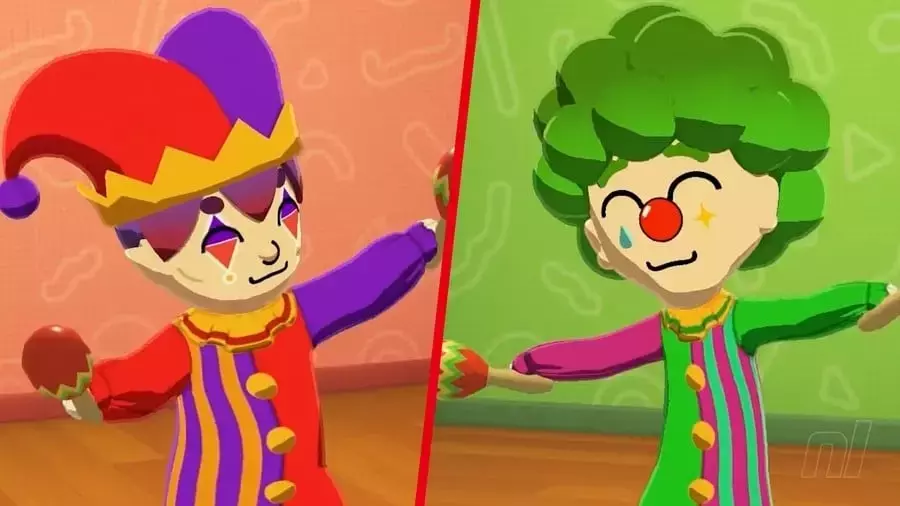
The recent Nintendo Direct for "Tomodachi Life: Living the Dream" has captivated audiences with its unique blend of humor, extensive customization options, and engaging character narratives. However, a closer look reveals significant regional disparities in the presentation. While the overarching theme and game mechanics remain consistent, the specific characters, their backstories, and even some in-game elements differ across geographical broadcasts, leading to diverse viewer experiences.
Initially, viewers were introduced to Hugh Morris, a clown-like figure featured prominently in the Nintendo of America broadcast. His quirky personality quickly garnered a fan base. Yet, this American presentation prompted questions from other regions, particularly regarding the absence of a character named Bubbles. It soon became evident that the Nintendo UK version of the Direct presented an entirely different set of Miis and storylines, showcasing distinct character interactions and scenarios.
These regional variations are a common practice for Nintendo Directs, often reflecting localized content or game announcements specific to certain markets. In the case of "Tomodachi Life," the differences extended beyond character selection. For instance, in the UK broadcast, Rosa assumes the role of the player's best friend, a part played by Jess in the US. Similarly, Forian is depicted as a fitness enthusiast in the UK, contrasting with Patrick, a guitar enthusiast, in the US version. Even characters present in both versions, like Carlo, exhibit different professions and personalities, appearing as a nosy and active individual in the UK and a barista in the US. Notably, Mocha the Bear maintains a consistent presence across both Atlantic regions.
Further subtle distinctions include the prevalence of a hot dog costume in the American Direct, while wizard and bee costumes take center stage in the UK. The types of grocery items displayed and the interior decorations within the game also vary by region. One particularly charming change in the UK version involves an alien character participating in a romantic ferris wheel encounter, replacing the best friend character in the American counterpart. These nuanced alterations underscore the detailed localization efforts undertaken by Nintendo.
Insights from various community members, including a video analysis by rockheadHD, further highlight these substantial localization differences. A notable example is the news report segment, where newsreaders deliver stories with slight variations tailored to each region. The full extent of these localized elements in the final game release remains to be seen. European streams, apart from the UK, generally adopted the UK version with added subtitles, while Japan's Direct presented its own unique set of characters, including Rika, Daisuke (who shares Patrick's musical inclination), and yet another iteration of Carlo, this time portrayed as a painter. The most pronounced variations were observed in the in-game grocery store, where items like pizza, coffee, and escargot in English-speaking regions were replaced with octopus, juice, and rice bowls in the Japanese version.
Despite these numerous regional adjustments, the core content and delightful, eccentric tone of all three highlighted Direct presentations remain consistent. The observed differences, though small in isolation, collectively paint a picture of thoughtful localization designed to resonate with diverse cultural audiences. As "Tomodachi Life: Living the Dream" approaches its release on April 16th, 2026, players will undoubtedly discover many more unique regional touches that enhance the game's charm.
