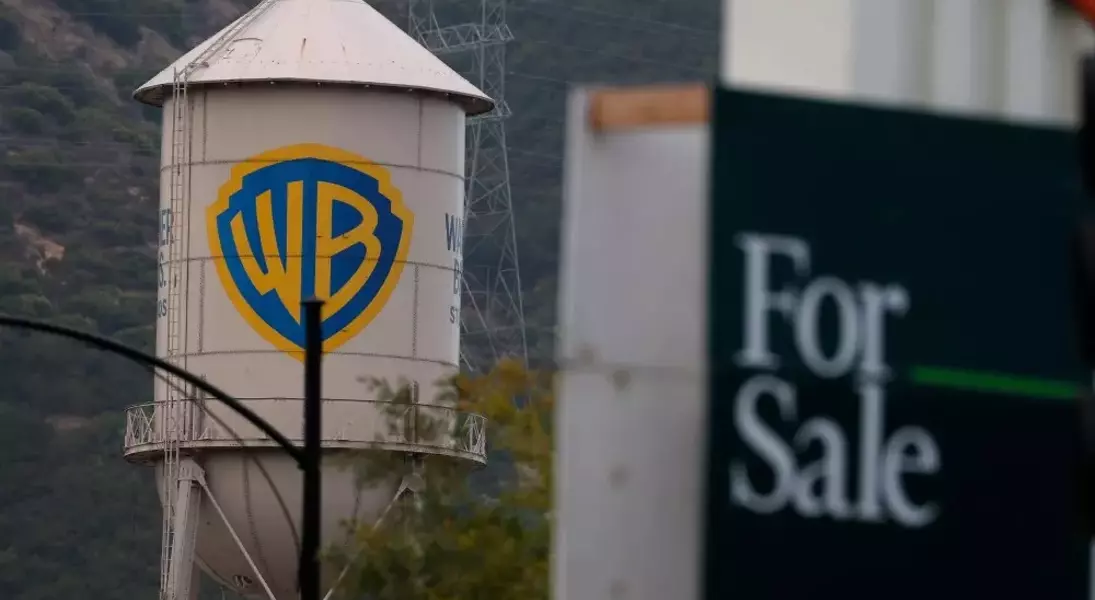
Regal Cinemas' CEO, Eduardo Acuna, has voiced strong support for the proposed union of Paramount and Warner Bros. Discovery, emphasizing the benefits this consolidation would bring to the film industry. His endorsement highlights the need for a stable studio environment to foster growth and innovation within cinema.
A United Front for Cinematic Progress
Regal's Stance on the Paramount-Warner Bros. Discovery Merger
Eduardo Acuna, the chief executive of Regal Cinemas, recently issued a statement advocating for the anticipated merger of Paramount and Warner Bros. Discovery. This declaration aligns Regal, one of the nation's largest theater chains, with the proposed deal, underscoring its potential positive impact on the industry.
The Imperative of a Robust Studio Ecosystem
Acuna stressed the current positive trajectory of the film industry, citing increased attendance and a renewed interest from younger audiences. He articulated that maintaining this momentum necessitates a flourishing studio system capable of supporting and expanding the industry's platform for growth. A strong studio foundation, he believes, is essential for continued success.
Commitments Driving the Merger's Support
After careful deliberation, Acuna concluded that advancing the Paramount Skydance acquisition of Warner Bros. Discovery is the correct path. He revealed discussions with Paramount-Skydance CEO David Ellison, who provided specific assurances for the cinematic sector. These include pledges for a minimum of 30 theatrical releases annually, a safeguarded theatrical window of 45 days for TVOD and 90 days for SVOD for at least three years, and a substantial annual investment of $30 billion in media content.
Avoiding the Pitfalls of Prolonged Litigation
Acuna warned against the detrimental effects of an extended legal battle, suggesting that a protracted antitrust trial would not increase film releases. He argued that such a scenario would only generate further instability and distraction, ultimately harming studios, filmmakers, moviegoers, and theater operations like Regal, as well as their employees. His perspective indicates that swift resolution is in the best interest of all stakeholders.
Growing Alliance Against Antitrust Challenges
Regal's endorsement arrives shortly after AMC Theatres CEO Adam Aron publicly expressed similar support for the merger. With the backing of the two largest theater chains, David Ellison gains crucial allies as he prepares for an antitrust trial scheduled for March 2027. This broad support from the exhibition sector significantly strengthens the merger's defense against the lawsuit initiated by California Attorney General Rob Bonta and a coalition of 11 other state attorneys general.
Undermining the Lawsuit's Claims
The lawsuit, filed on July 13, alleges that the $111 billion merger would violate the Clayton Act by reducing competition in three key markets: wide-release theatrical distribution, "top-grossing" theatrical distribution, and basic cable licensing. The plaintiffs also contend that the merger would negatively impact theater owners and consumers. However, with AMC and Regal aligning with Ellison, it becomes significantly more challenging for Bonta's team to demonstrate that the exhibition industry would suffer post-merger.
Divergent Views Within the Exhibition Industry
Despite the support from major chains, Acuna and Aron's positions contrast with those of Cinema United, an exhibition industry trade group led by Michael O'Leary. O'Leary has vocally opposed the sale, asserting in a letter to members that the transaction would lead to fewer films, higher costs for consumers, and ultimately, fewer theaters. He dismisses promises of theatrical support as unenforceable and insufficient to mitigate potential harms.
The Financial Stakes of a Delayed Trial
Judge Araceli Martinez-Olguin has set the antitrust trial for 12 days, from March 2 to March 19, 2027. Paramount had sought an earlier trial in November, while the states and the Writers Guild of America pushed for a March date. Paramount's urgency stems from a "ticking fee" of $7 million per day payable to Warner Bros. Discovery for any delay past October 1, highlighting the significant financial implications of the ongoing legal uncertainty.
Ellison's Defense: Beyond Market Share
In a New York Times op-ed, Ellison suggested that the state attorneys general's true motivation for blocking the merger is not solely about market share. He posited that the underlying concern is his potential control over CNN. Ellison reiterated his commitment to an independent and fact-based CNN, affirming that his intention is not to steer newsrooms towards his personal views but to uphold journalistic integrity
