
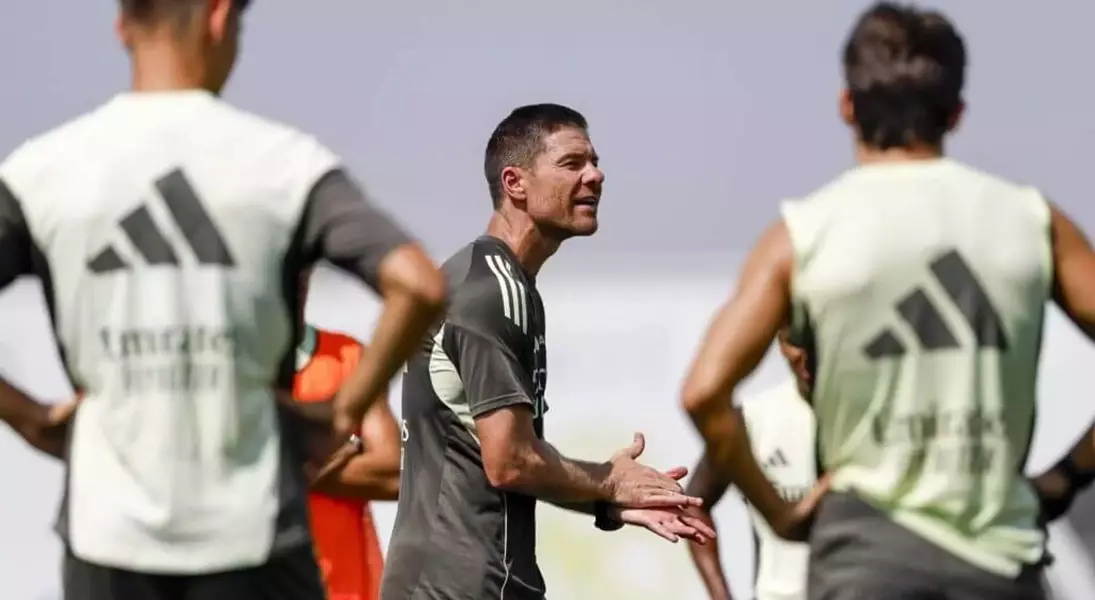

Real Madrid's belated start to their pre-season training, almost a month behind Barcelona, has set a challenging pace for the squad as they gear up for the new La Liga season. Their extended participation in the Club World Cup meant a delayed end to their previous campaign, significantly compressing their preparation period. Despite advocating for a postponement of their initial league fixture, the request was ultimately denied, leaving the team with a condensed schedule to achieve optimal match fitness. Under the guidance of their new coach, Xabi Alonso, the focus is now on implementing innovative training regimens and enhancing player well-being to navigate the demands of a packed fixture list. The club's internal perspectives on the impact of the Club World Cup are mixed, with some viewing it as a logistical hurdle due to challenging conditions, while others see it as a beneficial opportunity to reshape team dynamics and instill a new, more intense training philosophy.
The critical question now facing Real Madrid is whether this accelerated preparation will be sufficient to ensure they are fully competitive from the outset of the La Liga season. With their opening match against Osasuna scheduled for August 19, the pressure is on to integrate new tactical approaches, refine physical conditioning, and foster team cohesion within a tight timeframe. The club has introduced significant changes to its physical and medical departments, aiming to mitigate injury risks and maximize player performance. While some within the club acknowledge the need for further squad strengthening, the current roster is considered robust. The immediate challenge lies in transforming a holiday-rested squad into a formidable league contender in record time, demonstrating the efficacy of their new coaching staff and training strategies.
Accelerated Preparations and New Methodologies
Real Madrid's pre-season schedule has been significantly compressed, commencing nearly a month after their primary competitors due to their extended participation in the Club World Cup. This late start, combined with the Spanish FA's rejection of their request to delay their opening La Liga fixture, has forced the team into an intensive preparation phase. The players, returning from their holidays on August 4, immediately underwent medical assessments before engaging in rigorous group training sessions. This period is critical for re-establishing physical conditioning and tactical understanding.
Under the new leadership of Xabi Alonso, the training philosophy has seen a notable shift towards increased on-field work, a departure from the previous emphasis on individual strength training. This revised approach aims to enhance overall team fitness and strategic implementation. Furthermore, the club has revamped its medical support team, introducing new physical trainers who employ advanced techniques, such as temperature-coordinated muscle training and data-driven injury risk analysis. These adjustments are a direct response to the high incidence of injuries experienced in the previous season, reflecting a proactive approach to player health and performance optimization. The sole friendly match scheduled against WSG Tirol will serve as a crucial test of their early readiness before the league campaign begins.
The Dual Impact of the Club World Cup
The Club World Cup's impact on Real Madrid's pre-season has been a subject of internal debate, presenting both challenges and opportunities. On one hand, some coaching staff members view the tournament as a hindrance, citing adverse conditions in the United States—including excessive humidity, poor playing surfaces, and time zone differences—which made optimal preparation difficult. The sheer number of minutes accumulated by players at the tail end of an already long season also raised concerns about fatigue and potential burnout, making the subsequent holiday period even more crucial for player recovery.
Conversely, other club sources describe the Club World Cup as "very useful" for achieving a fundamental objective: changing the team's dynamic. This perspective highlights the tournament as an invaluable platform for Xabi Alonso and his collaborators to introduce new, high-intensity training methods and instill greater discipline, such as improved punctuality. The experience allowed them to implement more individualized video analysis and integrate tactical adjustments aimed at boosting player engagement and performance. Despite the logistical challenges, the Club World Cup served as an early proving ground for Alonso's vision, laying the groundwork for a more cohesive and demanding team environment. This early exposure to competitive play, albeit under less than ideal circumstances, provided valuable insights for the coaching staff to refine their strategies ahead of the demanding La Liga season.
