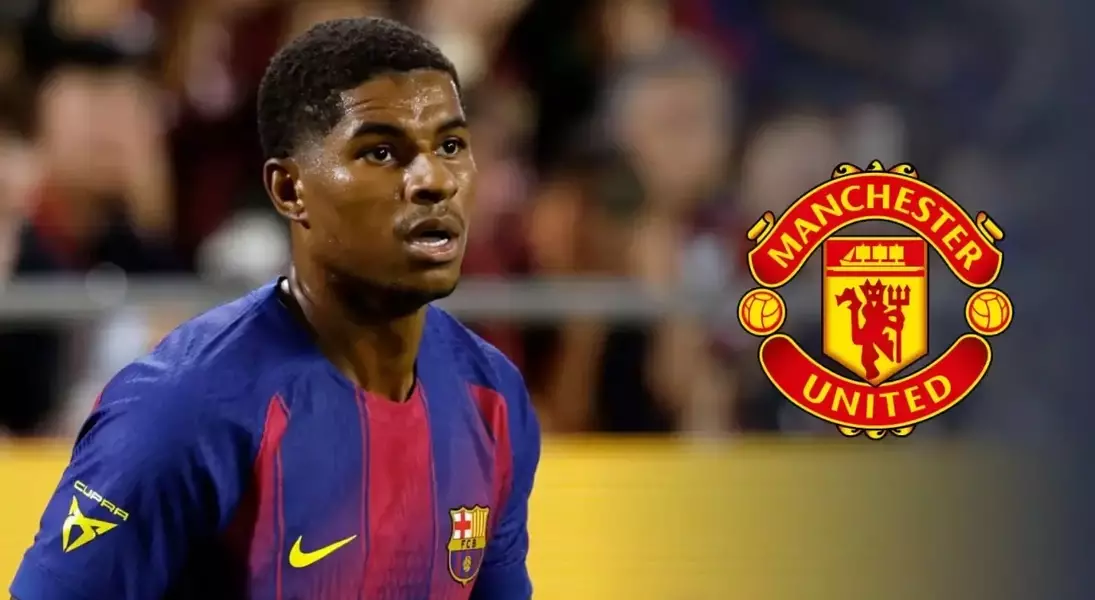
In a candid assessment of Manchester United's operational philosophy, Marcus Rashford, currently on loan at Barcelona, has openly criticized the club's recruitment approach. His critique centers on what he perceives as a lack of stable direction and a tendency towards reactive decision-making in player acquisitions. This, he argues, has significantly hampered the team's ability to achieve sustained success at the highest level of competition. Rashford’s commentary offers a glimpse into the internal frustrations experienced by players amidst the club's fluctuating strategies, drawing a clear distinction between isolated victories and the consistent championship pursuit seen in other top-tier clubs.
Rashford, who departed Old Trafford this summer for a season-long loan with an option for a permanent transfer to the Catalan giants, had also spent the latter half of the previous season at Aston Villa following a dispute with Ruben Amorim. His latest remarks, shared during an appearance on 'The Rest is Football' podcast, shed light on the systemic issues he identifies within his former club's framework. He contends that successful footballing institutions are built upon fundamental principles that new personnel, whether coaches or players, must assimilate or enhance. For Rashford, Manchester United's approach has been the antithesis of this, characterized by impulsive signings rather than a coherent long-term vision.
The England international specifically highlighted the detrimental effect of an ever-changing club direction on competitive ambitions. He articulated that while a strong coach and talented individuals might secure occasional cup triumphs, winning a league title demands a stable and consistent pathway. Rashford stressed that such achievements are not accidental but the result of a deliberate, unwavering strategy. He pointed out that Manchester United has fallen considerably short of its own lofty expectations, and from his recent detached perspective, the reasons for this underperformance are clear.
Drawing a parallel with Liverpool's successful transformation under Jurgen Klopp, Rashford implored his former club to adopt a similar blueprint for rebuilding. He noted that Liverpool, despite not achieving immediate success under Klopp, committed to his vision, eventually reaping the rewards of consistent planning and patient execution. Rashford stressed that genuine transitions are initiated with a well-defined plan that is then rigorously adhered to. He lamented that Manchester United's frequent changes in management, ideas, and tactical approaches have led to a state of perpetual uncertainty, preventing the establishment of a clear identity and a path towards genuine competitive dominance.
Ultimately, Rashford's insights underscore the critical importance of strategic stability and a cohesive club philosophy in modern football. His observations suggest that Manchester United's 'reactionary' transfer policy and constant shifts in direction have created an environment where long-term planning is compromised, thereby hindering their aspirations for consistent, top-tier success. The comparison with Liverpool serves as a poignant reminder that patient commitment to a well-articulated strategy is often the bedrock upon which true and lasting footballing empires are built.
