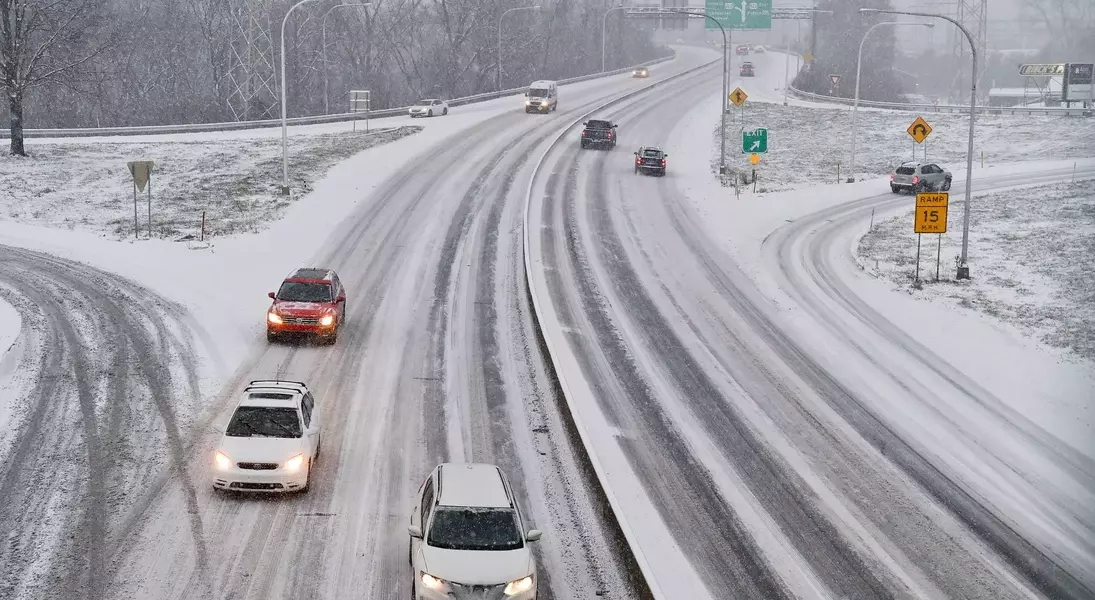
A rare weather event has gripped Alaska's Dalton Highway, particularly the treacherous Atigun Pass, as an unseasonal late-August snowstorm unleashes its fury. With forecasts predicting up to half a foot of snow, powerful wind gusts reaching 30 miles per hour, and visibility plummeting to half a mile or less, authorities have issued a winter weather advisory until Saturday morning, urging extreme caution for all travelers traversing this remote and unforgiving route.
Dangerous Driving Conditions Expected on Dalton Highway and Atigun Pass
On Thursday, August 27, 2026, the National Weather Service in Fairbanks issued a comprehensive Winter Weather Advisory encompassing the central Brooks Range, slated to remain active until 4 a.m. Saturday. The advisory specifically targets Atigun Pass and a significant stretch of the Dalton Highway, from Mile Post 232 to Mile Post 322, including adjacent areas like Anaktuvuk Pass and Galbraith Lake. Drivers can anticipate accumulating snow, with the heaviest falls concentrated near Atigun Pass, potentially reaching 6 inches. Initially, snow levels are expected to be above 2,500 feet, gradually ascending to 4,000 feet by Friday. The primary concern is the combination of persistent snowfall, strong winds creating blowing snow, and the critical danger of black ice forming overnight as temperatures dip below freezing. This meteorological phenomenon represents the third such winter alert for the Dalton Highway this year, following similar events in June and late July, firmly establishing unseasonal snow as a periodic challenge rather than an anomaly in the Brooks Range. The Dalton Highway, known as the 'Ice Road Truckers' route, is notoriously challenging. It is a 414-mile gravel road that extends from Fairbanks to the Prudhoe Bay oil fields, with limited to no cellular service throughout its length. Coldfoot, a crucial stop, serves as the last fuel station for 239 miles. Road condition updates are delayed, often hours old by the time they reach the state's 511 system, as maintenance crews must physically inspect the road before reporting. Atigun Pass, situated at Mile Post 244 and towering at 4,739 feet, stands as Alaska's highest perpetually maintained pass and the sole road crossing the Brooks Range. Its elevation means temperatures can be significantly colder than in Fairbanks, and its steep 12 percent grades on the northern descent become especially hazardous when coated in ice, making re-routing impossible for drivers. Its history is marked by frequent vehicle incidents and full closures due to severe snowdrifts.
For those who must navigate the Dalton Highway this week, it is crucial to prepare for full winter conditions, even in August. Essential items include tire chains, winter-rated tires, blankets, flashlights, portable chargers, extra food, water, and a full tank of fuel before leaving any service points, as assistance can be hours away. Maintain at least three times the typical stopping distance, and decelerate well before descents rather than relying on braking on treacherous slopes. Additionally, drivers should consult resources like the Alaska DOT Dalton Highway page and Alaska 511 for the latest closure information before embarking on their journey. Even after the advisory concludes, the risk of black ice persists into the weekend due to overnight refreezing, meaning drivers should not assume conditions have cleared simply because the alert has expired. This ongoing vigilance is paramount for safety.
