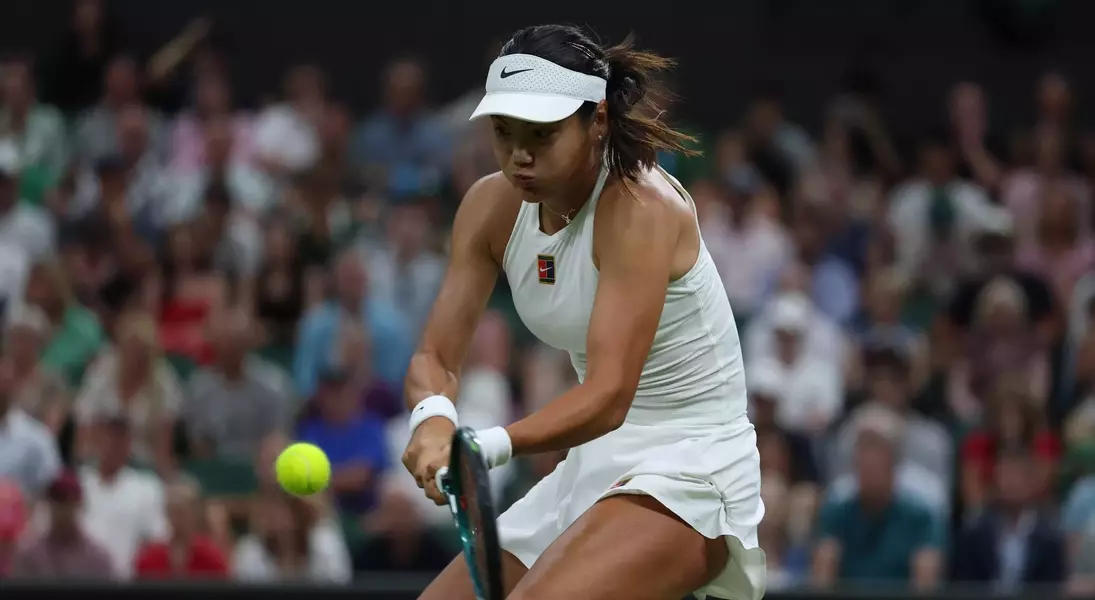
Emma Raducanu continues to grapple with coaching changes, as her current mentor, Mark Petchey, has indicated that their collaboration will not extend into a long-term agreement. This revelation comes despite their recent success at Wimbledon, where Raducanu showed promising form. The dynamic nature of their coaching relationship underscores the ongoing challenge for the young British tennis star to establish a consistent support system, a factor crucial for her sustained development and performance in the demanding world of professional tennis.
The announcement from Petchey highlights the complexities inherent in high-level athletic coaching, where personal obligations and professional commitments can often intersect. While Petchey's temporary return to Raducanu's team yielded immediate positive outcomes, his inability to commit to a permanent role means that Raducanu's quest for stability in her coaching setup remains unfulfilled. This ongoing search is a critical aspect of her career trajectory, influencing her ability to build upon recent successes and navigate the challenges of elite competition.
The Elusive Coaching Stability for Raducanu
Emma Raducanu's professional journey has been marked by frequent changes in her coaching staff, a pattern that continues with Mark Petchey's recent statement. Despite their effective partnership leading to notable victories at Wimbledon, Petchey has openly stated that their arrangement is not intended to be a long-term commitment. This situation leaves Raducanu in a familiar predicament, as she once again faces the task of finding a stable and enduring coaching presence that can provide consistent guidance and support. The search for this elusive stability is paramount for her to cement her position and progress further in the highly competitive environment of professional tennis.
Petchey's decision stems from his existing personal and professional obligations, which prevent him from fully dedicating himself to a long-term role with Raducanu. Their recent reunion, initiated after her split from Nick Cavaday and a brief trial with Vladimir Platenik, brought a discernible improvement in her on-court performance, including two significant wins at Wimbledon. However, this temporary resurgence only underscores the urgent need for a permanent solution. As Raducanu prepares for the upcoming US hardcourt-swing, where she will compete in the WTA 500 DC Open, the imperative for a consistent coaching relationship becomes even more apparent. Her current world No. 37 ranking suggests potential for advancement, particularly with a strong performance at the US Open in late August, but this hinges significantly on securing reliable long-term coaching support.
Impact of Short-Term Coaching on Performance
The temporary nature of Emma Raducanu's coaching arrangement with Mark Petchey, while yielding positive short-term results, presents a significant challenge to her long-term development and consistency on the court. Petchey's candid admission about the fluid situation and his prior commitments reveals the inherent difficulties in maintaining coaching continuity. This instability, though not uncommon in the individualistic sport of tennis, can hinder a player's ability to consistently refine their technique, mental fortitude, and strategic approach, all of which are crucial for navigating the demanding professional circuit and achieving sustained success.
Petchey's emphasis on creating the \"best possible environment\" for Raducanu, irrespective of his own long-term involvement, highlights a selfless dedication to her progress. However, the absence of a permanent coaching figure inevitably leads to repeated adjustments in training methodologies and strategic planning, potentially disrupting her rhythm and development. While their work at Wimbledon, which included overcoming a six-match grass-court winning streak by Marketa Vondrousova, demonstrated the immediate benefits of their collaboration, the need for a singular, committed coach remains critical. As Raducanu looks ahead to the US hardcourt-swing and the US Open, securing a stable coaching foundation will be essential for her to build momentum, consolidate her skills, and ultimately aim for a seeded position in major tournaments, thereby moving beyond the cycle of periodic coaching transitions.
