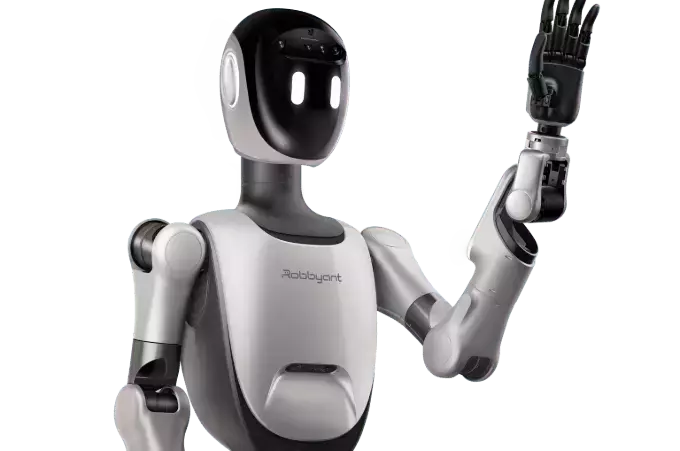
In a significant move within the rapidly evolving field of artificial intelligence and robotics, Ant Group, the prominent Chinese technology conglomerate, has introduced its groundbreaking humanoid robot, the R1. This development signals Ant Group's ambitious entry into the global race to develop advanced AI-driven robots, directly challenging established players such as Tesla's Optimus. The R1 is poised to redefine human-robot interaction with its diverse capabilities, starting with initial demonstrations showcasing its utility in culinary tasks.
The R1, a product of Ant Group's robotics arm, Robbyant, recently made its public debut at the IFA 2025 technology exhibition in Berlin. Attendees were reportedly treated to a demonstration of the R1's cooking prowess, with the robot expertly preparing shrimp. Following its European unveiling, the R1 was also showcased at the 2025 Inclusion Conference in Shanghai, further solidifying Ant Group's commitment to the humanoid robotics sector. Robbyant has indicated that culinary assistance is merely one of many potential applications for the R1, envisioning its role in various domains.
Beyond the kitchen, the R1 is being considered for deployment in critical areas such as companion and caregiver roles within the healthcare industry. Its human-like form factor and anticipated AI capabilities could offer invaluable support in assisting individuals and providing personalized care. Additionally, Robbyant sees potential for the R1 to serve as a robotic tour guide, enhancing the travel and tourism experience by offering interactive and informative guidance to visitors. The company is currently engaged in testing the R1 in real-world environments, including community centers and restaurants, to refine its performance and expand its functionalities.
While the R1's full capabilities and commercial launch details, including pricing and availability, are yet to be revealed, its introduction highlights a broader trend in the tech industry. Companies are increasingly investing in AI-powered robotics, driven by advancements in artificial intelligence that are beginning to overcome long-standing challenges in robotics development. Despite a history of slow progress and unfulfilled promises in the field, the integration of sophisticated AI is expected to accelerate innovation and unlock new possibilities for humanoid robots to perform complex tasks and integrate seamlessly into human society.
Ant Group's unveiling of the R1 underscores a pivotal moment in the global robotics landscape, where artificial intelligence is increasingly bridging the gap between sophisticated algorithms and physical manifestations. The emergence of such advanced humanoid robots, capable of performing intricate tasks, heralds a future where AI-driven automation plays an ever more central role in various aspects of daily life and industry. The R1's development not only showcases Ant Group's technological prowess but also contributes to the collective progress of an industry striving to integrate intelligent machines into human environments, moving beyond speculative concepts towards tangible applications.
