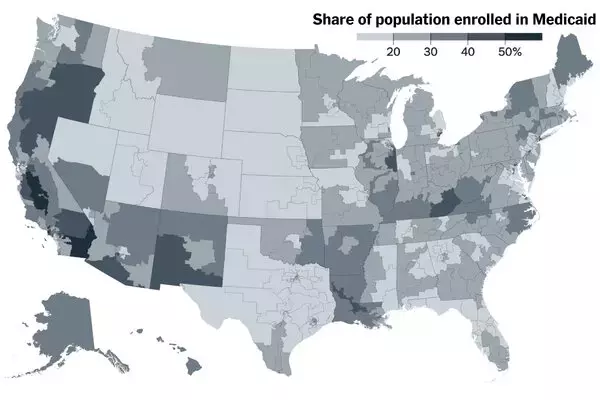
A recent survey by KFF, a nonpartisan health research organization, has revealed a complex public opinion landscape regarding Medicaid, the nation's largest health insurance program. While most voters oppose cutting funding for Medicaid, there is significant support for implementing work requirements for beneficiaries. The poll found that only 17% of respondents favored reducing Medicaid's budget, with 40% wanting to maintain current spending levels and 42% advocating for an increase. However, over 60% of voters, including nearly half of Democrats, supported the idea of requiring enrollees to work.
Support for Medicaid Remains Strong, but Work Requirement Gains Traction
In the midst of discussions about potential cuts to Medicaid, a comprehensive survey conducted by KFF has highlighted both the widespread importance of the program and the growing interest in reforming its eligibility criteria. The findings reveal that Medicaid, which provides health coverage to over 70 million Americans, holds immense significance for many communities. Nearly all respondents—98% of Democrats and 94% of Republicans—agreed that Medicaid plays a crucial role in their local areas.
The survey also indicated that while overall support for Medicaid remains robust, with a majority opposing funding reductions, there is notable backing for policies that would limit the program's scope. Specifically, the proposal to introduce work requirements for recipients garnered support from more than 60% of voters, including a surprising 47% of Democrats. This policy, championed by some Republican lawmakers, could potentially result in $100 billion in savings by excluding those who are unemployed or unable to verify their employment status.
Interestingly, the poll also shed light on the personal connection many Americans have to Medicaid. Over half of the respondents reported that they or a family member had previously relied on Medicaid for health coverage at some point. This underscores the program's far-reaching impact across various demographics and regions of the country.
As Congress debates the future of Medicaid, these findings suggest that policymakers must carefully balance the desire for fiscal responsibility with the need to protect vulnerable populations who depend on this essential healthcare resource.
From a journalistic perspective, this poll highlights the nuanced nature of public opinion on social welfare programs. It shows that even when people recognize the importance of such programs, they may still support reforms that could inadvertently harm those who rely on them. As journalists, it's crucial to present these complexities without oversimplifying the issues, ensuring that readers understand the potential consequences of proposed changes to Medicaid.
