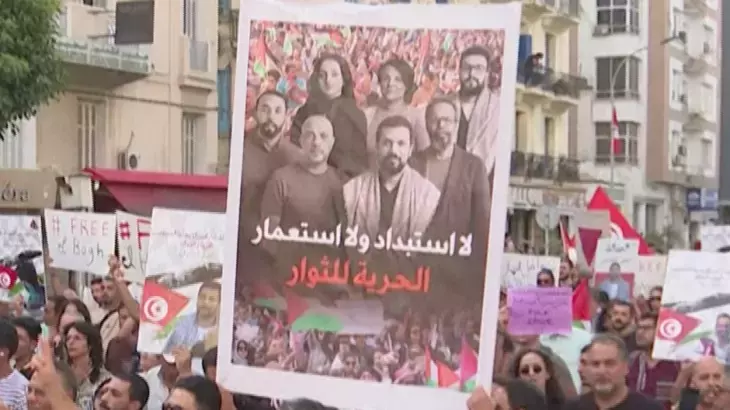
In a significant display of public concern, numerous individuals gathered in Tunisia's capital, Tunis, to voice their demand for the liberation of four activists associated with the Global Sumud Flotilla. These activists have been in custody since March of the current year, confronting accusations of financial irregularities stemming from their involvement in a humanitarian mission to Gaza in 2025. The demonstration underscores the public's unwavering support for these individuals and highlights the ongoing debate surrounding the legal proceedings and the nature of their detention.
The protests, which drew hundreds of participants, were specifically aimed at compelling authorities to release the four Global Sumud Flotilla members. These activists stand accused of financial misconduct, charges that arose from their humanitarian endeavor to deliver aid to Gaza in 2025. The flotilla's mission was to provide crucial assistance to the besieged region, an act that has now led to legal challenges and public outcry in Tunisia.
The Global Sumud Flotilla embarked on its journey towards Gaza in 2025 with the explicit goal of delivering much-needed humanitarian supplies. This mission, intended to alleviate suffering in the Palestinian territory, has instead resulted in the arrest and detention of several participants. The activists' current legal predicament and the allegations leveled against them have sparked widespread condemnation and calls for their immediate release, drawing attention to the complexities and risks involved in such humanitarian efforts.
The demonstration in Tunis serves as a powerful reminder of the deep public sentiment concerning the humanitarian situation in Gaza and the plight of those who attempt to provide aid. The ongoing detention of the activists has galvanized support, with many believing that the charges are politically motivated or unjust. The call for their release is not merely about individual freedom but also about the broader principles of humanitarian action and accountability.
Ultimately, the recent gatherings in Tunis reflect a strong collective desire for justice and the protection of humanitarian workers. The public's sustained engagement highlights the critical importance of ensuring fair legal processes and upholding the right to provide humanitarian assistance without undue impediment. The focus remains on the swift and unconditional release of the detained activists, who are seen by many as champions of a vital cause.
