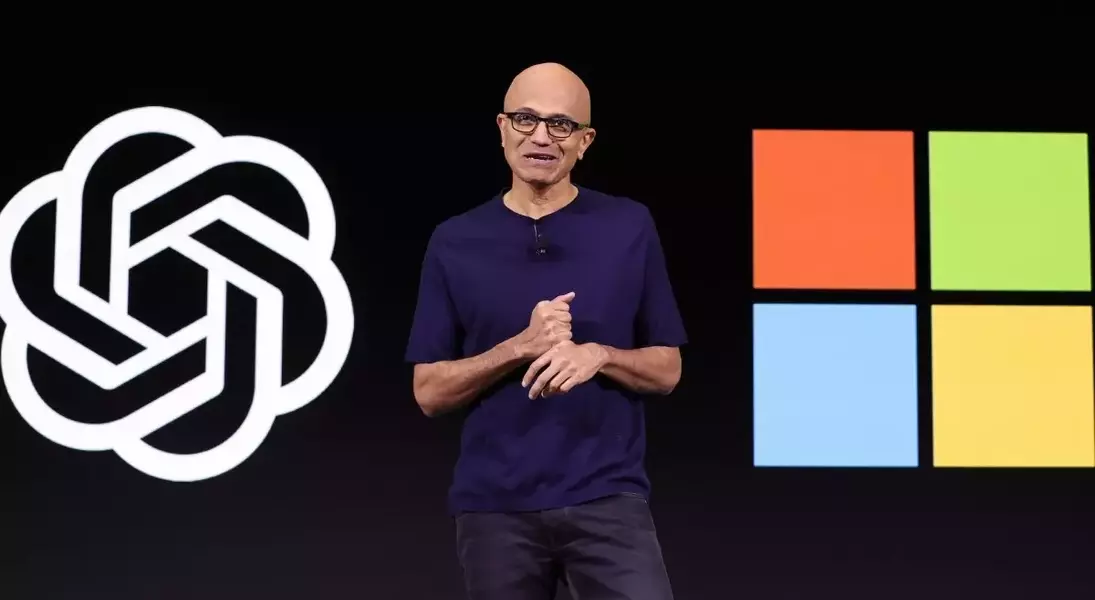
Amidst the rapid advancements in artificial intelligence, a surprising revelation has emerged regarding how two tech giants define artificial general intelligence (AGI). A recent report from The Information sheds light on an unconventional agreement between Microsoft and OpenAI, suggesting that AGI is not solely a technical milestone but also a financial one. This new perspective challenges traditional views of AGI and raises questions about the future of AI development.
Unlocking the Future of AI: A Decade of Innovation Ahead
The Financial Milestone for AGI
The partnership between Microsoft and OpenAI operates under an unusual premise. According to reports, OpenAI must generate at least $100 billion in profits before it can officially declare the achievement of AGI. This definition contrasts sharply with the more abstract and philosophical interpretations often associated with AGI. For many experts, AGI represents a system capable of understanding, learning, and applying knowledge across various domains without human intervention. However, for these tech giants, AGI seems to be as much about economic success as it is about technological prowess.This profit-centric approach reflects a broader shift in how companies are beginning to measure progress in AI. While traditional metrics focus on performance benchmarks and computational efficiency, the inclusion of financial targets introduces a new dimension to the conversation. It suggests that for some, the true value of AGI lies not just in its capabilities but also in its potential to revolutionize industries and generate unprecedented revenue streams.Challenges on the Horizon
Despite the ambitious financial goals set by Microsoft and OpenAI, the road ahead is fraught with challenges. Reports indicate that OpenAI is currently facing substantial financial losses, with projections suggesting it won’t turn a profit until 2029. This timeline raises concerns about the sustainability of their current trajectory. The high compute costs associated with developing advanced AI models like o3 further complicate matters. These expenses can quickly accumulate, putting additional pressure on both OpenAI and Microsoft to find viable monetization strategies.Moreover, the emphasis on profitability may inadvertently narrow the scope of research and innovation. If the primary focus remains on generating revenue, there’s a risk that less commercially viable but scientifically significant projects could be sidelined. Balancing the pursuit of groundbreaking technology with the need for financial viability will be crucial for both companies moving forward.Implications for the AI Ecosystem
The unique arrangement between Microsoft and OpenAI has far-reaching implications for the broader AI ecosystem. One of the most immediate effects is the extended access Microsoft retains to OpenAI’s cutting-edge models. Under the terms of their agreement, Microsoft can continue leveraging OpenAI’s technology for up to a decade or more. This prolonged collaboration could accelerate the integration of AI into various sectors, from healthcare to finance, driving innovation across multiple industries.However, this extended partnership also raises questions about competition and market dynamics. With Microsoft holding onto such valuable assets for an extended period, other players in the AI space may find it challenging to catch up. The competitive landscape could become increasingly skewed, potentially stifling diversity and innovation within the field. Policymakers and industry leaders will need to carefully monitor these developments to ensure a balanced and healthy ecosystem.A New Era of AI Development
Ultimately, the unconventional definition of AGI proposed by Microsoft and OpenAI marks the beginning of a new era in AI development. By intertwining financial success with technological advancement, these companies are redefining what it means to achieve AGI. This approach challenges existing paradigms and invites a fresh perspective on the future of AI.As we move forward, the intersection of profitability and innovation will shape the trajectory of AI research. The coming years will likely see a convergence of economic and scientific objectives, leading to novel approaches and unforeseen breakthroughs. The journey toward AGI, as defined by Microsoft and OpenAI, promises to be both transformative and intriguing, setting the stage for a new chapter in the history of artificial intelligence.You May Like