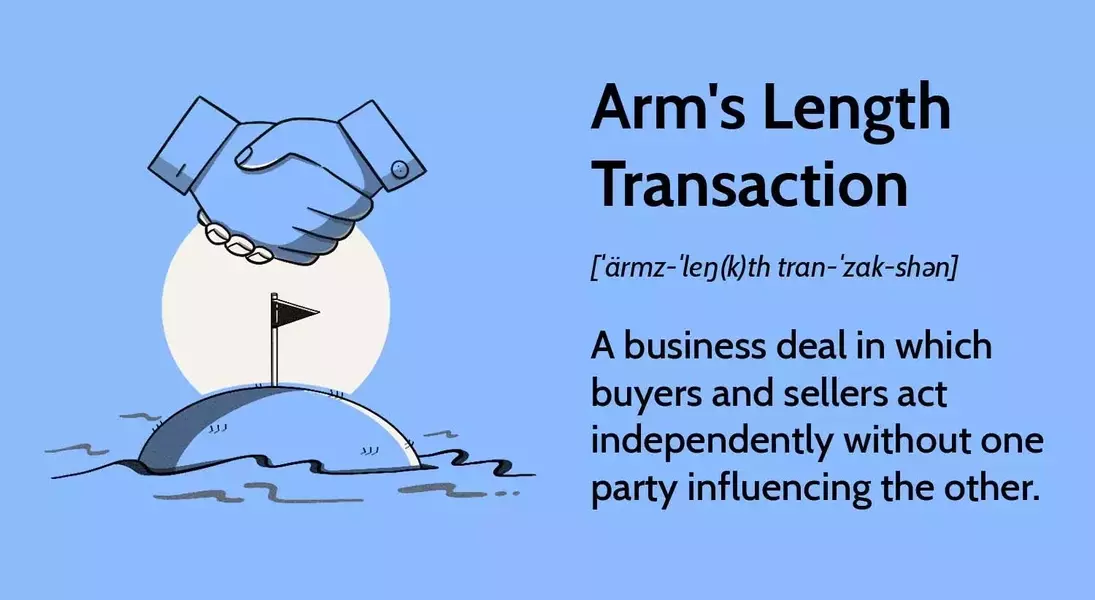
This article explores the principle of arm's length transactions in business, where unrelated parties engage in independent negotiations. It distinguishes these from non-arm's length transactions, highlighting their significance in ensuring fair market value, particularly in real estate. The discussion also covers the legal and tax implications associated with each type, emphasizing the importance of transparency and unbiased dealings.
Ensuring Equity: The Cornerstone of Independent Business Dealings
Defining Arm's Length Engagements
An arm's length transaction represents a business agreement where all participants operate autonomously, without any pre-existing personal or professional ties that could influence their negotiation positions. This setup guarantees that each party acts solely in its own best interest, preventing any form of collusion. For such dealings to be truly impartial, all involved entities should have equal access to relevant information.
The Mechanism of Independent Dealings
These transactions are particularly prevalent in property sales, where the agreed-upon price is expected to closely reflect the fair market value (FMV). In a scenario involving unfamiliar individuals, the seller aims for the highest possible price, while the buyer seeks the lowest. This dynamic ensures that the transaction price remains aligned with the property's actual market worth. Beyond the immediate buyer and seller, these transactions also influence other stakeholders, including financial institutions, local tax authorities, and broader market pricing benchmarks.
Distinguishing Independent from Connected Transactions
Conversely, non-arm's length transactions involve parties with pre-existing relationships, such as family members or affiliated companies. In these situations, personal or corporate ties can affect the terms of the deal, potentially leading to outcomes that deviate from market standards, such as a discounted price offered to a relative. Regulatory bodies, especially tax authorities, often scrutinize these transactions to ensure that fair market value principles are applied for taxation purposes, as exemplified by transfer pricing rules for international corporate dealings.
Impact on Fair Market Value
A primary advantage of arm's length transactions is their ability to establish fair and equitable terms, especially in the real estate sector. When buyers and sellers lack prior connections, the transaction terms, particularly the sale price, tend to genuinely reflect prevailing market conditions and the fair market value, unswayed by external influences. The fair market value is the optimal price a willing, unbiased buyer and seller would agree upon, determined by factors such as location, comparable property prices, property condition, size, amenities, and market interest rates.
Illustrative Scenario of an Arm's Length Transaction
Consider a hypothetical case where John lists his house for $350,000, aligning with its fair market value. An external buyer, after evaluating market factors, offers the asking price. If John accepts, this is an arm's length transaction. However, if John's son, Henry, offers a reduced price of $275,000 due to their familial relationship, and John accepts, this then becomes a non-arm's length transaction. This distinction is crucial, as it impacts financial assessments and legal obligations.
Arm's Length Transactions Versus Alternative Sales Structures
Arm's length transactions are defined by the independence of the involved parties, who have no personal or business affiliations beyond the transaction itself. In contrast, non-arm's length transactions occur when there are existing personal relationships, such as between family members, or business connections, like those between a parent company and its subsidiary. These relationships can lead to terms that are not strictly market-driven.
Significance of Arm's Length Transactions
The distinction between arm's length and non-arm's length transactions holds significant legal and tax implications. For multinational corporations, ensuring that transactions between affiliated entities adhere to fair market values is vital for proper tax allocation across different jurisdictions. Similarly, conglomerates and holding companies must conduct internal transactions at arm's length to avoid legal and regulatory challenges. Ultimately, these transactions promote ethical business practices and safeguard the interests of the general public.
Examples of Transactions Not at Arm's Length
An instance of a non-arm's length transaction could be a mother selling her car to her son at a reduced price, deliberately discounting it below market value due to their familial bond. While this example is benign, the implications can be more severe in corporate settings. For instance, a publicly traded company's founder might practice nepotism by appointing a less qualified family member to a key position, potentially harming shareholder interests by not selecting the most competent candidate. These scenarios underscore how personal connections can compromise objective business decisions.
The Crucial Role of Independent Dealings
Achieving the most favorable price in financial transactions is a universal goal for both buyers and sellers. Arm's length transactions are instrumental in this regard, as they eliminate relationship-based influences that could skew pricing or decision-making. Transactions that are not at arm's length risk suboptimal pricing outcomes, which can in turn disrupt the broader market and impact lending decisions.
