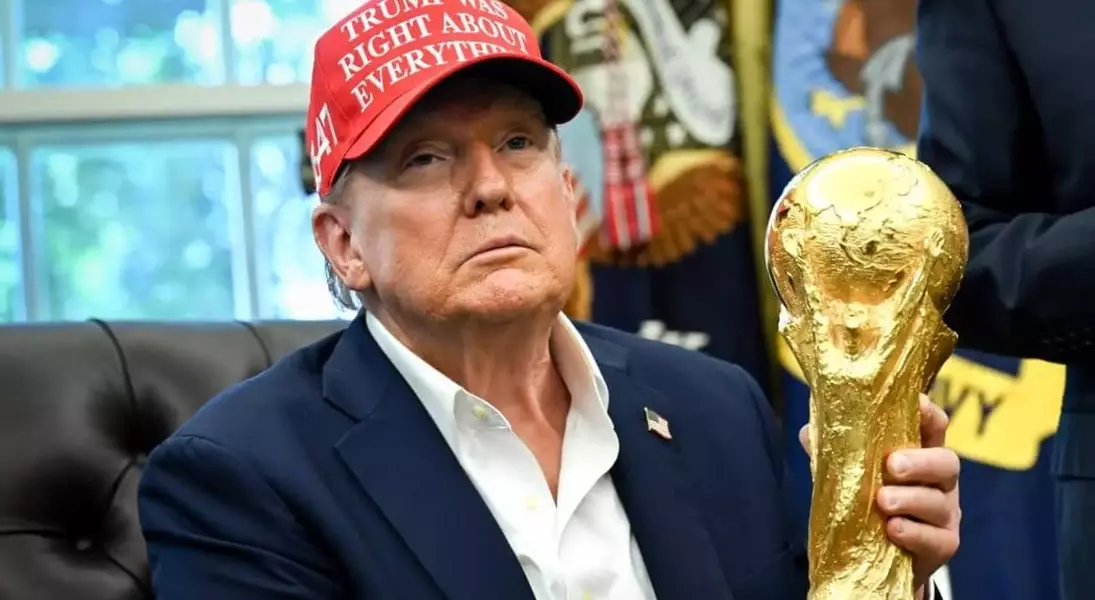
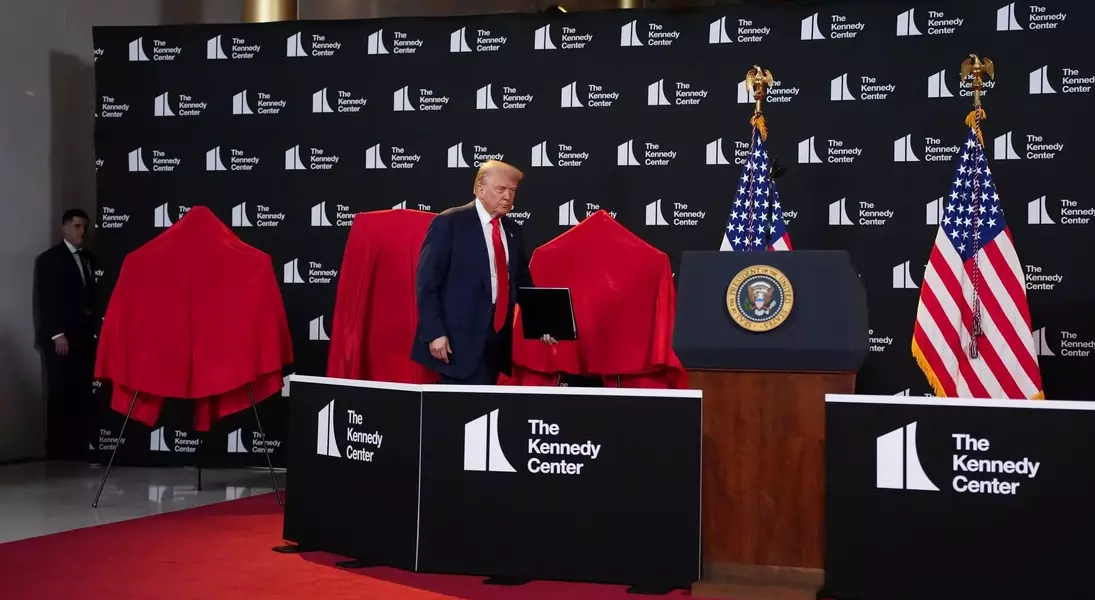
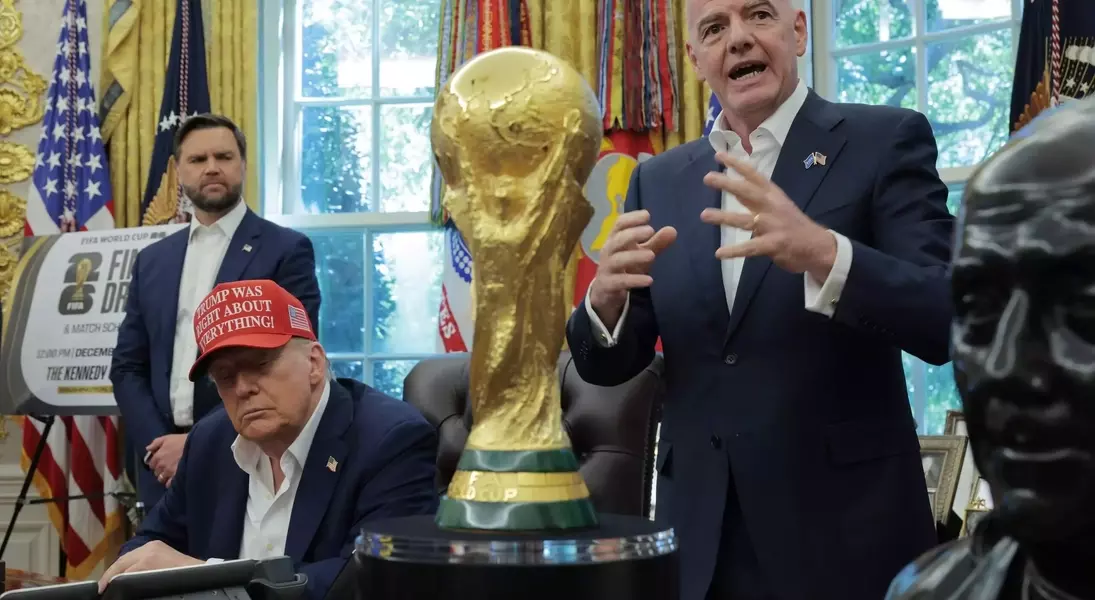
The recent announcement regarding the 2026 FIFA World Cup draw unfolded as a highly politicized event, far removed from typical sports news. On a Friday at the White House, the focus unexpectedly shifted from the upcoming global football spectacle to a platform for political statements by former U.S. President Trump. While the 2026 World Cup is set to commence on June 11 in Mexico City, its official commencement in the public sphere was marked by discussions on an array of topics including international conflicts, economic tariffs, and domestic policy matters. FIFA President Gianni Infantino, present at the announcement, seemingly conceded the spotlight and the symbolic World Cup trophy to Trump, allowing the event, which ideally should have been a FIFA-led affair, to be largely dictated by political rhetoric. This arrangement highlighted an unusual intersection of sports governance and national leadership, drawing attention to how such prestigious events can be leveraged for non-sporting agendas.
During the lengthy session, the former president veered off script multiple times, transforming the announcement into an extended political commentary. He suggested renaming the esteemed Kennedy Center, the designated venue for the World Cup draw, and launched into criticisms regarding urban crime rates, despite contradictory data, and media perceived as "dishonest." He also made dismissive remarks about co-host nations Canada and Mexico, implying his personal role in their inclusion in the tournament. Despite brief speaking opportunities for Infantino and other U.S. officials, Trump consistently reclaimed the narrative, interjecting with discussions on border security and law enforcement, and even referencing a recent meeting with a foreign leader concerning ongoing conflicts. This persistent diversion from the World Cup agenda, including addressing questions on global political issues instead of sporting ones, demonstrated a clear intent to utilize the international platform for domestic and personal political messaging.
Ultimately, this event underscored the potential for major international sports gatherings to become intertwined with political narratives. The discourse, which included everything from gun laws to geopolitical conflicts, conspicuously lacked substantive engagement with the core subject of the World Cup itself. The intended purpose of announcing the draw location and date was largely subsumed by political rhetoric, demonstrating how a global sporting event can be utilized to promote national agendas and personal viewpoints. This integration of politics and sport prompts reflection on the responsibilities of hosting nations and international sports organizations to maintain the integrity and focus of such widely anticipated events.
Such instances remind us that even the most unifying global events can become stages for broader societal and political dialogues. It is crucial for these platforms to ultimately transcend partisan divides and instead foster international goodwill, shared passion, and the spirit of fair competition. The true essence of sports, with its capacity to bring people together across borders and cultures, should always prevail, promoting unity and understanding above all else.
