In a dramatic turn of events, several members of the Republican party have challenged President-elect Donald Trump's proposed spending bill, leaving Congress in disarray as the government funding deadline looms. The uncertainty surrounding this legislative deadlock has sent ripples through financial markets, with implications for holiday travel and broader economic forecasts.
A Deep Dive into the Factors Shaping Today’s Financial Landscape
The Legislative Standoff: Unraveling the Spending Bill Saga
The refusal of numerous Republicans to support the President-elect's spending bill has cast a shadow over Capitol Hill. With only hours before the government's funding expires, there is no clear path forward. This impasse could lead to disruptions in essential services, including holiday travel plans for millions of Americans. The political tension underscores the complexities of bipartisan negotiation and the delicate balance required to secure legislative approval. The debate over the bill extends beyond immediate funding concerns. It highlights the broader ideological divide within the GOP, where some factions prioritize fiscal conservatism over loyalty to party leadership. This rift may have long-term implications for how future legislation is crafted and debated. As lawmakers scramble to find common ground, the stakes are high, and the consequences could ripple across various sectors of the economy.Economic Projections and Policy Adjustments
The Federal Reserve's revised forecast for 2025 inflation reflects a cautious optimism tempered by uncertainty. The central bank now anticipates higher inflation rates and fewer rate cuts than previously projected. This shift is partly attributed to the potential impact of Trump's policies on tariffs, tax reforms, and deregulation. Investors are closely watching these developments, as they will influence monetary policy decisions that can either stabilize or destabilize markets.The upcoming release of the Commerce Department’s personal consumption expenditure (PCE) report will provide critical insights into consumer behavior and inflation trends. Analysts predict that U.S. consumer spending will maintain its modest growth from the previous month, rising by 0.2% in November. Such data points are vital for policymakers and investors alike, as they offer a snapshot of economic health and consumer confidence.Market Reactions and Investor Sentiment
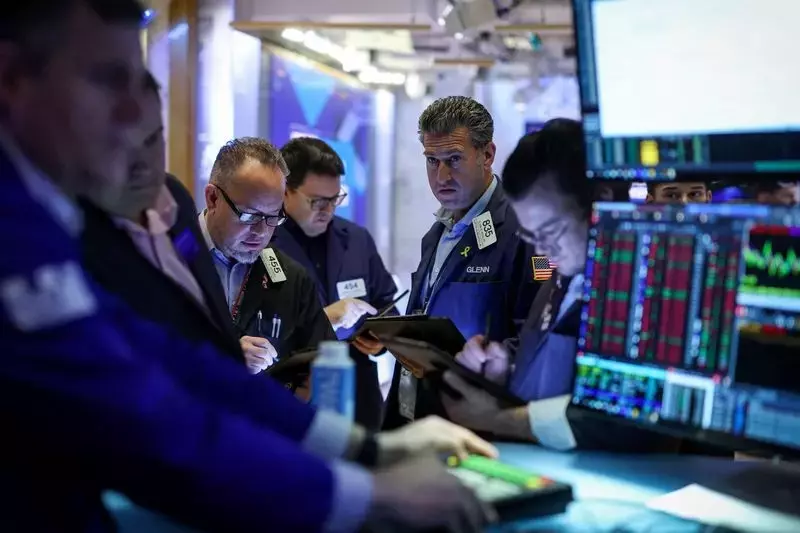
Financial markets have responded sharply to the confluence of political and economic uncertainties. Major indices like the Dow Jones Industrial Average, S&P 500, and Nasdaq 100 have experienced significant declines, reflecting investor anxiety. Pre-market trading showed substantial losses, with Dow e-minis down 244 points, S&P 500 E-minis dropping 52 points, and Nasdaq 100 E-minis falling 269 points. These movements signal a pessimistic outlook among traders, who are bracing for potential volatility in the coming weeks.The Nasdaq is poised to end a five-week winning streak, while the S&P 500 is on track for its worst week since September. Similarly, the Dow faces its steepest weekly decline since March 2023. These market reactions underscore the sensitivity of financial instruments to macroeconomic indicators and policy shifts. Investors are recalibrating their portfolios in anticipation of further turbulence, driven by both domestic and international factors.Corporate Performance and Strategic Moves
Amidst the broader economic upheaval, individual companies are making strategic moves that capture market attention. Nike, the renowned sportswear giant, saw its stock plummet by 3.6% in premarket trading following a revenue forecast that indicated a low double-digit decline for the third quarter. This projection has raised concerns about the company's performance and its ability to navigate challenging market conditions.Conversely, FedEx announced a significant restructuring plan, including the spinoff of its freight trucking division. This move aims to streamline operations and refocus on core delivery services. The stock surged by 7.7%, signaling investor approval of the company's proactive approach to adapting to changing market dynamics. Such corporate maneuvers highlight the resilience and adaptability required in today’s volatile business environment.You May Like