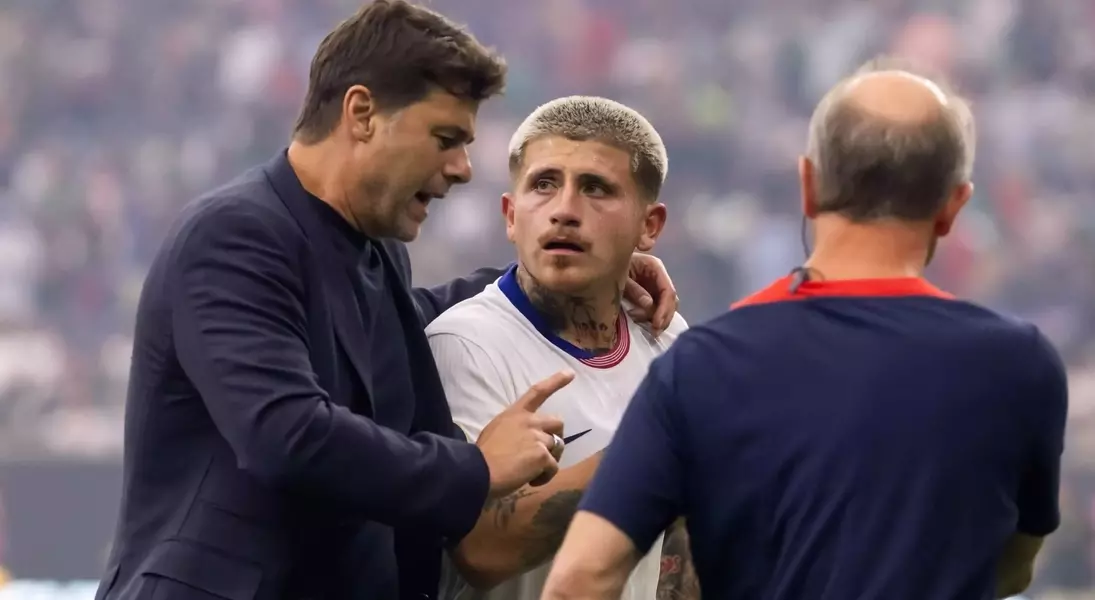

Mauricio Pochettino's recent comments lauding Major League Soccer have reignited a persistent discussion concerning the caliber of MLS and its contribution to the U.S. Men's National Team's roster. This shift in coaching philosophy, prioritizing domestic league talent, marks a departure from previous eras that heavily favored European-based players. The ongoing debate centers on whether MLS adequately prepares athletes for the demanding international stage, especially with the upcoming 2026 World Cup drawing nearer. Pochettino's embrace of MLS players underscores a growing recognition of the league's competitive evolution and its potential to nurture top-tier talent for the national squad.
This renewed focus on MLS talent comes at a crucial juncture for the USMNT, as they navigate roster selections in preparation for a World Cup on home soil. The changing dynamics of player availability, with key European-based players sidelined, have inadvertently created opportunities for MLS standouts to prove their worth. Pochettino's confidence in MLS, as evidenced by his current player selections, challenges conventional wisdom and suggests a future where domestic league experience is valued equally, if not more, than playing abroad. This approach could herald a new era for the USMNT, fostering a more diverse and locally-sourced player pool.
The Evolving Role of MLS in USMNT Player Selection
Mauricio Pochettino's staunch defense of Major League Soccer as a viable training ground for U.S. Men's National Team players has sparked considerable discussion within soccer circles. His assertion that MLS offers a competitive environment, potentially on par with some European leagues, directly challenges the long-standing belief that European experience is paramount for national team readiness. This perspective is particularly noteworthy given his European coaching background and represents a significant shift from the views of previous USMNT managers like Jurgen Klinsmann, who often expressed reservations about the league's ability to adequately prepare players for international competition. Pochettino's willingness to select MLS-based players for critical upcoming friendlies signals a pragmatic approach to team building, acknowledging the league's progress and its growing pool of talent.
The debate surrounding MLS's quality and its impact on the USMNT is far from new, but Pochettino's endorsement injects fresh impetus into the conversation. Historically, there has been a strong bias towards players competing in Europe's top leagues, driven by the perception of higher intensity and tactical sophistication. However, MLS has undergone considerable development in recent years, investing in youth academies and improving overall league standards. Pochettino's comments suggest that he recognizes this evolution, viewing MLS not as a stepping stone to Europe, but as a legitimate platform for players to hone their skills and demonstrate their national team potential. This evolving outlook could significantly influence future USMNT roster compositions, promoting a more balanced representation of domestic and international talent and challenging the notion that a European club affiliation is a prerequisite for national team success. The increasing number of MLS players in the national team fold, including those who have opted to return from Europe, underscores a changing landscape where the value of consistent playing time in a competitive domestic league is increasingly acknowledged.
Pochettino's Strategic Vision and MLS Talent Integration
Pochettino's strategic assessment of the USMNT player pool, identifying a broad selection of 60 to 65 candidates, highlights his commitment to exploring all avenues for talent acquisition. His preference for MLS players in key roles, particularly in the absence of several prominent European-based players, demonstrates a tactical shift aimed at maximizing the team's potential ahead of the 2026 World Cup. This approach emphasizes the competitive nature of MLS, suggesting that it provides sufficient challenge and development opportunities for national team aspirants. By incorporating more domestic talent, Pochettino is not only broadening the player pool but also fostering a stronger connection between the national team and the burgeoning soccer landscape within the United States.
The integration of MLS talent into the USMNT aligns with a broader strategy of building a robust and adaptable squad. Players like Diego Luna and Paxten Aaronson, who have either benefited from or returned to MLS for consistent playing time, exemplify this trend. Their decisions to prioritize regular minutes and central roles within MLS clubs, rather than sporadic appearances in Europe, reflect a pragmatic understanding of what is required to remain relevant for national team selection. This strategy not only provides these players with invaluable experience in high-pressure situations but also showcases MLS as a league capable of fostering top-tier performers. Pochettino's continued reliance on and advocacy for MLS talent signals a long-term vision for the USMNT that leverages the strengths of the domestic league, ensuring a steady pipeline of competitive players who are well-prepared for the rigors of international soccer. This philosophical shift underscores a growing confidence in MLS's capacity to contribute significantly to the national team's success on the global stage.
