
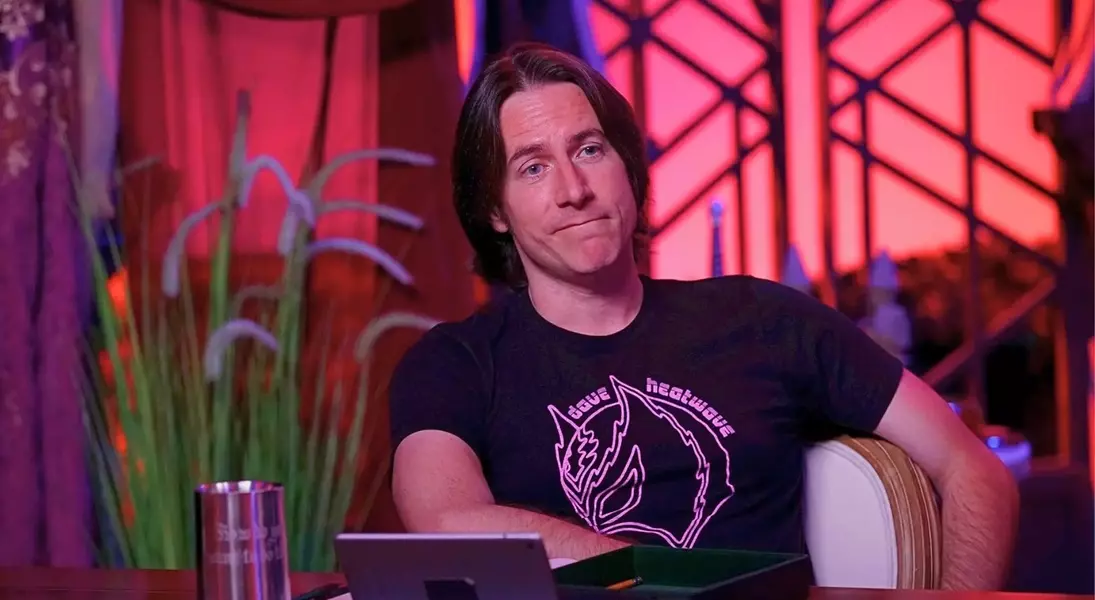
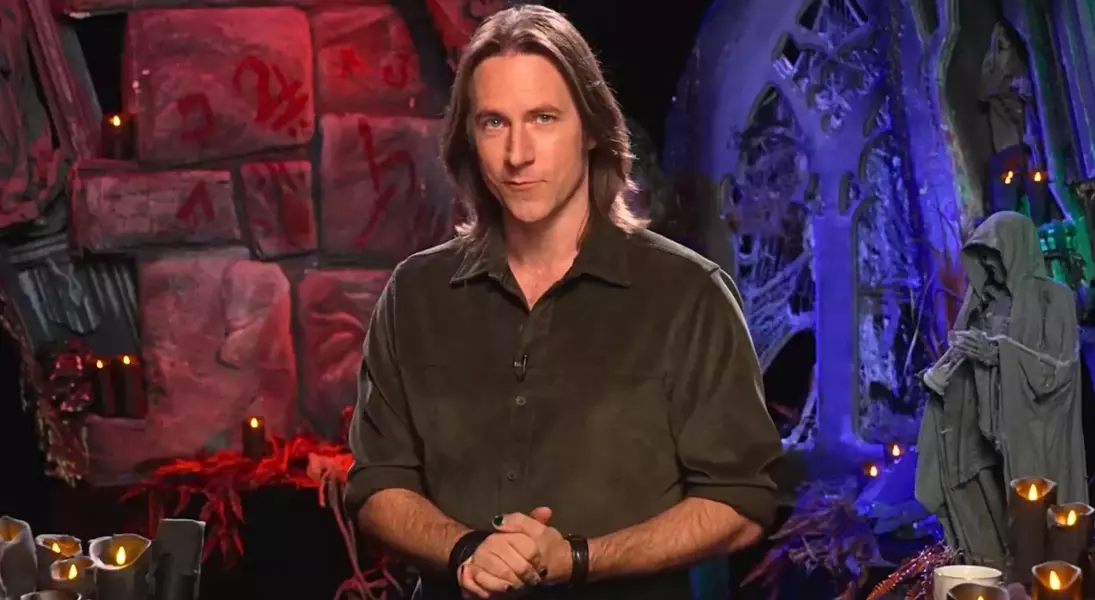
Critical Role's fourth campaign launched with ambitious designs, introducing a new Dungeon Master, Brennan Lee Mulligan, an expanded 13-player cast, a West Marches-style format, and the rich, fantastical world of Aramán. Despite meticulous preparation, the improvisational nature of Dungeons & Dragons ensures that player actions can unexpectedly steer the narrative. This proved true when Matthew Mercer, portraying Sir Julien Davinos, performed an unscripted act that fundamentally reoriented the campaign's direction and the destiny of a key character, underscoring the collaborative and unpredictable essence of tabletop role-playing.
The initial episode of Campaign 4 immersed players in Aramán, particularly the political undercurrents of Dol-Makjar. A central figure, Thjazi Fang, a revolutionary hero responsible for the Falconer’s Rebellion, was depicted as meeting his demise by hanging. His funeral followed shortly after, revealing a character both revered and reviled. It was at this juncture that Matthew Mercer, embodying Sir Julien Davinos, irrevocably changed the narrative. His character's decision to spit upon Thjazi’s remains, a seemingly minor act, had profound and unforeseen consequences for the trajectory of Thjazi’s story and the entire Campaign 4.
The animosity between Thjazi and Julien was a long-standing plot point, rooted in Julien's belief that his father's alliance with Thjazi during the rebellion led to his family's downfall. This deep-seated resentment made the revelation in episode 31, 'Trick of the Light,' even more impactful: Thjazi’s soul, evading the necromantic House Tachonis, had concealed itself within Julien’s shadow. This twist created a compelling dynamic, trapping the hated revolutionary with his most ardent detractor. Dungeon Master Mulligan later disclosed in a September 1 Instagram Q&A that Julien’s irreverent act at Thjazi's funeral opened up entirely new narrative possibilities for Thjazi.
Mulligan emphasized that while a Dungeon Master plans extensively, leaving room for player creativity is paramount. He admitted to having preliminary ideas about Thjazi’s fate but not a fully developed end. Mercer’s spontaneous action disrupted these initial plans, prompting Mulligan to scrap his original intentions and embrace the new direction. This highlights a fundamental aspect of TTRPGs: player choices, even those made without foreknowledge of their impact, are crucial and can lead to richer, more dynamic storytelling.
Any experienced Dungeon Master recognizes the futility of over-planning, as players inevitably introduce unexpected elements that necessitate improvisation. These unplanned turns, while potentially challenging, compel the DM to innovate and reshape the narrative in response to player actions. This dynamic exchange between narrator and players is arguably the most captivating aspect of tabletop role-playing games, transforming it into a shared storytelling endeavor rather than a rigidly controlled one.
Mulligan's insight into the significance of player autonomy is particularly illuminating. While the DM's initial vision for Thjazi remains unknown, it's clear that Mercer's antagonistic interaction with Thjazi's corpse dramatically altered it. This pivotal moment not only reshaped Mercer’s character arc but also had ripple effects on other players' characters. Thimble (Laura Bailey) gained renewed hope that her friend's soul might be recoverable, a sentiment she hadn't experienced since the campaign's start. Similarly, Halandil Fang (Liam O’Brien), who had grappled with his brother Thjazi's legacy, now has the prospect of achieving closure. Mercer's embodiment of Julien's hatred for Thjazi unleashed a cascade of narrative consequences for Campaign 4, demonstrating his exceptional talent as both an actor and storyteller. Coupled with Mulligan's adaptability in abandoning initial plans for superior, emergent narratives, Campaign 4 promises continued intrigue and unexpected developments.
