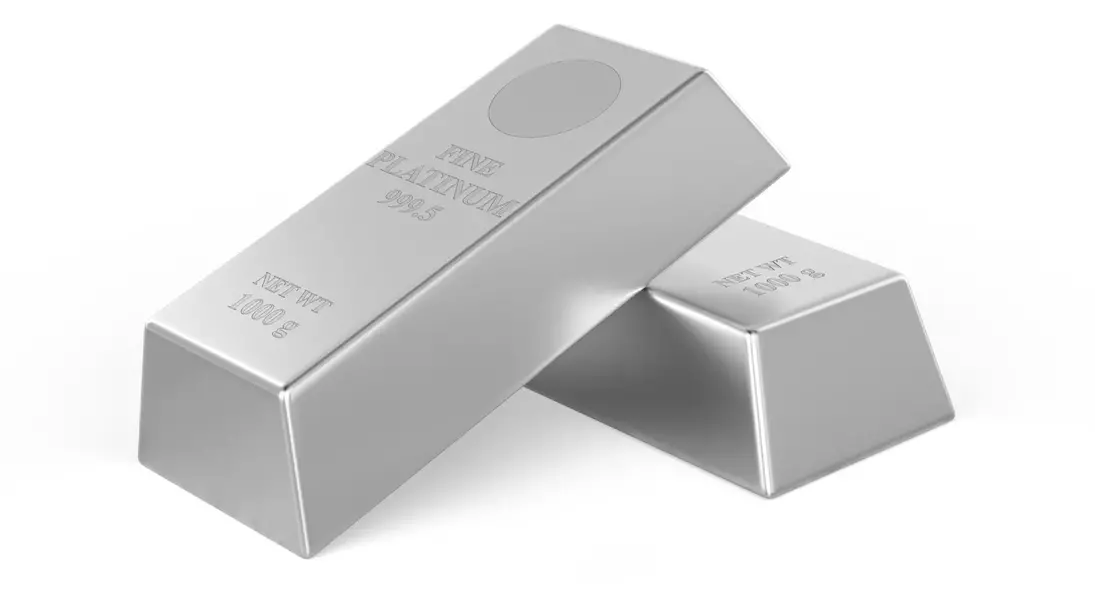
In recent trading sessions, the precious metal platinum has seen a notable dip in its market value, with prices descending below the psychological threshold of $1,900 to settle around $1,880. This movement reflects a broader market sensitivity to prevailing macroeconomic conditions, even as other commodities like oil experience their own price fluctuations. The interplay of various financial indicators, including government bond yields and inflationary pressures, continues to exert significant influence on the trajectory of platinum.
Platinum's Retreat: Market Factors and Future Projections
On Monday, March 23rd, Ezequiel Gomes reported that platinum (XPTUSD:CUR) witnessed a sustained downward trend, pushing its spot price to approximately $1,880. This occurred after the metal had already breached the $1,900 level earlier in the day. Interestingly, this decline took place amidst a sharp reversal in crude oil prices, which slid back towards $100 per barrel. Typically, a drop in oil might offer some relief to other markets, but for platinum, this was not the case. The enduring elevation of U.S. 10-year Treasury yields, which remained near 4.39%, alongside persistent concerns about inflation, appeared to be the dominant forces suppressing platinum's value. Market analysts are now closely monitoring key technical levels for the metal's near-term direction. A sustained rebound and stabilization above the $1,900 to $1,925 range are deemed essential to avert further fragility. Conversely, a failure to achieve this could see platinum testing lower support levels, with $1,850 identified as the next significant downside target. The current market environment underscores how interconnected global economic indicators are, with precious metals like platinum reacting not just to their direct supply and demand but also to the wider financial landscape.
This recent market behavior serves as a stark reminder of the intricate dance between various global economic indicators. The price of platinum, often seen as a safe-haven asset or an industrial metal, is clearly not immune to the gravitational pull of broader financial forces. For investors and market watchers, the episode highlights the importance of a holistic view, considering not just commodity-specific news but also the overarching macro environment. The market's inability to find solace in falling oil prices suggests that the current concerns over yields and inflation are deeply entrenched, demanding careful consideration in future investment strategies. It prompts a reflection on diversification and risk management, especially in times when traditional market correlations appear to shift.
