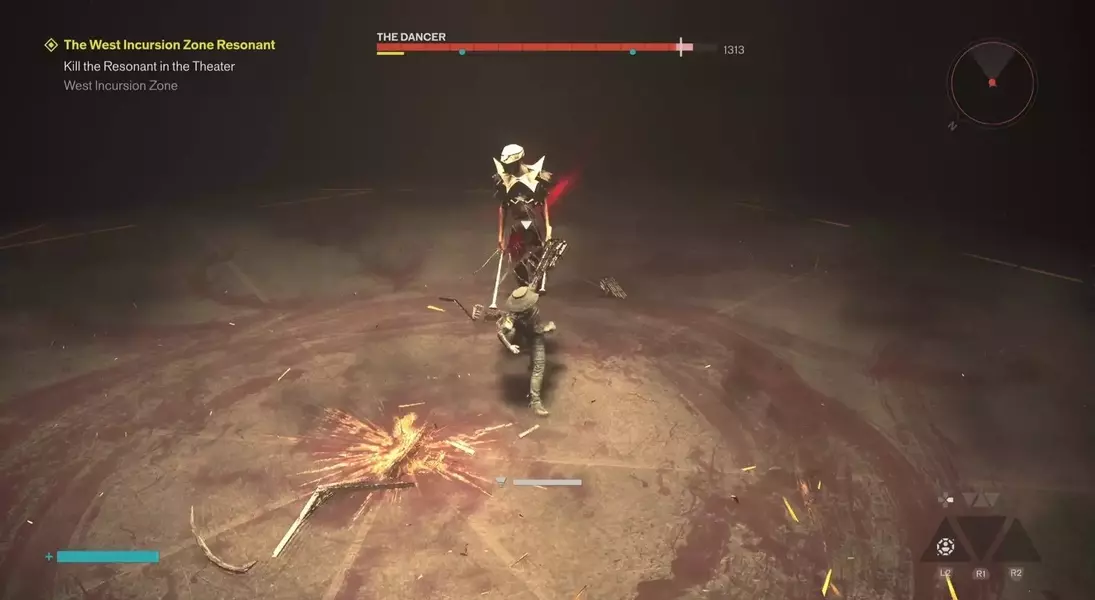
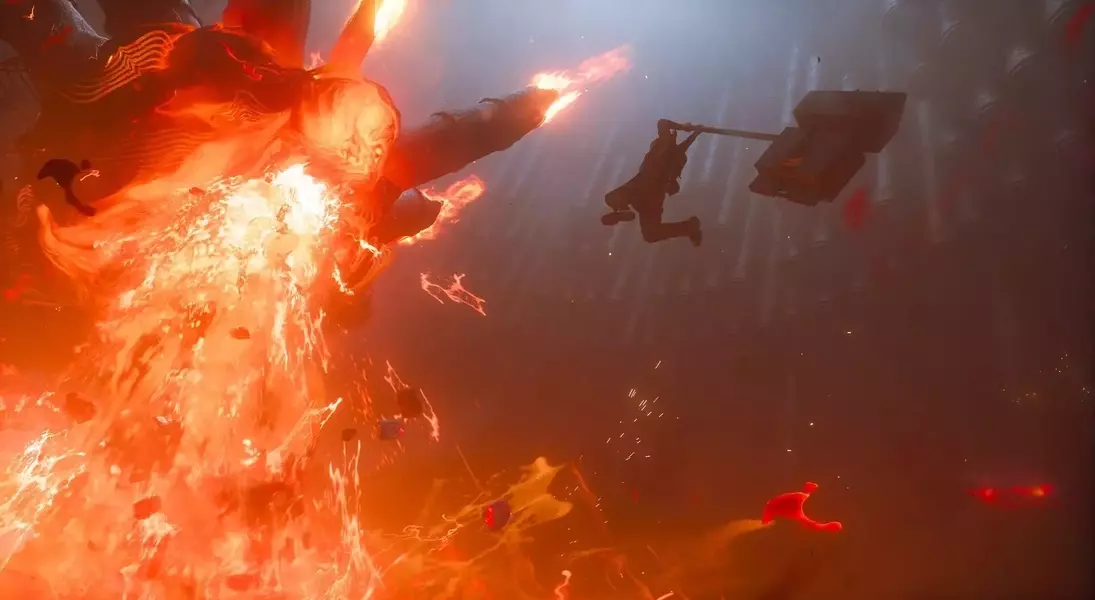
Video game boss battles, a cornerstone of the gaming experience since the medium's early days, serve a multitude of purposes. They can mark significant plot advancements, guard valuable treasures, or simply provide a challenging obstacle. These encounters range from entirely unique adversaries with novel mechanics to enhanced versions of previously encountered foes. Regardless of their specific form, successfully conquering a boss battle consistently delivers a profound sense of accomplishment and satisfaction to the player.
However, this satisfaction can be severely undermined by a particular design choice: multi-stage boss fights. This mechanic, particularly prevalent in games by developers like FromSoftware and their 'Souls' series, involves bosses transforming into more formidable versions of themselves mid-battle, often with completely new attack patterns, animations, and, most controversially, a fully replenished health bar. This regeneration of boss health, while the player's resources remain depleted, frequently leads to intense frustration, stripping away the hard-earned feeling of victory and replacing it with a sense of unfairness. The expectation of a straightforward challenge is subverted, creating a jarring and often unwelcome experience.
The Growing Discontent with Multi-Phase Boss Mechanics
The increasing prevalence of multi-stage boss fights has become a significant point of contention within the gaming community. Players often express dismay when, after meticulously whittling down a boss's health bar, the enemy abruptly enters a new phase, fully healed and armed with an expanded repertoire of attacks. This design choice can feel particularly egregious when the player is not granted any similar advantage, such as a health or resource replenishment, creating a stark imbalance that detracts from the enjoyment of the battle. The experience can transition from an engaging challenge to a tedious grind, as players are forced to re-engage with a perceived 'new' enemy after already overcoming a substantial portion of the original encounter.
A primary source of frustration stems from the expectation versus reality gap. In games where multi-stage bosses are a known quantity, like the 'Souls' series, players often approach each boss with the anticipation of a hidden second form. This prior knowledge, while still challenging, prepares them for the evolving nature of the fight. However, when this mechanic appears unexpectedly in games that haven't established such a precedent, it can feel like a cheap trick, sabotaging the player's hard-won progress. This sentiment is amplified when the initial phase of the fight is already demanding, meaning players must repeatedly conquer a difficult segment just to reach and learn the more formidable later stages, making the learning curve unnecessarily steep and repetitive.
Refining Multi-Stage Boss Encounters for Enhanced Player Experience
While multi-stage boss battles inherently possess the potential for engaging and memorable gameplay, their current implementation often falls short of delivering a consistently positive player experience. The core issue frequently lies in the unfair advantage granted to bosses, such as full health regeneration between phases, which feels punitive to players who have already invested significant effort. This design decision often transforms what could be epic confrontations into frustrating exercises in attrition, where the player's sense of achievement is overshadowed by exasperation. Games like 'The Legend of Zelda: Tears of the Kingdom' offer a glimpse into how these multi-phase encounters can be executed effectively, by introducing transformations that enhance the narrative and spectacle without arbitrarily penalizing player progress.
To mitigate the prevalent dissatisfaction, game developers should consider implementing more player-friendly mechanics within multi-stage boss fights. A simple yet highly impactful solution would be to introduce checkpoints between different boss phases. This would alleviate the tedium of having to re-conquer earlier stages after failing a later one, allowing players to focus their learning and efforts on the current, more challenging phase. Alternatively, if a boss transition involves a significant power spike, developers could avoid full health regeneration for the boss, or at least offer the player a comparable advantage. By re-evaluating these design choices, developers can transform multi-stage boss battles from sources of irritation into truly rewarding and epic confrontations, preserving the crucial sense of player accomplishment and fun.
