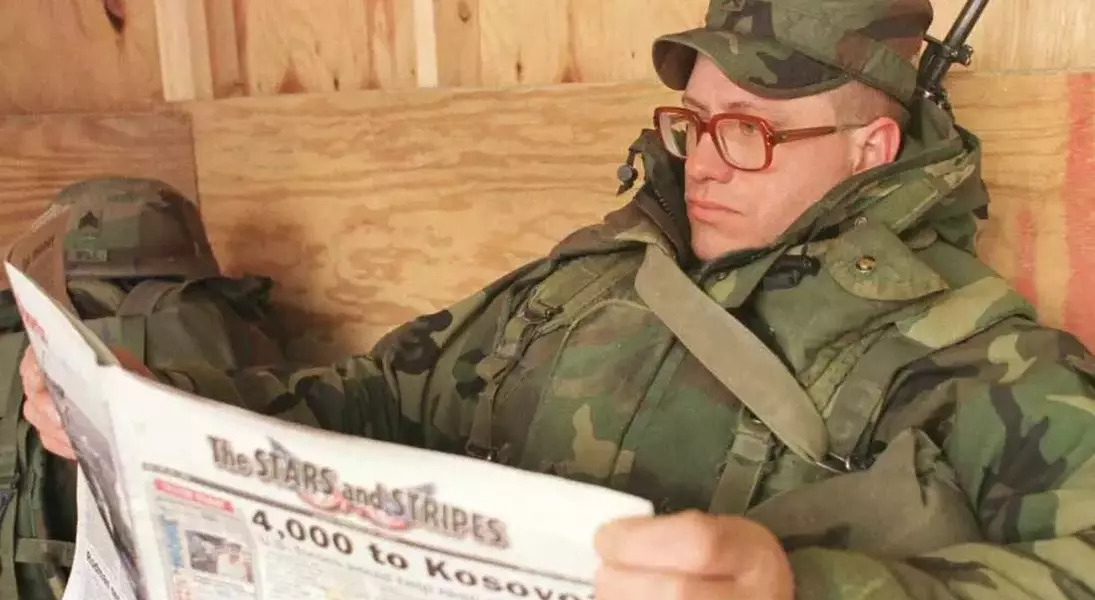
The United States Department of Defense has recently imposed stricter regulations on "Stars and Stripes," an independent newspaper serving the military. This move follows criticisms from a senior Pentagon representative who accused the publication of being preoccupied with "woke" issues. The new directives, outlined in a memo, seek to "modernize" the newspaper's operations and content. This development has sparked apprehension regarding the publication's journalistic autonomy and the potential consequences for its staff members who are also part of the military.
The Pentagon's spokesperson, Sean Parnell, publicly announced these changes, stating that the newspaper would be reoriented to its original mission: providing independent news for service members stationed abroad. He emphasized that "Stars and Stripes" would evolve to align with industry trends and the media consumption habits of newer generations of military personnel. However, the memo's implications, particularly the phrase "consistent with good order and discipline," have raised questions about the editorial freedom of the newspaper's staff, especially those who are active military members. Editor-in-chief Erik Slavin expressed concern that reporting on topics deemed inconsistent with this directive could put his staff at risk of legal repercussions, including court-martial.
The Pentagon's increased oversight comes after previous attempts to curtail the newspaper's independence during the Trump administration. Despite a congressional mandate in the 1990s that granted "Stars and Stripes" editorial autonomy, the Defense Department withdrew a federal regulation supporting this mandate in January. The new memo further centralizes control by requiring the newspaper's ombudsman to route information intended for Congress through the Department of Defense first, rather than directly to lawmakers. This shift indicates a broader effort by the Pentagon to exert greater influence over various media entities.
These recent actions are part of a larger pattern observed under Defense Secretary Pete Hegseth, who, along with allies, has sought to impose more stringent controls on media organizations. In September, Hegseth introduced a policy demanding media outlets commit to only disseminating information officially sanctioned by defense officials. This policy led many established news organizations, including NPR, to forgo their press passes rather than comply with the new terms, highlighting the growing tension between the Pentagon and the press.
The revised regulations are expected to significantly impact the daily news-gathering capabilities of "Stars and Stripes." The memo explicitly forbids the publication from using most stories from wire services like the Associated Press and Reuters. This restriction means that the newspaper will be unable to cover crucial global events, such as the ongoing conflict in Iran or other combat zones where its military readership might be deployed, if it does not have its own journalists on the ground. Additionally, the new rules extend to lighter content, prohibiting the use of wire services for popular news like college basketball tournaments and even banning the publication of comic strips. Editor-in-chief Slavin acknowledged the need to find alternative information sources to compensate for these new limitations.
The tightening of control over "Stars and Stripes" has drawn criticism from press freedom advocacy groups. Organizations like PEN America have voiced alarm, stressing the importance of the newspaper's independent reporting for service members and their families. They argue that the content should not be shaped or dictated by the very officials the publication is meant to hold accountable. This situation underscores a continuing debate about media independence within military contexts and the balance between national security interests and journalistic freedom.
