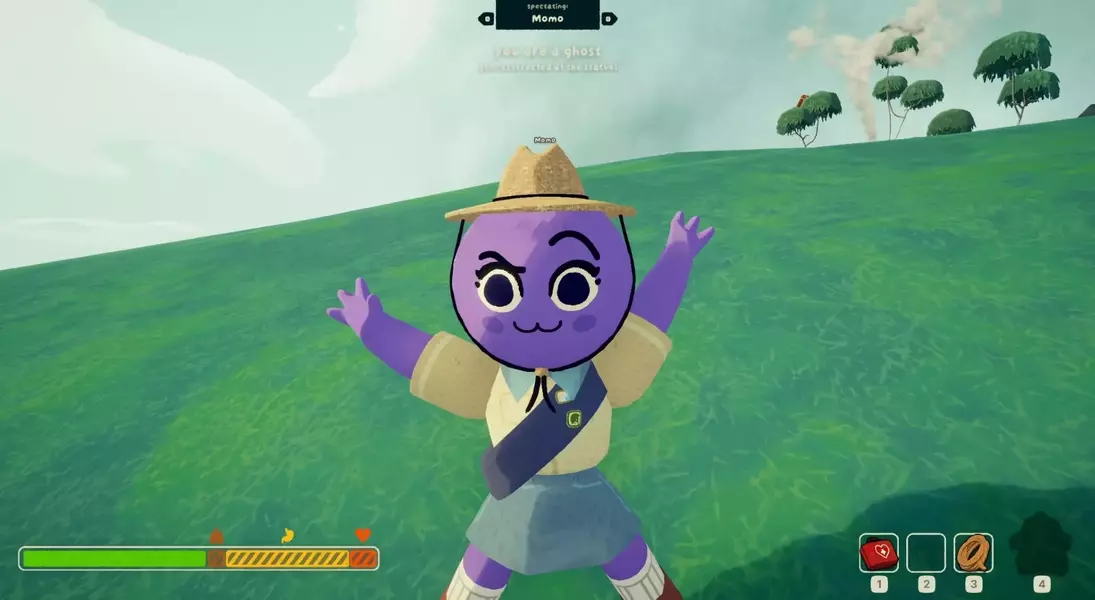

The article explores a fascinating insight into game pricing strategy, particularly how players perceive game costs. It highlights the unique pricing philosophy employed by the developers of the co-op game "Peak," suggesting an unconventional approach to value perception that challenges traditional economic models in the gaming industry.
Unlocking Value: The Art of Perceived Pricing
The Unexpected Influence of Minimal Price Differences
It's a common scenario: a new cooperative indie game emerges, offered at an almost negligible cost. Instantly, a sense of obligation arises to rally friends, compelling them to invest a small sum in a game promising hours of entertainment. This familiar pattern often involves enthusiastic persuasion, advocating for a $5 purchase with the conviction that it will lead to countless shared gaming sessions.
Personal Reflections on Gaming Investments
The author readily admits to being the primary instigator in such scenarios. There's a history of convincing friends to engage in various digital escapades—from role-playing as legal sock puppets, to navigating treacherous wizard towers as magical familiars, and even attempting to contain supernatural entities. However, among these, "Peak" stands out as a particularly compelling recommendation, not just for its exceptional cooperative gameplay but also for its remarkable affordability.
Developer's Philosophical Take on Game Valuation
Nick Kaman, a co-creator of "Peak," sheds light on the team's pricing philosophy in an interview with Game File. He humorously recounts their internal discussions, pondering the true value of a game in the player's mind. Kaman suggests that a $5 game is perceived as such, but oddly, a $6 game still feels like $5. Similarly, $4 registers as $5, $3 as $2, and a $2 game is virtually considered free. This psychological quirk underpins their pricing strategy.
An Unapologetic Embrace of Pricing Psychology
This candid admission resonates deeply with the author's own purchasing habits and recommendations. It represents a form of cognitive reframing, almost an irrational justification, that has proven effective so far. The author, therefore, sees no reason to abandon this personal approach to evaluating game costs, despite its unconventional nature.
Strategic Pricing Tiers and Player Perception
Kaman further elaborates on their tiered pricing model: "$12, that's $10. But $13 is $15." He emphasizes that "$8 is still $5; it doesn't become $10." The most significant psychological leap, according to Kaman, occurs between $7.99 and $8, where $7.99 is still grouped with the $5 perception. This precise understanding led them to conclude that $8 represents the optimal price point for their game.
Beyond the Price Tag: The Enduring Value of "Peak"
Positioned under $8, this cooperative climbing game offers exceptional value. The author contends that its price is almost too modest, given the immense enjoyment it has provided. A memorable experience recounted from a "Peak" review involved a game of Marco Polo amidst a virtual snowstorm, illustrating the game's capacity for creating hilariously chaotic and memorable moments. These instances consistently affirm the initial enthusiastic recommendation, making $8 the perfect sweet spot for a title like "Peak."
