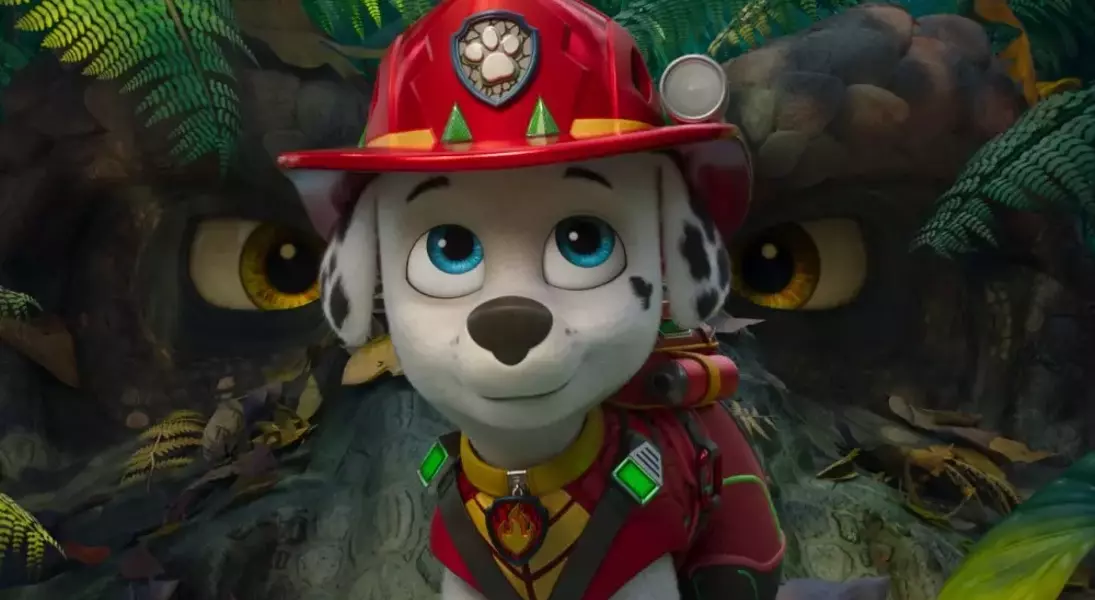
"PAW Patrol: The Dino Movie" marks the third cinematic venture for the popular Canadian children's franchise, delivering an experience that, while visually engaging, struggles with thematic coherence. The film presents admirable animation and production design, particularly in its depiction of a turbulent sea storm and a lush, dinosaur-inhabited island. However, its narrative choices and underlying messages about progress versus nature leave a critical viewer with mixed feelings, even as it targets a younger demographic.
The story follows the ever-optimistic PAW Patrol, a team of anthropomorphic puppies equipped with high-tech gear and vehicles, as they inadvertently discover a secluded island teeming with dinosaurs. This discovery, initiated by their encounter with a paraplegic dog named Rex who has harmoniously lived among the prehistoric creatures, sets in motion a chain of events that challenges the film's intended heroic message. Despite the visual splendor, the film's portrayal of the puppies' actions—alerting authorities to the island's existence and thus inviting external intrusion—highlights a problematic worldview where modernity's encroachment on a natural paradise is not critically examined but rather presented as a consequence of villainous greed, even though the dogs themselves instigate the disruption.
Ultimately, the movie finds its footing in a series of well-executed action sequences as the antagonists' greed leads to environmental catastrophe, forcing the pups and dinosaurs to unite. These moments, set against a backdrop of volcanic activity, inject much-needed tension and offer a glimpse of character development for Marshall, the firefighting Dalmatian. While the film may not resonate deeply with adults due to its lack of layered humor, it provides a serviceable adventure for its core young audience, reminding parents of the fleeting nature of childhood entertainment through subtle cultural references like a new Ed Sheeran song for the Backstreet Boys.
This film subtly underscores the pervasive influence of technology and progress, even in narratives intended for children. It serves as a modern fable, prompting viewers to consider the implications of human (or canine) intervention in pristine environments, and the often-complex relationship between discovery, advancement, and preservation. The story, despite its narrative shortcomings, inspires contemplation on the true meaning of heroism and responsibility, encouraging a balanced perspective on innovation and its impact on the natural world.
