Renowned Portuguese producer Paulo Branco has officially started principal photography for his latest venture, “Aqui.” This ambitious dystopian drama, boasting a budget of €4.5 million (approximately $5.3 million), is a cinematic adaptation of Nobel laureate J.M. Coetzee’s critically acclaimed “Jesus” trilogy. The film is currently being shot across various locations in Spain and Portugal under the direction of Tiago Guedes, with a Spanish-language mandate personally stipulated by Coetzee himself. Starring acclaimed actors Manolo Solo and Patricia López Arnaiz, alongside a diverse international cast, “Aqui” promises a unique exploration of profound themes against a timeless backdrop, with Branco aiming for a prestigious premiere at the Cannes Film Festival in 2026.
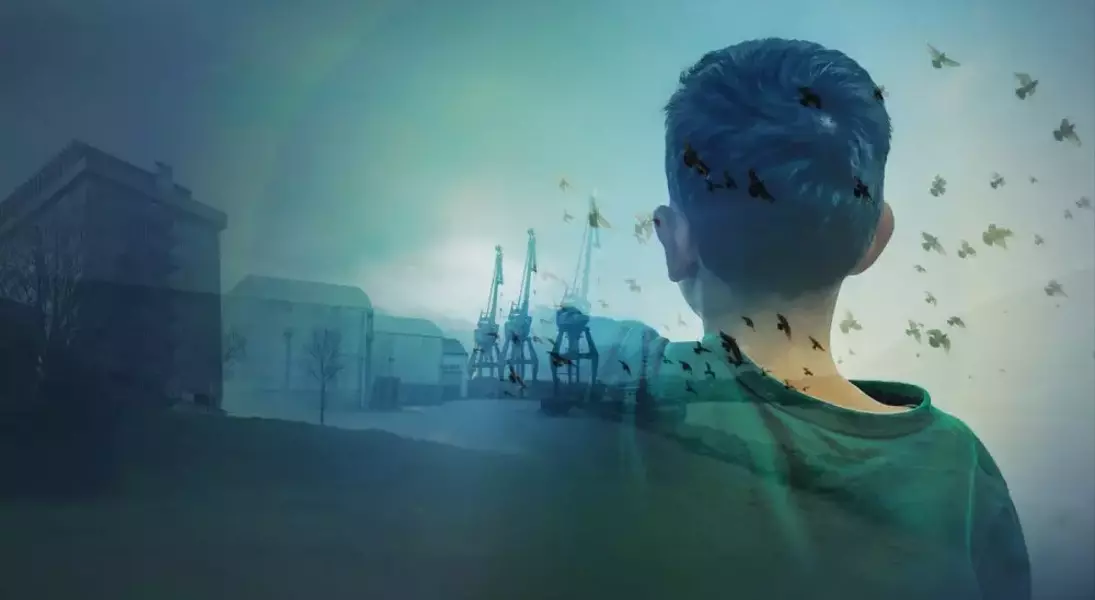
The film “Aqui” draws its narrative from J.M. Coetzee's “Jesus” trilogy, published in the 2010s, which delves into the increasing global influence of the English language and reflects Coetzee's profound engagement with the literature and cultural landscapes of the Global South, particularly Argentina. The story centers on a child refugee named David, portrayed by newcomers Álex Peláez and Hugo Encuentra, who forms an unlikely bond with Simón (Manolo Solo) aboard a vessel bound for an undefined territory. Upon their arrival, Simón encounters Inés (Patricia López Arnaiz), and the trio seeks refuge in a new urban environment where David enrolls in a dance academy, subsequently developing extraordinary abilities.
The cast for “Aqui” is a blend of distinguished Spanish talent and international actors. Manolo Solo, known for his role in “Close Your Eyes,” and Patricia López Arnaiz, from “20,000 Species of Bees,” lead the ensemble. They are joined by Itsaso Arana from “Volveréis,” the legendary Ángela Molina of “Live Flesh” fame, director Fernando Trueba, Argentine actor Daniel Elias from “The Delinquents,” and French luminaries Lambert Wilson, recognized for “The Matrix Reloaded,” and Sergi López, acclaimed for “Map of the Sounds of Tokyo.” This diverse lineup underscores the film’s international scope and artistic ambition.
Paulo Branco, with an illustrious career spanning over 300 films, is recognized as one of Europe's most prolific producers. His extensive portfolio includes collaborations with celebrated auteurs such as David Cronenberg, Paul Auster, Wim Wenders, and Raúl Ruiz. Branco expressed a deep sense of responsibility regarding Coetzee’s trust, noting his growing interest in literary adaptations and the inherent artistic duty to honor the original author’s vision. He drew parallels to his experience with David Cronenberg’s adaptation of Don DeLillo’s “Cosmopolis,” highlighting the delicate balance required in bringing complex literary works to the screen.
The production of “Aqui” is a Franco-Portuguese co-venture, orchestrated by Branco’s production companies, Alfama Films based in Paris and Leopardo Films in Lisbon. Substantial support has been garnered from various institutions, including France’s CNC, Portugal’s ICA – Institute of Cinema and Audiovisual, the PIC – Tourism and Cinema Support Fund, RTP, the Lisbon City Council, and the Porto Film Commission. Director Tiago Guedes, an alumnus of the New York Film Academy and a prominent figure in Portuguese film, television, and theater, expressed his long-standing ambition to adapt Coetzee’s novels, describing the “Jesus” trilogy as a “hypnotic 800-page allegory” that poignantly explores themes of fundamental solitude.
The 65-day shooting schedule for “Aqui” will feature brutalist architectural sites across Portugal, specifically in cities like Porto, Viana do Castelo, Coimbra, and Lisbon, complemented by scenic port locations in Spain’s Cantabria region. Guedes aims to construct a timeless world within the film, utilizing objects, landscapes, and architecture that evoke a sense of being suspended in time, deliberately excluding modern technology to create an aesthetic reminiscent of the mid-20th century, specifically between the 1940s and 1970s. This creative decision is intended to enhance the dystopian and allegorical nature of Coetzee’s original work.
At 75, Paulo Branco is increasingly directing his focus towards production activities within Portugal, citing both political and professional considerations. Having experienced his childhood under a fascist regime in Portugal, Branco articulated his unwillingness to expend energy on what he perceives as an “inquisitorial spirit” currently prevalent in France. This shift reflects a personal and artistic commitment to his home country. In addition to “Aqui,” Branco is also overseeing other film adaptations, including Sérgio Graciano’s “Memories of Prison,” based on Camilo Castelo Branco’s novel, and Mário Barroso’s “Lavagante,” an adaptation of José Cardoso Pires’ final work, demonstrating his continued dedication to bringing significant literary works to the cinematic stage.
