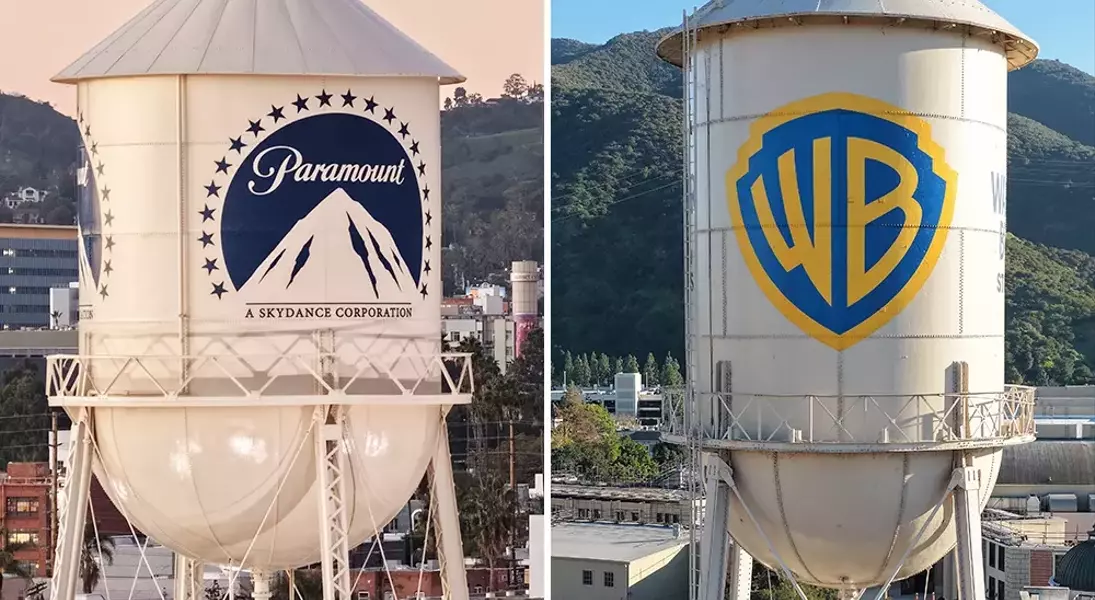
Paramount is seeking a substantial financial guarantee of nearly $1.9 billion from the states and the Writers Guild of America (WGA). This demand stems from the significant financial ramifications and operational delays incurred as their proposed merger with Warner Bros. Discovery faces ongoing antitrust litigation. The protracted legal battle has deferred the merger's completion, leading to considerable economic strain and strategic hindrances for Paramount. The company argues that the bond is essential to mitigate the mounting losses and operational uncertainties caused by the extended legal proceedings.
Paramount's legal maneuver is a direct response to the continued delay of its merger with Warner Bros. Discovery, which has been stalled by antitrust lawsuits from several states and the WGA. The company asserts that the court-ordered hold on the merger has resulted in substantial financial losses, including a "ticking fee" of approximately $7 million daily payable to Warner Bros. Discovery shareholders, alongside broader impacts on integration plans, content investment, and employee morale. Paramount's motion highlights the statutory requirement for plaintiffs to post a bond covering potential harm from such litigation, especially when a transaction is halted, emphasizing the need for financial protection should they ultimately prevail in court.
Paramount's Stance on Merger Delays and Financial Implications
Paramount has formally moved the court to mandate a $1.88 billion bond from the plaintiffs, including a coalition of 12 states and the WGA. This request is a direct consequence of the prolonged delay in its planned merger with Warner Bros. Discovery, a delay primarily caused by pending antitrust lawsuits. Paramount asserts that the injunction preventing the merger's closure, which they initially agreed to, is inflicting substantial financial damage. The company is particularly concerned about the escalating costs, such as daily fees to Warner Bros. Discovery shareholders and the broader economic impact of deferred integration and content investment, all of which underscore the urgency of their bond request.
The motion filed by Paramount emphasizes that the continued postponement of the merger until at least March 2027 will lead to a considerable increase in financial burdens, including over $1.2 billion in ticking fees alone by the scheduled trial conclusion. Beyond these direct monetary costs, Paramount points to intangible yet significant losses related to the inability to integrate operations, invest in new content, and foster creative talent under a unified entity. The company stresses that both Paramount and Warner Bros. Discovery employees are experiencing harm due to the uncertainty generated by the delay. Citing the Clayton Act, Paramount argues that a bond is a standard legal requirement to ensure that if the plaintiffs' lawsuits are unsuccessful, the injured party has a means of recovering damages, thereby protecting against unjustified economic disruption.
Antitrust Challenges and Path Forward for the Merger
The core of the issue lies in the antitrust lawsuits filed by 12 states, led by California, and the WGA, which aim to block the proposed $111 billion merger between Paramount and Warner Bros. Discovery. These lawsuits allege that the consolidation would unfairly reduce competition in key entertainment sectors, including theatrical films, blockbuster productions, and basic cable television, as well as diminish opportunities for writers. Although the merger has received regulatory approvals from 68 other jurisdictions globally, these domestic legal challenges represent the primary remaining obstacles. The states' and WGA's commitment to pursuing a trial, rather than a settlement, highlights the deep-seated concerns regarding market concentration and its potential negative impact on the industry.
Despite Paramount's confidence in the pro-competitive nature of the merger and its readiness to defend the transaction in court, the plaintiffs, particularly California Attorney General Rob Bonta, have expressed skepticism regarding proposed behavioral remedies. Bonta insists on structural changes to address anti-competitive concerns, viewing past behavioral agreements as ineffective. The ongoing legal battle is poised for a trial in March 2027, a timeline that underscores the significant, long-term implications for all parties involved. Paramount remains steadfast in its belief that the merger will ultimately benefit consumers and entertainment workers globally, yet the path to finalization is clearly fraught with substantial legal and financial hurdles.
