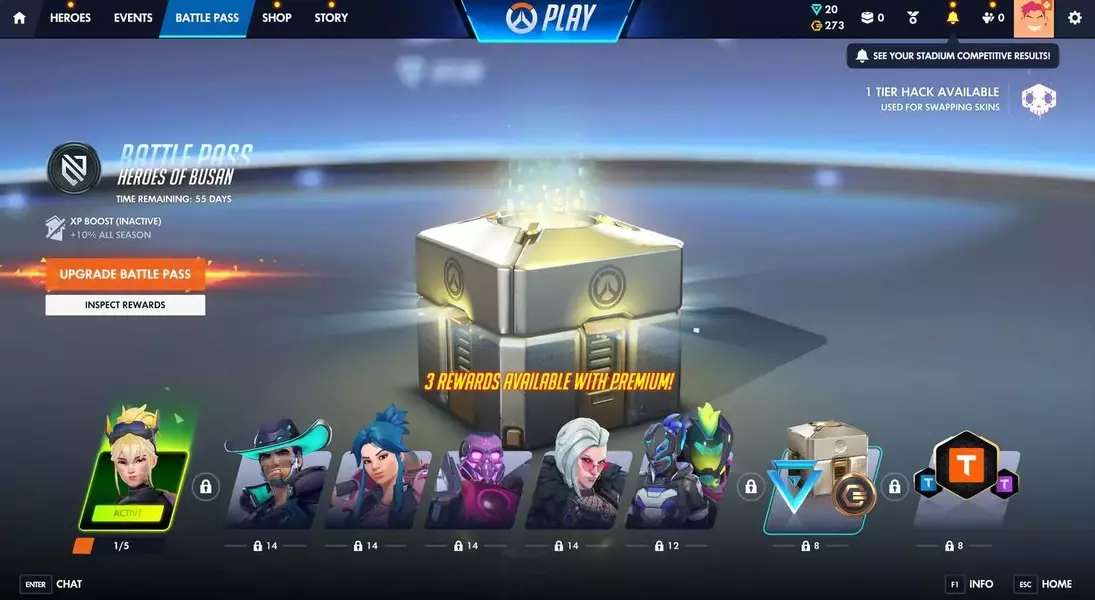
Blizzard Entertainment has rolled out a significant overhaul to its popular game Overwatch's battle pass system for Season 4. While the update aims to enhance player choice in acquiring rewards through a new track-based structure, a contentious element has emerged: the placement of a substantial amount of in-game currency. Both Overwatch gold coins and Mythic Prisms, which were previously distributed more evenly throughout the pass, are now largely confined to the final, most challenging track. This design choice has sparked considerable debate and dissatisfaction within the gaming community, with many players expressing concerns about the increased grind and potential pressure to spend real money.
Overwatch Battle Pass Revamp: A Deep Dive into Player Discontent
In the vibrant world of Overwatch, Blizzard's recent modifications to the battle pass for Season 4 have stirred up a storm of opinions. The core of the revamped system, as articulated by product director Chris McCabe, focuses on empowering players with greater agency over their reward acquisition. Instead of a linear progression, the pass is now segmented into distinct tracks, each culminating in a unique cosmetic skin and interspersed with various other rewards. This modular approach intends to allow players to prioritize the content they desire most, fostering a more personalized reward experience.
However, the apparent benevolence of this new system is overshadowed by a critical adjustment to how in-game currencies are distributed. A significant cache of 400 gold Overwatch coins and 30 Mythic Prisms, crucial for obtaining new skins and customization options, is now exclusively available upon the completion of the very last track. Crucially, this final track only becomes accessible after a player has diligently worked through all preceding tracks. This structure effectively forces players to complete the vast majority of the battle pass, analogous to reaching tier 72 in older battle pass iterations, before they can access a substantial portion of these valuable resources. This model diverges from previous seasons where such free rewards were strategically spread out, offering players opportunities to earn smaller amounts of currency at regular intervals, often enough to contribute towards future battle passes or desired shop items without additional financial investment. The change has drawn comparisons to monetization strategies observed in other titles, such as NetEase's Marvel Rivals and Call of Duty's seasonal passes, suggesting a broader industry trend towards more aggressive gating of free rewards.
Player sentiment, particularly on platforms like Reddit, reflects a palpable sense of frustration. Many users lament the removal of the flexibility to earn enough coins to fund subsequent battle passes or purchase specific shop items without having to complete nearly the entire pass. One user articulated their annoyance by stating, "That's kinda annoying sometimes i'd use a few coins earned to purchase the battle pass without having to spend for the season." Another swiftly concluded, "That's probably why they made the change, actually." The community perceives this as a deliberate move to penalize free-to-play (F2P) players and potentially drive them towards purchasing the ultimate battle pass. Furthermore, the distribution of Mythic Prisms, essential for customizing mythic skins, has also shifted. Previously, 10 prisms were awarded roughly every 10 battle pass tiers. Now, after completing the initial starter track, players receive 10 prisms at tier 11 within each optional track, with the remaining 30 prisms tucked away in the final track. Given that a complete mythic skin set can cost up to 110 prisms, and real-money conversions are steep ($10 for 10 prisms, $25 for 30), this change makes acquiring full customization options significantly more challenging for those not dedicating extensive play hours.
The time commitment required to complete the battle pass has also become a point of contention. While it was previously possible to clear all 80 tiers by playing approximately six games per day, equating to roughly an hour of gameplay, this expectation now feels more burdensome for many players. In an age where individuals juggle work, school, and family responsibilities, dedicating an hour daily to a single game can be a considerable challenge, especially for those who wish to explore other gaming experiences. Despite Blizzard's recent emphasis on player feedback regarding interface and map design, it remains uncertain whether these significant battle pass adjustments are subject to similar revision, leaving the player base in a state of anticipation and concern.
The recent alterations to Overwatch's battle pass system serve as a potent reminder of the delicate balance between game monetization and player satisfaction. While companies naturally seek to maximize revenue, aggressive gating of in-game currencies risks alienating a dedicated player base. This situation highlights the ongoing tension in the free-to-play model, where developers must carefully consider the perceived value and accessibility of rewards to maintain a healthy and engaged community. It underscores the importance of transparent communication and a willingness to adapt based on player feedback to prevent goodwill from eroding. Perhaps a more balanced distribution of rewards, even within a track-based system, could mitigate player frustration and foster a more sustainable and enjoyable gaming experience for all.
