
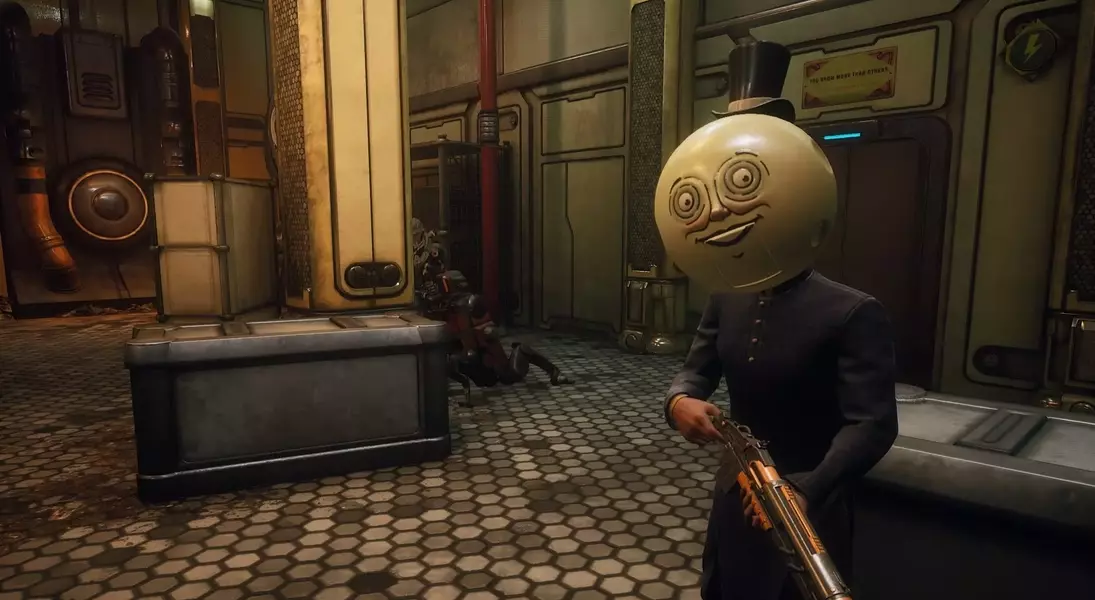
This article explores the deliberate narrative choices made in "The Outer Worlds," particularly its focus on class-based discrimination to the exclusion of other forms. It delves into the challenges faced by game developers in conveying complex social themes and maintaining a consistent tone, as articulated by director Tim Cain. The discussion highlights how attempts to simplify narrative focus can sometimes lead to unexpected tonal discrepancies and player confusion.
Navigating Narrative Nuance: The Tonal Tightrope in Game Development
The Intent Behind Exclusion: Focusing on Class Struggle
In a recent discussion led by Tim Cain, a key figure behind "The Outer Worlds" and co-creator of "Fallout," the intricate nature of narrative tone in video games was brought to the forefront. Cain explained the development team's conscious decision to steer clear of portraying racial or gender-based discrimination within the game's universe. Instead, their narrative was meticulously crafted to concentrate solely on societal class distinctions as the primary form of prejudice. This approach aimed to sharpen the game's critique of capitalist structures by funnelling all discriminatory experiences through this specific lens.
Unintended Consequences: When Simplification Leads to Misinterpretation
However, this concentrated focus, while intentional, inadvertently caused a disconnect for many players. Cain reflected on feedback indicating that the game's tone felt "off." Players, accustomed to broader forms of discrimination, sometimes perceived the class-based struggles as a veiled commentary on other, unaddressed social inequalities. This suggests that even a deliberate narrowing of scope can be misconstrued, highlighting the difficulty in controlling audience interpretation of complex themes, especially when dealing with deeply ingrained societal issues.
The Challenge of Maintaining Narrative Cohesion Across Departments
The complexities of tone extend beyond initial narrative design; they permeate every aspect of game development. Cain pointed out the inherent tension between different departmental goals—for instance, an artist's vision for a unique, class-specific weapon might clash with a game designer's need for balanced loot tables. These internal conflicts necessitate critical decisions: should the overarching narrative tone be preserved at all costs, or should gameplay mechanics and player experience take precedence? Balancing these elements is a continuous struggle in crafting a cohesive and impactful game world.
Critiquing Capitalism: A “Toothless Satire” Debate
"The Outer Worlds" and its subsequent installment are openly critical of capitalist ideologies. Yet, as Fraser Brown, Online Editor at PC Gamer, observed regarding the sequel, the game's satire of capitalism has been described as "toothless." Brown argued that merely identifying the detrimental aspects of capitalism without offering deeper insight or critique can feel superficial, especially in a medium capable of profound social commentary. This perspective raises questions about the effectiveness of a narrative that points out obvious flaws without delving into their systemic roots or offering alternative viewpoints.
Lessons Learned: The Evolving Art of Game Storytelling
The experience of developing "The Outer Worlds" offers valuable lessons on the delicate balance required in game storytelling. It underscores that while specificity in thematic focus can be powerful, it must also be mindful of broader societal contexts and player expectations. The challenge lies in creating narratives that are both pointed in their message and accessible in their interpretation, prompting reflection without alienating or confusing the audience. This ongoing dialogue between creators and players shapes the future of narrative design in the gaming industry.
