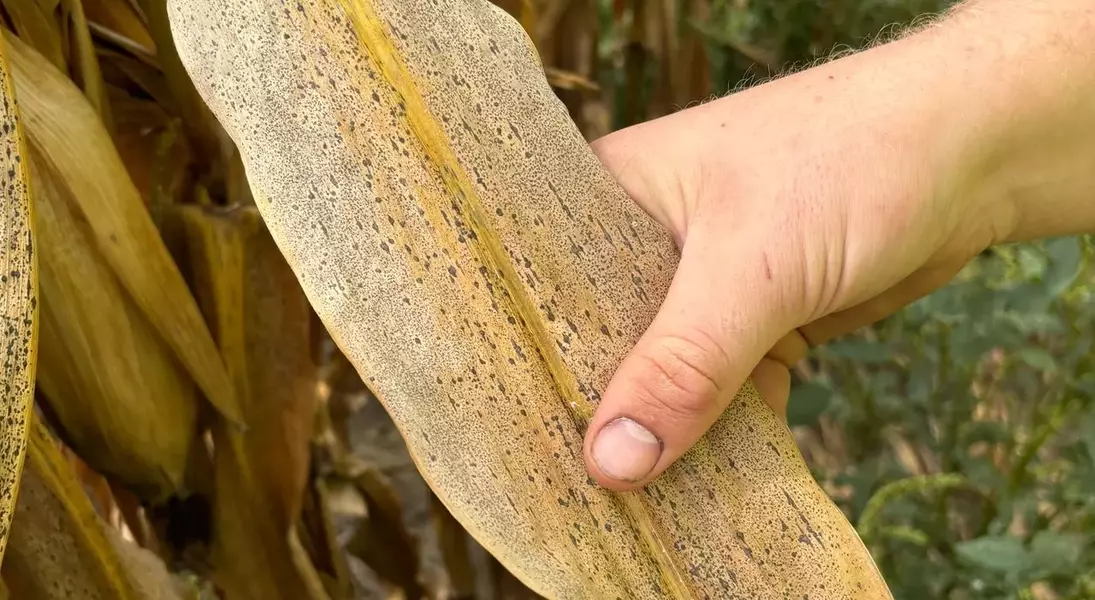
Effective management of tar spot, a pervasive corn disease, hinges on timely and strategic fungicide application. This comprehensive guide synthesizes insights from leading agricultural experts, offering crucial recommendations for farmers facing this challenge. The key takeaway emphasizes the necessity of assessing various factors—from the corn's developmental stage to the severity of the infection and the hybrid's inherent resistance—to determine the optimal intervention strategy. Ignoring these critical elements can lead to ineffective treatments and wasted resources, underscoring the importance of informed decision-making in crop protection.
Optimizing Fungicide Application Timing and Strategy for Corn Health
Agricultural experts from Indiana, including Betsy Bower, senior research associate at Purdue Extension in West Lafayette; Abby Horlacher of Nickel Plate Consulting in Frankfort; Brian Mitchem from Farmer 1st Agronomy Consulting Services in Decatur; and Dan Quinn, corn specialist at Purdue Extension, recently shared their invaluable insights on managing tar spot in corn. Their collective wisdom underscores the importance of precision and timing in fungicide applications.
When tar spot is initially detected in a cornfield, the first crucial step is to ascertain the corn's growth stage and the extent of the infection. If the corn has reached the denting stage (R5) or beyond, applying fungicide may offer minimal return on investment, as the yield potential has largely been determined. Conversely, if the infection is identified prior to tassel emergence (VT) or during the early stages of grain fill (R1-R4), fungicide application is highly recommended. For optimal results, targeting infections below 5% of leaf area is crucial; once the infection surpasses this threshold, effective control becomes significantly more challenging.
While no corn hybrid is entirely immune to tar spot, some exhibit greater tolerance than others. Growers should consider the hybrid's susceptibility when planning treatments. Highly susceptible varieties may necessitate a second fungicide application, especially if environmental conditions favor disease progression, such as persistent moisture. Conversely, more tolerant hybrids may not require a two-pass program.
The location of the disease on the plant also dictates the treatment approach. If tar spot lesions are found on or above the ear leaf, the disease has likely advanced, making yield protection more difficult. Fungicide applications timed around tassel emergence have shown the most consistent positive impact, providing critical protection during the first three weeks following tassel formation.
Considering adjacent cornfields is also vital. If nearby fields share similar tar spot susceptibility and environmental conditions, prophylactic fungicide application might be a prudent measure, particularly if rainfall is anticipated to activate fungal spores. Ultimately, a thorough assessment of the individual field, coupled with an understanding of regional weather patterns and hybrid characteristics, will lead to the most effective and economically sound tar spot management decisions.
This discussion among Indiana's leading certified crop advisers provides a clear roadmap for farmers battling tar spot. It highlights that successful disease management is not a one-size-fits-all solution but rather a nuanced process requiring careful consideration of multiple variables. From a journalist's perspective, this emphasizes the dynamic nature of modern agriculture, where scientific understanding and practical experience converge to ensure crop health and economic viability. It serves as a reminder that continuous learning and adaptability are paramount for agricultural professionals in navigating the complexities of crop diseases and environmental factors.
