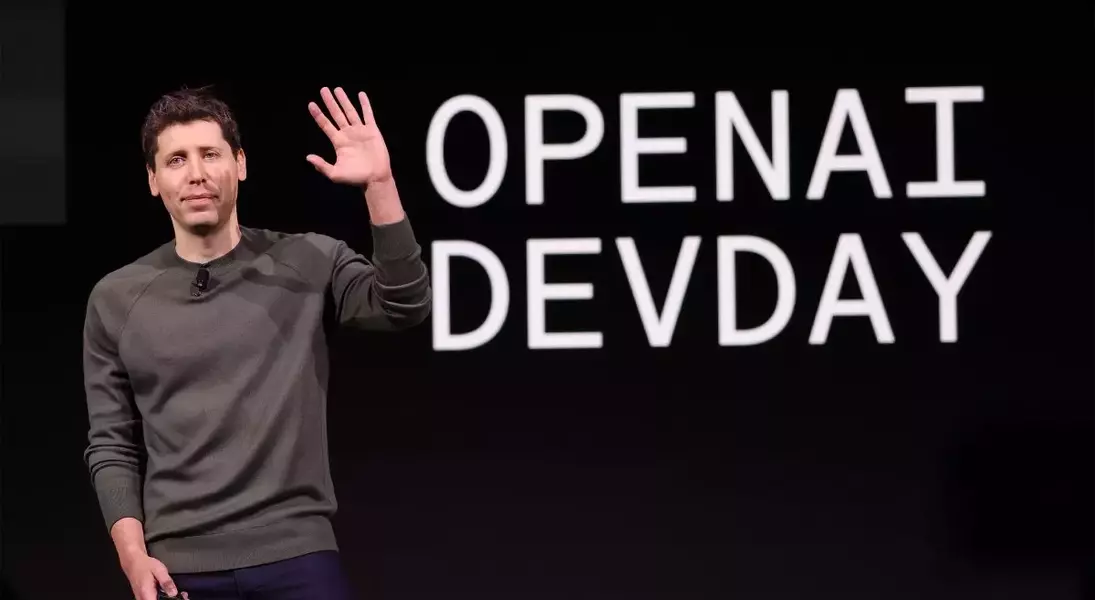
OpenAI is making significant strides in the realm of artificial intelligence with the introduction of o1, its advanced "reasoning" AI model. This move is set to reshape the landscape of API usage and developer experiences. Starting from Tuesday, o1 begins its rollout to developers in OpenAI's "tier 5" category, but access is granted only to those who have spent at least $1,000 with the company and have an account older than 30 days since their first successful payment.
Key Features and Differences
O1 replaces the previously available o1-preview model in the API. One of the notable distinctions is that reasoning models like o1 effectively fact-check themselves, reducing the likelihood of common pitfalls that often affect other models. However, this comes at a cost - they typically take longer to arrive at solutions. Additionally, these models are quite expensive due to the significant computing resources required for their operation. OpenAI charges $15 for every ~750,000 words analyzed and $60 for every ~750,000 words generated, which is six times the cost of its latest "non-reasoning" model, GPT-4o.
In the OpenAI API, o1 offers far more customization options compared to o1-preview. New features such as function calling allow the model to be connected to external data, while developer messages enable developers to instruct the model on tone and style. Moreover, o1 has an API parameter, "reasoning_effort," which gives developers control over how long the model "thinks" before responding to a query. This enhanced customization makes o1 a powerful tool for developers with specific requirements.
Version Updates and Improvements
OpenAI stated that the version of o1 in the API and soon in its AI chatbot platform, ChatGPT, is a "new post-trained" version. Compared to the o1 model released in ChatGPT two weeks ago, the "o1-2024-12-17" version shows improvements in "areas of model behavior based on feedback," although the details were not specified. This continuous improvement process aims to provide more comprehensive and accurate responses, especially for questions related to programming and business, and reduce the likelihood of incorrect refusals.
Realtime API Updates
In addition to the o1 developments, OpenAI announced new versions of its GPT-4o and GPT-4o mini models as part of the Realtime API. These new models, "gpt-4o-realtime-preview-2024-12-17" and "gpt-4o-mini-realtime-preview-2024-12-17," boast improved data efficiency and reliability, making them more cost-effective to use. The Realtime API itself has gained several new capabilities, such as concurrent out-of-band responses, which allows background tasks like content moderation to run without interrupting interactions. It also now supports WebRTC, the open standard for building real-time voice applications for various devices.
Interestingly, OpenAI hired the creator of WebRTC, Justin Uberti, in early December. This integration is designed to enable smooth and responsive interactions in real-world conditions, even with variable network quality. It handles audio encoding, streaming, noise suppression, and congestion control, ensuring a seamless user experience.
Fine-Tuning and Developer Kits
OpenAI brought preference fine-tuning to its fine-tuning API, enabling developers to compare pairs of a model's responses to "teach" the model to distinguish between preferred and "non-preferred" answers. This feature provides more control and flexibility in customizing the model's behavior. Additionally, the company launched an "early access" beta for official software developer kits in Go and Java, further expanding the development options for developers.
