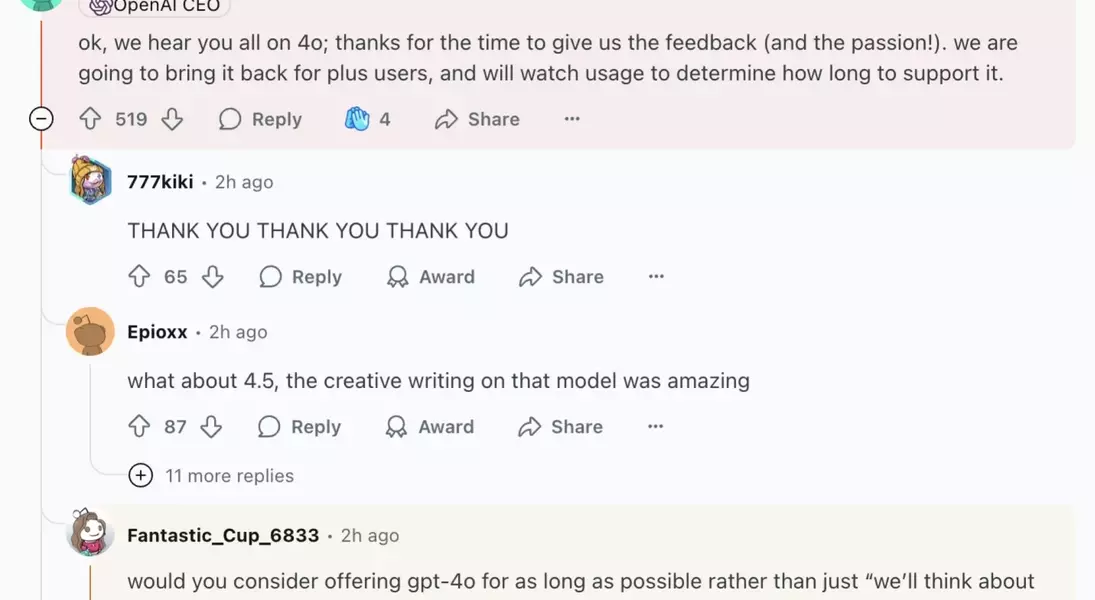

Following a turbulent launch of its new GPT-5 model, OpenAI is reintroducing the highly-regarded GPT-4o for its paid ChatGPT subscribers. This decision comes as a direct response to widespread user discontent, where many expressed frustration over GPT-5's performance and the sudden deprecation of older, more favored models. Sam Altman, OpenAI's CEO, acknowledged the challenges associated with the recent transition, emphasizing the company's commitment to addressing user feedback and refining its offerings. This move highlights the delicate balance between pushing technological boundaries and maintaining user satisfaction in the rapidly evolving AI landscape.
The introduction of GPT-5 was met with considerable criticism from the user community. While OpenAI touted GPT-5 as its most advanced and efficient model to date, designed with a streamlined system for optimizing user prompts, many found its performance lacking compared to its predecessor, GPT-4o. A significant portion of the feedback centered on GPT-5's 'colder' personality, a stark contrast to the perceived warmth and empathy of GPT-4o. This shift in conversational tone, coupled with the abrupt removal of the model selection feature, led to an outpouring of negative sentiment across various platforms, including Reddit and other social media channels. Users described the GPT-5 rollout as a 'disaster' and lamented the loss of their preferred interaction style.
In response to the growing chorus of complaints, Sam Altman engaged directly with the community through a Reddit 'Ask Me Anything' (AMA) session and posts on X. He openly admitted that the GPT-5 rollout had been 'a little more bumpy' than anticipated, assuring users that their feedback was heard and valued. Altman confirmed that Plus users would soon have the option to revert to GPT-4o, signaling a responsive approach to community concerns. He also indicated that OpenAI would monitor usage patterns to determine the duration for which legacy models would remain available.
During the AMA, Altman also addressed the immediate performance issues of GPT-5, explaining that a temporary malfunction in the auto-switcher system had made GPT-5 appear 'dumber' than intended. He pledged that improvements would begin immediately, with a focus on refining the decision boundary mechanism to ensure users consistently receive the most appropriate model for their needs. This commitment reflects OpenAI's ongoing efforts to enhance the user experience and adapt its AI models based on real-world interactions, even as it strives for cutting-edge innovation. The experience underscores the vital role of user sentiment in shaping the development and deployment of advanced AI technologies.
Ultimately, this situation underscores the importance of user experience in the development and deployment of AI models. While technological advancement is paramount, the subjective preferences and expectations of the user base play a crucial role in the adoption and success of new AI iterations. OpenAI's swift response to user dissatisfaction, by reinstating GPT-4o and committing to further improvements in GPT-5, demonstrates a recognition of this dynamic, ensuring that innovation proceeds hand-in-hand with user satisfaction.
