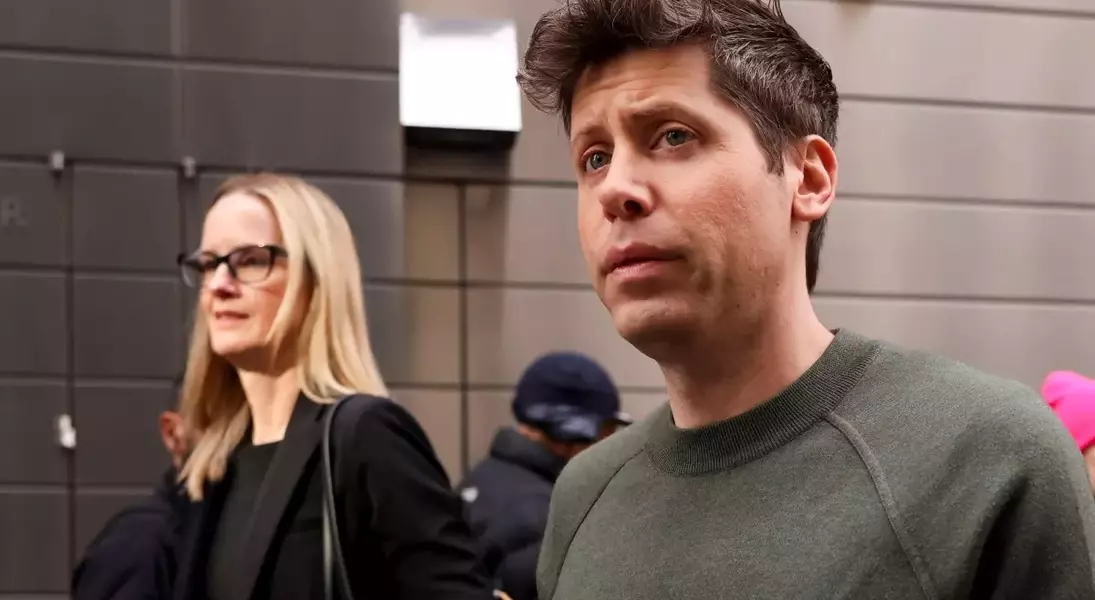
In 2023, OpenAI CEO Sam Altman found himself before Congress, testifying about the perils of AI. He emphatically informed American lawmakers that he held no equity in OpenAI, a claim he had repeatedly made, stating that he merely ran the company out of his love for it.
Unraveling Sam Altman's Equity Ties at OpenAI
Congress Testimony and Initial Equity Claim
During his congressional appearance, Altman's stance on not having equity in OpenAI was clear. This assertion was widely reported and became a significant part of the public discourse surrounding the company. It raised questions about his motives and the future of the organization.However, recent revelations have shown a different side. Altman admitted that he did have a stake in OpenAI through a Sequoia fund at one point. This stake, he said, was later sold. In an interview with Bari Weiss, Altman was asked about his potential equity if OpenAI became a for-profit entity.Details of Equity Through YC and Sequoia
It was known that Altman had a small investment through Y Combinator. This "small investment" was his only interest in the company and was made before he dedicated himself full-time to OpenAI. Sequoia, on the other hand, first invested in OpenAI in 2021. At that time, the company was valued at approximately $14 billion. Since then, with the latest funding round, its valuation has skyrocketed to $157 billion, with Sequoia participating.While the 2021 Sequoia stake is now worth a significant amount, many details remain unknown. Venture firms like Sequoia are not obligated to disclose their limited partner investors, and it is unclear when Altman sold his stake and for how much.An OpenAI spokesperson confirmed Altman's prior exposure but did not provide specific details. The spokesperson stated that Altman had a negligible stake, less than a fraction of a percent, in a general Sequoia fund with a broad portfolio that included minimal exposure to OpenAI. Sam no longer has any ongoing commitments to the fund.Most CEOs typically have equity in the companies they lead. In public companies, a significant portion of a CEO's pay comes from equity. Startup founders start with full ownership and gradually grant shares to employees and sell to investors. But OpenAI was founded as a nonprofit with a unique structure, and Altman had repeatedly stated that he owned no equity. Just this month, during The New York Times' DealBook Summit, he again claimed to have no equity.During a May interview with the All In podcast, Altman explained his initial decision not to take equity due to OpenAI's corporate structure. The nonprofit board requires a majority of independent directors, meaning they cannot have equity. Altman believed this led him to forgo equity to become one of those independent directors. However, this decision has led to doubts about his motives and may be one reason the company is moving away from this structure.Altman's stake in OpenAI has become more relevant as the company attempts to transition its for-profit branch, currently controlled by the nonprofit board, into an independent entity. There are reports that the company is considering granting the CEO some equity in this transition, although both the company and Altman have denied such plans.OpenAI's for-profit transition is currently at risk due to Elon Musk's lawsuit. Musk claims that OpenAI is abandoning its original nonprofit mission. OpenAI, on the other hand, alleges that Musk wanted to convert the startup into a for-profit from the beginning.In Altman's interview with Weiss, he called Elon Musk a "bully" who "clearly likes to get in fights." He also lashed out at Meta for asking California's attorney general to block OpenAI's for-profit transition, suggesting that Meta's motives were not pure.While the company insists that Altman's exposure through Sequoia was minimal, it is difficult to reconcile his previous claims of having no equity with his recent remarks on Weiss' podcast.