
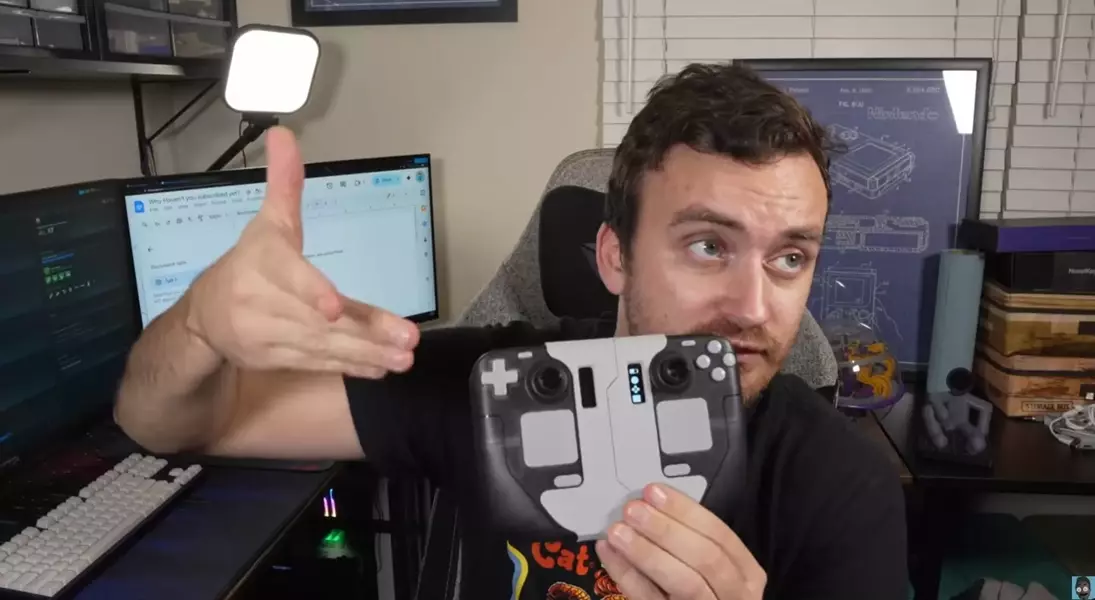
TommyB's open-source controller, the OpenSplitDeck, has received substantial upgrades, presenting a compelling alternative to conventional gaming peripherals. This innovative device, designed with a split form factor and twin trackpads, echoes the functionality of the Steam Deck's input system. Even with Valve's recent unveiling of their own Steam Controller, TommyB has continued to advance his project, introducing a range of enhancements that make the OpenSplitDeck more formidable than ever before.
The latest iteration of the OpenSplitDeck showcases considerable advancements in its design and functionality, despite maintaining a robust physical presence. A key development is the integration of advanced gyroscope controls, with a gyroscope embedded in each half of the controller, allowing for more precise in-game movements. Although the gyro functionality is still undergoing refinement, TommyB is actively seeking methods to enhance its accuracy and overall performance. Additionally, the controller now features sleek display screens positioned along the inner edge of each segment, further augmenting its interactive capabilities.
The OpenSplitDeck project, accessible on GitHub with a comprehensive list of required components, caters to those with a passion for hands-on development. The current estimated cost for acquiring all necessary parts ranges from $200 to $300, although this figure includes surplus materials for multiple units. Components are sourced from various suppliers, including iFixit, and the outer shell is repurposed from a Steam Deck replacement. The long-term vision includes transitioning to 3D-printed shells to reduce expenses, provided access to a 3D printer. This endeavor is best suited for individuals who enjoy customizing their gear, as the official Steam Controller might offer a more budget-friendly option for those seeking input parity without the DIY aspect, though without the unique satisfaction of building your own.
This dedication to innovation and customization in the gaming hardware space highlights the empowering spirit of open-source development. It demonstrates how individual ingenuity can lead to unique and powerful creations, fostering a community of creators and enthusiasts who value personalization and technical exploration over mass-produced alternatives. Such projects not only push the boundaries of what's possible but also inspire a deeper engagement with technology and its potential for bespoke solutions.
