
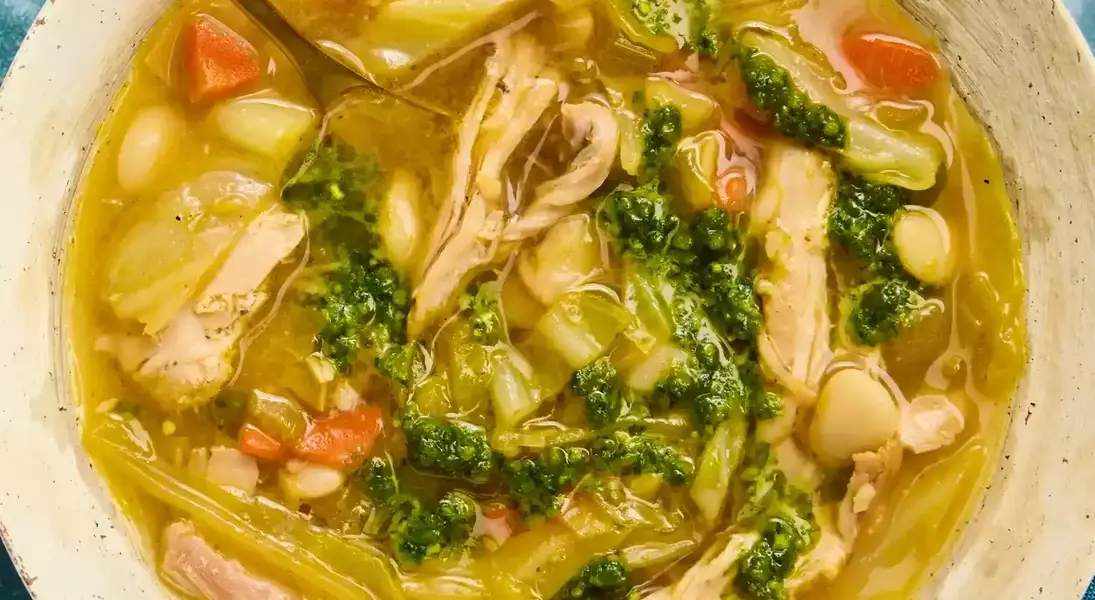


This nourishing and protein-rich soup is a culinary marvel, designed for both ease and exceptional flavor. It masterfully combines succulent chicken, crisp cabbage, and tender white beans into a harmonious broth, all achieved within a single cooking vessel. The beauty of this dish lies not only in its delightful taste and nutritional value but also in its ability to simplify meal preparation and cleanup. Furthermore, its flavors enhance with time, making it an excellent candidate for advance cooking and enjoying as delectable leftovers.
Hearty Chicken, Cabbage, and White Bean Soup: A Culinary Journey
The journey to crafting this comforting soup begins in a substantial Dutch oven, where two tablespoons of olive oil are gently heated. Into this shimmering oil, one pound of boneless, skinless chicken thighs, meticulously trimmed and seasoned with a quarter teaspoon of salt and pepper, are carefully placed. The chicken is seared to a beautiful golden-brown, a process that takes approximately four minutes per side, creating a rich base of flavor. Once perfectly browned, the chicken is set aside on a plate, allowing the pot to retain its savory remnants.
Next, the aromatic foundation of the soup is built upon the chicken's flavorful residue. A medley of one small chopped yellow onion, one medium peeled and chopped carrot, and two medium chopped celery stalks are introduced into the same pot. These vegetables are sautéed, with occasional stirring, until they soften and release their sweet essences, a transformation that occurs in about four minutes.
The culinary narrative continues with the addition of thinly sliced green cabbage, which is stirred frequently until it begins to tenderize, a quick two-minute process. Following this, three large minced garlic cloves and a tablespoon of no-salt-added garlic-and-herb seasoning blend are folded in. This fragrant mixture is stirred continuously until the garlic's perfume fills the kitchen, indicating its readiness in about one minute.
Now, five cups of rich lower-sodium chicken broth, along with the remaining quarter teaspoon of salt, are poured into the pot. The cook gently scrapes the bottom, ensuring all the delicious browned bits are incorporated into the liquid, enriching the soup's depth. The previously seared chicken is then nestled back into this simmering broth. The concoction is brought to a vigorous simmer over medium-high heat, after which the heat is reduced to maintain a gentle simmer. Covered, the soup cooks undisturbed for approximately 20 minutes, allowing the cabbage to become wonderfully tender and the chicken to reach a safe internal temperature of 165°F (as verified by an instant-read thermometer). The fully cooked chicken is then carefully transferred to a cutting board.
Finally, a 15-ounce can of no-salt-added white beans, thoroughly rinsed, is introduced into the pot. The beans are stirred occasionally until they are heated through, a process that takes about five minutes. Using two forks, the tender chicken is shredded into delectable pieces and returned to the soup. The pot is removed from the heat, and one and a half tablespoons of fresh lemon juice are stirred in, adding a bright, zesty finish. The culinary creation is then portioned into six bowls, each garnished with a quarter cup of vibrant basil pesto, ready to be savored.
This recipe for High-Protein Chicken, Cabbage, and White Bean Soup is more than just a meal; it's a testament to the power of simple, wholesome ingredients creating something truly extraordinary. Its one-pot nature is a godsend for busy individuals, offering a quick and straightforward path to a nutritious dinner. The depth of flavor, which only improves with time, underscores the beauty of thoughtful cooking and efficient meal planning. This soup serves as a comforting, hearty, and health-conscious option, embodying the ideal balance of taste, nutrition, and convenience. It's a reminder that delicious, home-cooked meals don't have to be complicated, and that often, the simplest approaches yield the most satisfying results.
