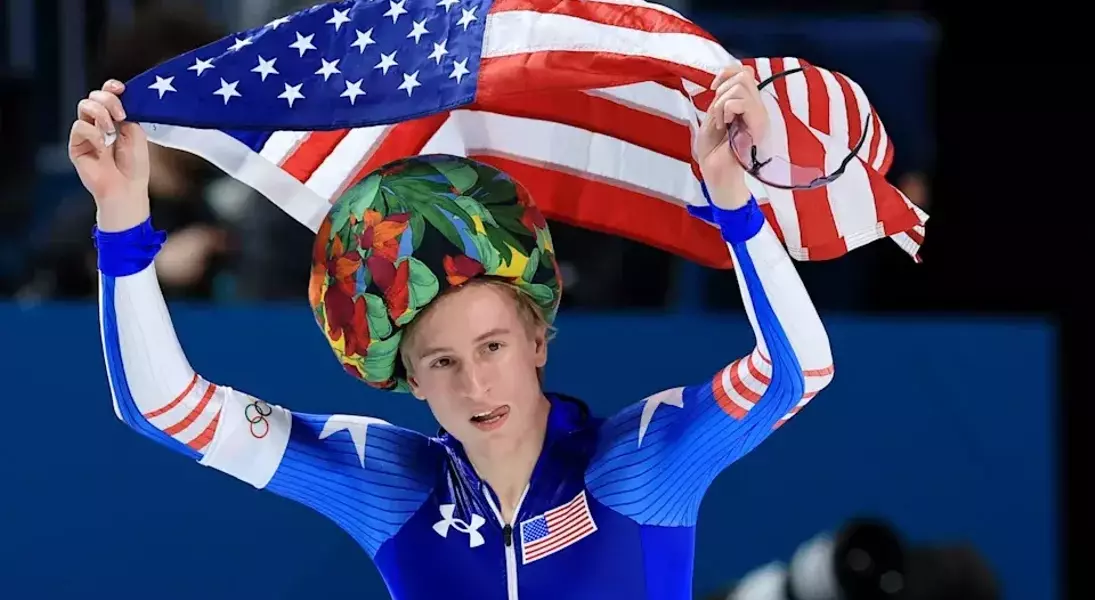
Following his triumph in the 1,000-meter speed skating event at the 2026 Winter Olympics in Milan, American athlete Jordan Stolz found himself at the center of a minor controversy, not for his athletic prowess, but for his choice of headwear during the celebratory lap. His coach, Bob Corby, openly shared his reservations about the vibrant hat Stolz wore, expressing a clear preference for a more distinguished or symbolic accessory, such as a national flag, for future victory moments.
The hat in question, a distinctive gift from an enthusiastic Dutch supporter, was donned by Stolz as he proudly carried the American flag around the track. Despite the sentimental value the hat might hold for the fan who gifted it, Corby's candid remarks highlighted his perception of the item as rather unremarkable for such a significant occasion. He even admitted to leaving the hat behind after Stolz handed it to him, indicating his strong aesthetic disagreement with its appearance.
As Stolz prepares for upcoming races, including the 500 meters, 1,500 meters, and the mass start event, the incident with the victory lap hat serves as a humorous, yet telling, footnote to his Olympic journey. It underscores the differing views on celebration etiquette and personal expression, even amidst the grandeur of elite sports. Ultimately, while the hat itself may not return, Stolz's golden performance and his coach's outspoken nature have added an unexpected layer of narrative to his remarkable achievements on the ice.
This lighthearted anecdote reminds us that even in moments of great achievement, individuality and the unique perspectives of those around us can add color and character to our stories. It encourages us to embrace diverse expressions, whether they are grand or unconventional, as each contributes to the rich tapestry of human experience and the spirit of competition.
