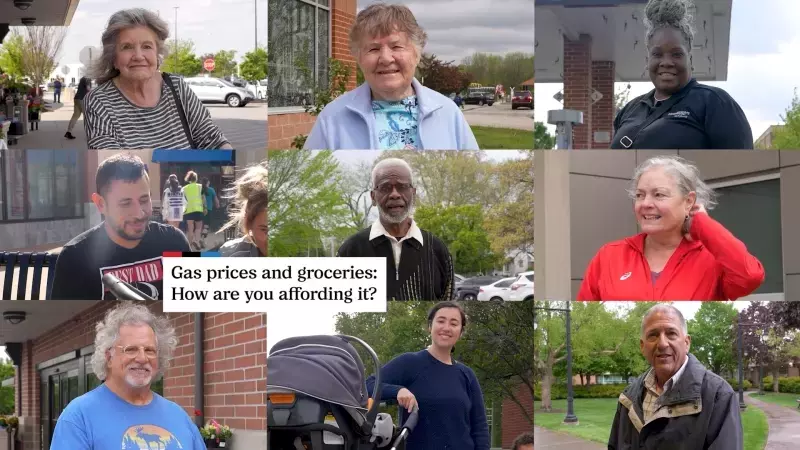
In Ohio's 9th Congressional District, residents are expressing deep concern over the escalating expenses of daily life, with a primary focus on the price of fuel and essential food items. Alan Isbell from Toledo articulated a common sentiment, noting that expectations for change have not materialized as living costs continue to climb. These economic anxieties are particularly salient in a district deemed a 'toss-up' by the Cook Political Report, suggesting that voter dissatisfaction with affordability could significantly influence the upcoming midterm elections for the U.S. House of Representatives, as well as crucial state-level contests for governor and a U.S. Senate seat.
The broader population across Ohio shares these worries; a recent NPR/PBS News/Marist poll indicates that over 80% of Americans find current fuel prices a strain on their household budgets, with a majority attributing the issue to the current administration. Even within the Republican voter base, four out of five individuals acknowledge the negative impact of high gas prices on their finances. Elizabeth Day, a Republican voter in Toledo, attributed the high prices to international conflicts, expressing confidence that her party would address the economic pressures. These views underscore the pervasive nature of economic concerns, transcending partisan lines and forcing many, like Hallie Tembo, to alter their shopping habits and travel plans to cope with the increased costs.
The political landscape in Ohio is complex, with a Democratic incumbent, Marcy Kaptur, holding the 9th Congressional District seat since 1983, despite a newly enacted redistricting map designed to favor Republicans. Kaptur will face Derek Merrin in a closely watched rematch. Statewide, Republicans generally hold sway, and the gubernatorial race will see Republican nominee Vivek Ramaswamy vying for office against Democrat Amy Acton, following the retirement of the incumbent. This election will serve as a critical test of whether Republican candidates can maintain voter confidence amidst concerns about the current presidential approval ratings and the pressing issue of economic stability, ultimately shaping the political future of Ohio and potentially the national balance of power.
The ongoing struggle with economic burdens faced by Ohioans serves as a powerful reminder of the fundamental need for stable and accessible livelihoods. It highlights how everyday financial pressures can galvanize political engagement and drive voters to seek solutions through democratic processes. This collective aspiration for economic security underscores a resilient spirit, encouraging leaders to prioritize the well-being of their communities and work towards a future where all citizens can thrive.
