Nvidia, a leading entity in the artificial intelligence sector, foresees a substantial increase in financial outlays for AI infrastructure, potentially surpassing one trillion dollars within the next two years. This projection comes despite a recent dip in stock performance, which has led to a 6% decline since its fiscal second-quarter earnings announcement in late August. This downturn, however, could present a strategic entry point for investors focused on the long-term opportunities within the AI landscape. The company's exceptional revenue growth, boasting a 56% increase in its most recent quarter and an astonishing nearly 700% surge over the past three years, underscores its robust market position.
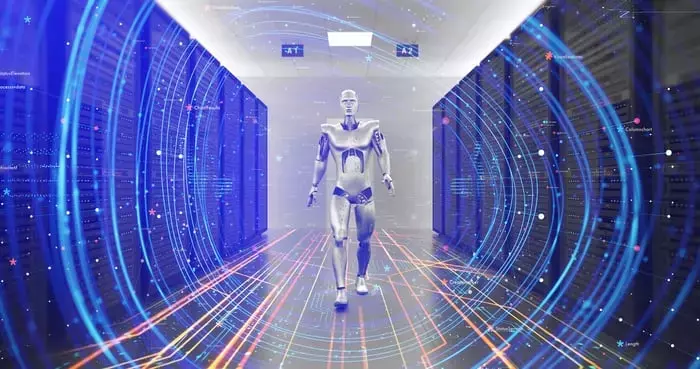
A critical driver of this projected growth is the emerging field of robotics, a sector poised to significantly amplify demand for Nvidia's cutting-edge products. Nvidia's CEO, Jensen Huang, has consistently highlighted the impending era of "physical AI" and robotics as the next major catalyst for the company. The recently introduced Jetson Thor robotics computing platform signifies Nvidia's readiness for this revolution, with major industry players like Amazon, Boston Dynamics, Caterpillar, Medtronic, and Meta Platforms already adopting this technology. This initiative is expected to bolster Nvidia's Automotive and Robotics segment, which experienced a 69% year-over-year revenue increase in Q2, further complementing the strong performance of its data center division by generating substantial, long-term demand for its platform.
While Nvidia's future appears promising, potential investors should acknowledge the inherent volatility associated with its stock. Recent geopolitical tensions and restrictions on semiconductor exports to China have impacted Nvidia's sales in the region, which previously accounted for approximately 13% of its total revenue. This uncertainty could contribute to continued stock price fluctuations. Nevertheless, Huang remains optimistic, envisioning a future where billions of robots and autonomous systems, powered by Nvidia's innovations, will transform industries. For those considering investment, a measured approach, such as buying in incremental phases, could help mitigate risks associated with market swings while positioning for substantial long-term gains, as the overall trajectory for Nvidia's stock is anticipated to be upward in the years to come.
In a world increasingly driven by technological advancement, the journey of companies like Nvidia illustrates the profound impact of innovation and foresight. Their commitment to pioneering new frontiers in artificial intelligence and robotics not only reshapes industries but also inspires a vision of progress and possibility for humanity. Embracing these transformative shifts with a forward-looking perspective allows us to participate in, and benefit from, the unfolding future.
