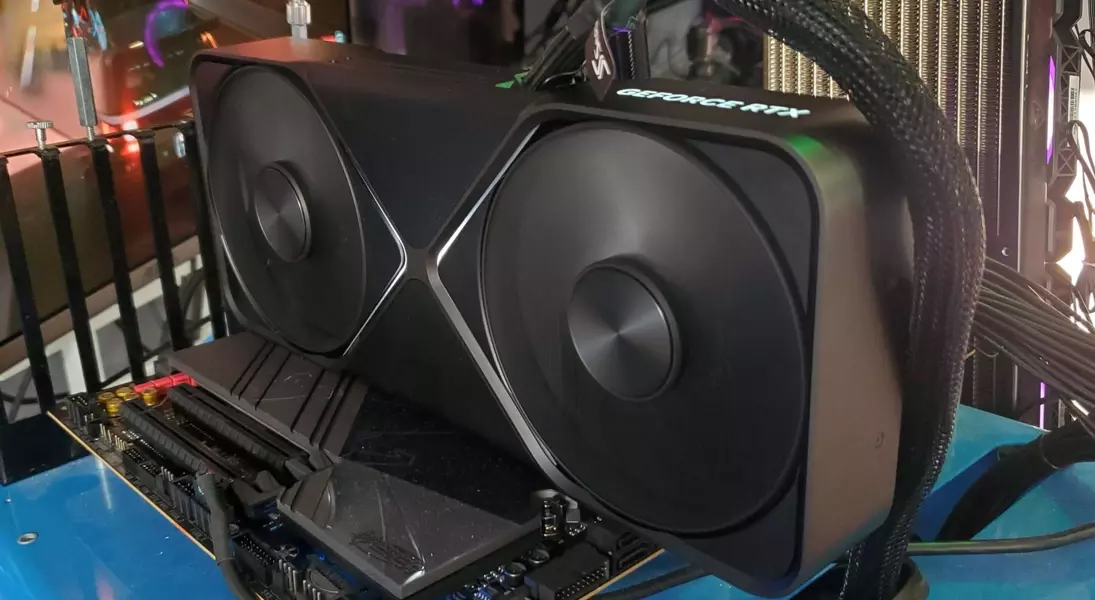

Nvidia's latest financial disclosure reveals a pronounced pivot towards artificial intelligence and data center operations, with these areas dominating discussions during the recent earnings call. While the gaming sector, historically foundational for Nvidia, saw a notable revenue increase, its future growth appears challenged by looming supply limitations. This strategic reorientation, alongside a substantial surge in the company's long-term purchase commitments for advanced components, primarily to fuel its expanding AI ventures, has ignited speculation regarding the potential impact on Nvidia's capacity to adequately support its gaming hardware production. The current landscape suggests a delicate balance, where the rapid ascent of AI could inadvertently strain the resources available for its established gaming market.
Amidst this backdrop, an intriguing dynamic unfolds within the technology industry. The very boom in AI, largely propelled by Nvidia's innovative hardware, is simultaneously contributing to a tightening global supply chain for critical components. Despite Nvidia's robust relationships with key manufacturers and its efforts to secure inventory, the escalating demand for AI-specific architectures implies a potential prioritization, leaving its gaming portfolio susceptible to material shortages. This complex interplay of market forces underscores a period of significant transformation for Nvidia, as it navigates burgeoning opportunities in AI while striving to maintain its stronghold in the gaming hardware domain, all under the shadow of potential economic volatility.
Nvidia's Strategic Emphasis on AI and Data Centers
In a recent financial briefing, Nvidia clearly signaled a strategic shift, with its artificial intelligence and data center segments taking center stage. These rapidly expanding sectors now represent the company's primary focus, leading to a downplay of its traditional gaming hardware business, which previously defined its market presence. Although gaming reported a healthy 47% year-over-year revenue increase, reaching $3.7 billion, driven by strong demand for Blackwell architecture, the forward outlook for this division is tempered by anticipated supply challenges. This re-prioritization reflects a broader industry trend where the immense growth potential of AI is drawing significant investment and resource allocation from leading technology firms, potentially at the expense of other market segments.
Nvidia’s executive insights further illuminated this strategic redirection. Despite robust consumer demand and optimal inventory levels within the gaming channel, the company foresees supply constraints impacting its gaming offerings in the first fiscal quarter and beyond. This indicates that while the market for gaming products remains strong, Nvidia’s ability to fully capitalize on this demand might be hampered by resource allocation choices. The vast financial returns from its data center activities, which generated an astounding $193.7 billion in annual revenue—a 75% increase year-on-year—suggest that a significant portion of Nvidia's operational capacity, including its efforts to secure advanced components, is now predominantly directed towards supporting its booming AI hardware ecosystem. This internal resource migration raises questions about the future growth trajectory and market availability of Nvidia's highly anticipated gaming products.
Navigating Supply Chain Dynamics and Market Risks
Nvidia's leadership has communicated confidence in its ability to manage the intricate global supply chain, asserting that the company has proactively secured necessary inventory and production capacity to fulfill demand for several quarters ahead. This assurance, however, is set against the backdrop of persistent tightness in the supply of advanced architectural components, a challenge exacerbated by the very success of Nvidia's AI hardware, which is a significant driver of current supply chain pressures. The firm's long-standing partnerships with critical suppliers like TSMC, responsible for manufacturing its core chips, are expected to play a pivotal role in mitigating these challenges, enabling Nvidia to adapt to fluctuating market conditions and maintain its competitive edge in both AI and gaming sectors.
Nevertheless, the financial commitments underpinning this strategy have drawn scrutiny. Noted investor Michael Burry has highlighted a dramatic increase in Nvidia's non-cancellable purchase obligations, soaring from $16.1 billion to an "alarming" $95.2 billion year-over-year. This substantial leap is largely attributed to demands from foundries like TSMC for longer-term contracts and increased capital to expand chip fabrication and packaging capacities. Such forward-looking financial obligations expose Nvidia to considerable risk should there be an unforeseen downturn in product demand, particularly if the current AI boom were to deflate. This scenario could leave Nvidia with a surplus of contracted inventory, underscoring the inherent volatility and speculative nature of high-growth technology markets, and hinting at potentially turbulent times ahead despite current successes.
