Nvidia, a leading technology firm, foresees a dramatic surge in global data center capital outlays, expecting them to escalate from an anticipated $600 billion in the current year to an astonishing $3 trillion to $4 trillion by 2030. This projection underscores the accelerating pace of the AI revolution and highlights Nvidia's pivotal role within this transformative landscape. The company's significant market share in data center infrastructure, currently standing at approximately 35%, positions it to capitalize immensely on this projected growth, potentially leading to unparalleled financial achievements and a profound revaluation of its market standing.
The company's confidence in this forecast stems from its deep engagements and collaborative efforts with major hyperscale clients, providing it with unique foresight into the future demands of AI chip technology. This insight suggests a continued explosive expansion within the AI domain, making Nvidia's projections credible despite their ambitious scale. Should these predictions materialize, Nvidia's annual revenues could soar to between $1 trillion and $1.4 trillion by the decade's end, a figure that would eclipse even the largest global corporations like Walmart and Amazon.
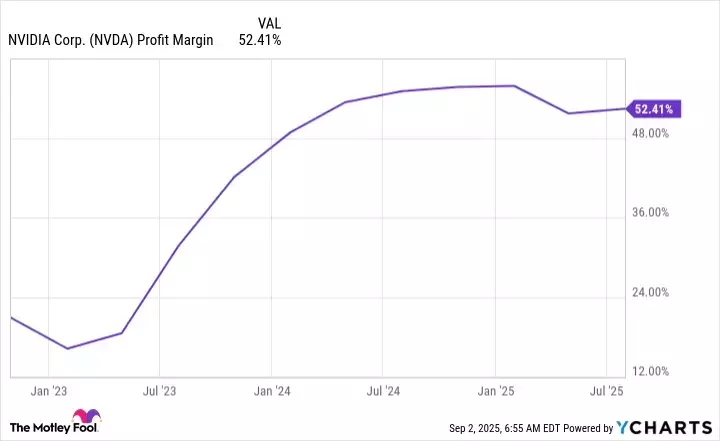
What further distinguishes Nvidia in this scenario is its exceptional profitability. Unlike many high-revenue companies that operate on thin margins, Nvidia boasts a remarkable profit margin of around 50%. This means that if the projected revenues are realized, the company could see annual profits ranging from $500 billion to $700 billion. To put this into perspective, Alphabet, currently the most profitable U.S.-listed company, generated $115 billion in profits over the past year. Nvidia's potential earnings would dwarf this, signifying an extraordinary financial performance.
Such profitability would have profound implications for Nvidia's stock valuation. Trading at approximately 49 times trailing earnings and 38 times forward earnings, a profit figure of $700 billion by 2030, coupled with a trailing earnings multiple of 50, could propel Nvidia's market capitalization to an astounding $34.3 trillion. Even under more conservative assumptions, such as a price-to-earnings ratio of 30 and reaching the lower end of the profit projection, Nvidia's market cap could still reach $15 trillion, representing a more than threefold increase from its current $4.2 trillion valuation. This potential trajectory solidifies Nvidia's position as a dominant force in the technology sector and a prime investment for those looking to leverage the ongoing AI arms race.
Nvidia's bold outlook, while seemingly aggressive, reflects its unparalleled position and deep understanding of the evolving AI infrastructure landscape. Even if the actual market expansion falls short of these grand predictions, the sheer scale of the opportunity ensures that Nvidia remains a compelling investment. The persistent demand for AI infrastructure, coupled with Nvidia's leadership in chip development, establishes it as a stock poised for sustained market-beating returns over the coming years, making it a strategic long-term holding for discerning investors.
