


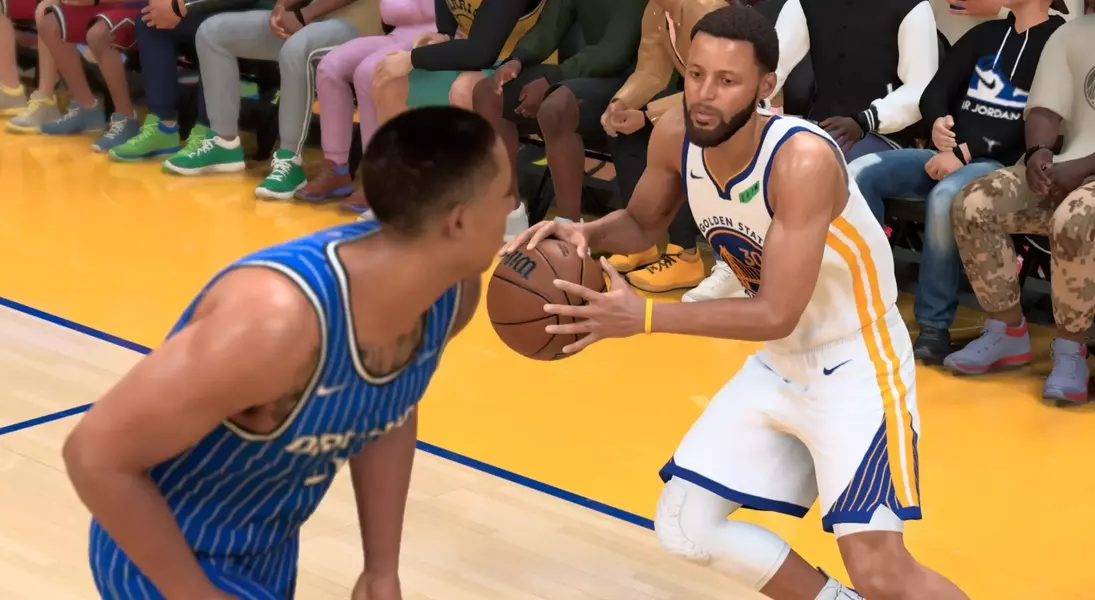
NVIDIA's latest iteration of its Deep Learning Super Sampling (DLSS) technology, referred to as DLSS Neural Rendering or DLSS 5, has received an October update that significantly enhances performance within "NBA 2K27." This refinement addresses previous performance challenges, marking a notable advancement in real-time graphics rendering for gaming.
NVIDIA's DLSS 5 October Update Delivers Enhanced Performance for "NBA 2K27"
In the vibrant digital landscape of October, NVIDIA has unveiled a substantial update to its DLSS 5 technology, coinciding with the launch of its innovative RTX Spark platform. This platform introduces a new era of NVIDIA-powered laptops and mini PCs, offering cutting-edge performance for gamers and content creators. The latest DLSS 5 update, internally known as Neural Rendering or DLSS NR, aims to revolutionize in-game visual fidelity and frame rates, particularly demonstrated in "NBA 2K27."
Previously, the initial implementation of DLSS 5 in "NBA 2K27" resulted in a considerable performance reduction, cutting frame rates by nearly half. This made it a less appealing option for many players. However, NVIDIA's October update introduces a new model that is approximately 24% smaller, with a refined neural network comprising about 118 million parameters. This optimization significantly reduces the computational burden, leading to a substantial decrease in hardware demands. For instance, VRAM usage at 4K resolution sees a 20% reduction.
Testing conducted on the Asus ProArt P16, an RTX Spark-powered laptop, reveals impressive real-world improvements. While the original DLSS 5 significantly hampered performance, dropping frame rates from 200 fps to around 107 fps at 1440p, the October update mitigates this impact. With the new model, "NBA 2K27" now runs at a much healthier 134 fps at 1440p, representing a 25% increase over the previous DLSS 5 performance. Even at 1080p, the game maintains a solid 170 fps with DLSS 5 enabled.
Despite these technical achievements, the perceived visual benefits of DLSS 5's extra lighting and tonal improvements are primarily noticeable during cinematic sequences rather than active gameplay. When zoomed out during typical basketball matches, the enhanced fidelity does not dramatically alter the overall experience. This raises questions about the practical value of the technology for games like "NBA 2K27" where the visual nuances might be lost during fast-paced action.
This update showcases NVIDIA's commitment to pushing the boundaries of gaming graphics. The reduced performance overhead of the new DLSS 5 model makes it a more viable and attractive feature for future games and modding platforms. Moving forward, the challenge for developers will be to integrate this technology in a way that provides a truly "wow" moment for players, making the visual enhancements indispensable to the gaming experience. As the model continues to evolve, further performance gains and more impactful visual integrations are anticipated, paving the way for more immersive and visually stunning gaming worlds.
The advancements in DLSS technology, particularly the efficiency gains demonstrated in the October update, suggest a promising trajectory for real-time graphics. This iteration of DLSS 5 represents a critical step towards making high-fidelity gaming more accessible on a wider range of hardware, including portable devices. As the technology continues to mature, it will be exciting to see how developers harness its full potential to create truly transformative visual experiences that are both breathtaking and performant, moving beyond mere frame rate boosts to genuinely enrich gameplay. The continued refinement of such technologies will undoubtedly shape the future of interactive entertainment, pushing the boundaries of what is visually possible in virtual worlds.