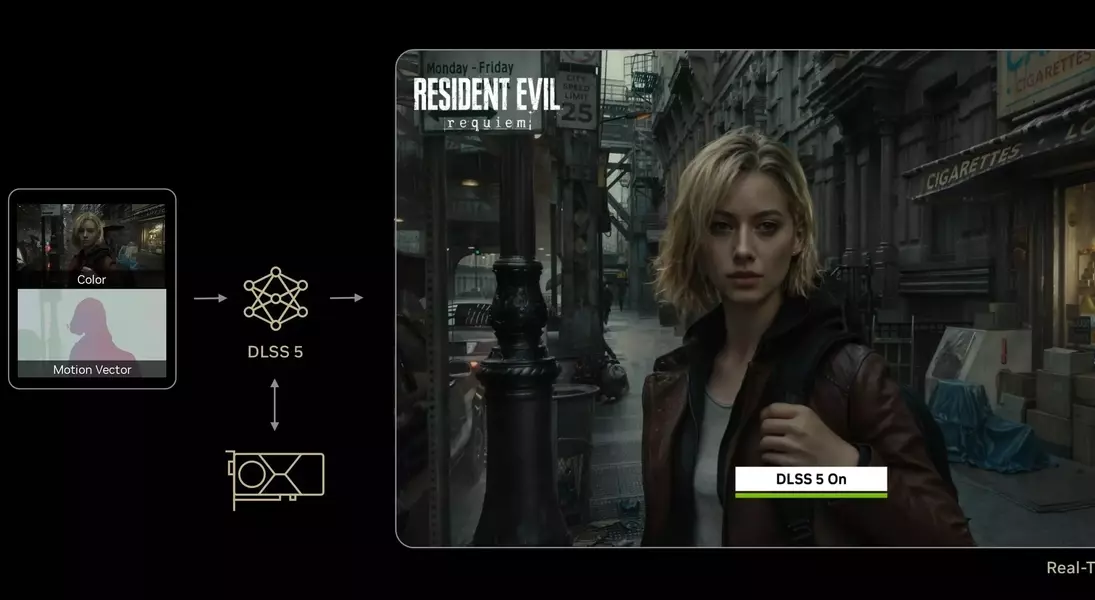
Nvidia's latest graphical innovation, DLSS 5, has ignited considerable discussion within the gaming community and among technology enthusiasts. Unveiled at the recent GPU Technology Conference (GTC), this new iteration of Deep Learning Super Sampling aims to elevate visual fidelity in games through artificial intelligence. However, initial revelations, particularly from a techtuber's interview with Nvidia's Jacob Freeman, suggest that the technology might be less advanced than its ambitious debut implied. The core concern revolves around DLSS 5's current operational model, which appears to primarily process static 2D images with motion vectors, rather than deeply integrating with a game's underlying 3D world data.
The initial demonstrations at GTC, which utilized powerful RTX 5090 graphics cards—one for standard rendering and another dedicated to DLSS 5 computation—created an expectation of groundbreaking advancements. It was assumed that such a demanding setup would unlock a more profound AI integration, perhaps moving beyond simple visual filtering. Yet, as Freeman explained, DLSS 5's input is limited to a 2D frame and its associated motion vectors. This implies that the technology essentially takes a snapshot of a game scene and applies an AI-driven enhancement, raising questions about the depth of its understanding of the game world's geometry, lighting, and textures.
This method of operation has significant implications for artistic control and visual consistency. Unlike a system that interacts directly with a game's engine to understand its 3D environment and lighting parameters, DLSS 5 infers these details from a single 2D image. While impressive in its ability to maintain frame-to-frame consistency and infer complex scene semantics like character features and environmental lighting, this inference-based approach inherently lacks the 'ground truth' information available to developers. This detachment means that DLSS 5 might make educated guesses about lighting and material properties, potentially leading to visual outcomes that deviate from the creators' original intent. For instance, developers who meticulously design path-traced lighting might find their carefully crafted visuals altered by DLSS 5's probabilistic enhancements.
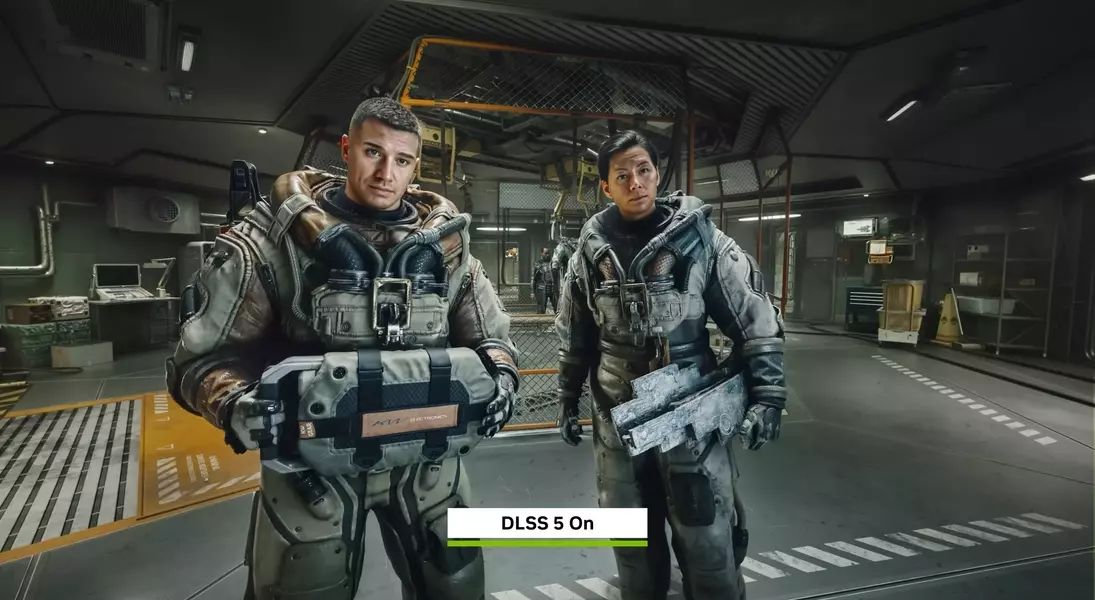
The discourse has also highlighted specific examples of how DLSS 5's enhancements might override artistic decisions. The "yassified Grace" example, where a character's appearance was seemingly altered by the technology, and observations of changes to character hair in Starfield, underscore these concerns. Although Nvidia maintains that DLSS 5 does not change a game's underlying geometry, the visual 'paint-over' effect can effectively obscure or modify the developer's original textures and details. Furthermore, the limited control mechanisms offered to developers—such as intensity sliders and masking options for specific objects—suggest a reactive rather than proactive approach to maintaining artistic vision. This raises fears of visual homogeneity, where characters and environments might begin to share a similar AI-applied aesthetic across different games, detracting from their unique design.
Despite these criticisms, certain aspects of DLSS 5, particularly its application in enhancing environments, have been positively received. The visual improvements seen in games like Assassin's Creed Shadows and the potential for smoother gameplay experiences are acknowledged. However, the perceived discrepancy between Nvidia CEO Jen-Hsun Huang's vision of fusing "ground truth of virtual worlds" with generative AI, and the current, seemingly more superficial implementation of DLSS 5, remains a point of contention. The current state of the technology, as described, appears to be more of a layered enhancement rather than a seamless integration, leaving many to wonder if its full potential, as initially envisioned, is yet to be realized. The rollout of DLSS 5 has been marred by a series of communication issues and a perceived lack of clarity regarding its technical underpinnings, leading to a mixed reception and ongoing debate within the gaming and tech communities.
