In a notable development for computing, a developer has successfully integrated an Nvidia RTX 4060 graphics card with Windows on Arm, utilizing modified drivers initially designed for Nvidia's RTX Spark laptops. This achievement signifies a potential shift in the landscape of Arm-based devices, which have historically relied on integrated Adreno GPUs or repurposed Apple Silicon for graphical processing. While the current performance, as evidenced by gaming benchmarks, is not yet on par with traditional Windows systems, this breakthrough opens doors for future discrete GPU support on Arm architecture.
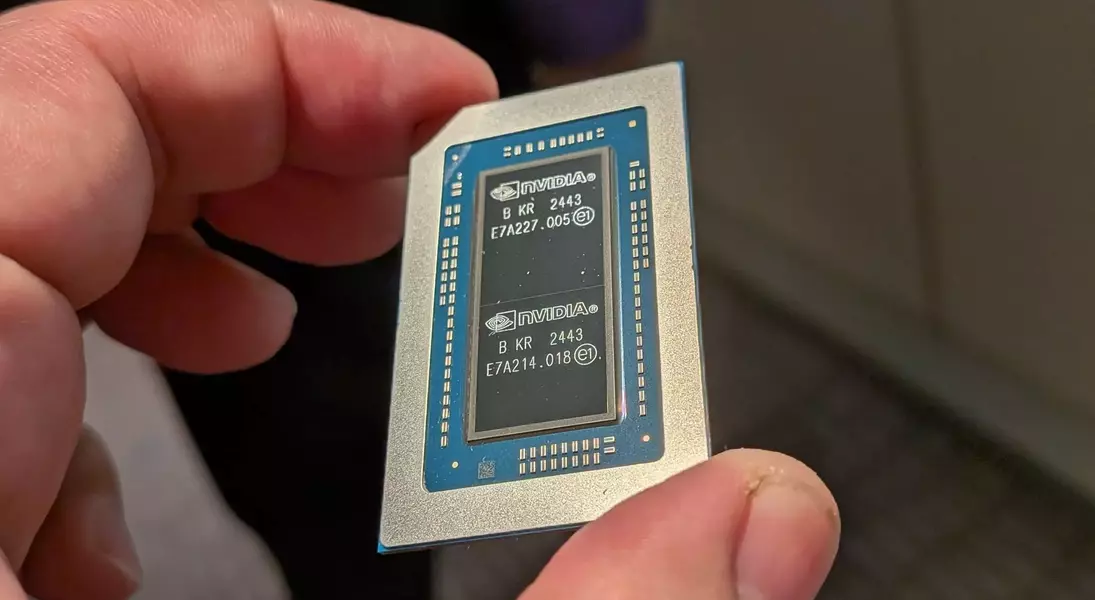
For an extended period, Windows on Arm systems were largely powered by Snapdragon processors featuring Adreno graphics. However, Nvidia's recent introduction of RTX Spark, an Arm processor boasting significant GPU capabilities, hinted at new possibilities. This innovation appears to have spurred efforts to enable broader Nvidia GPU compatibility with the Arm-based Windows environment.
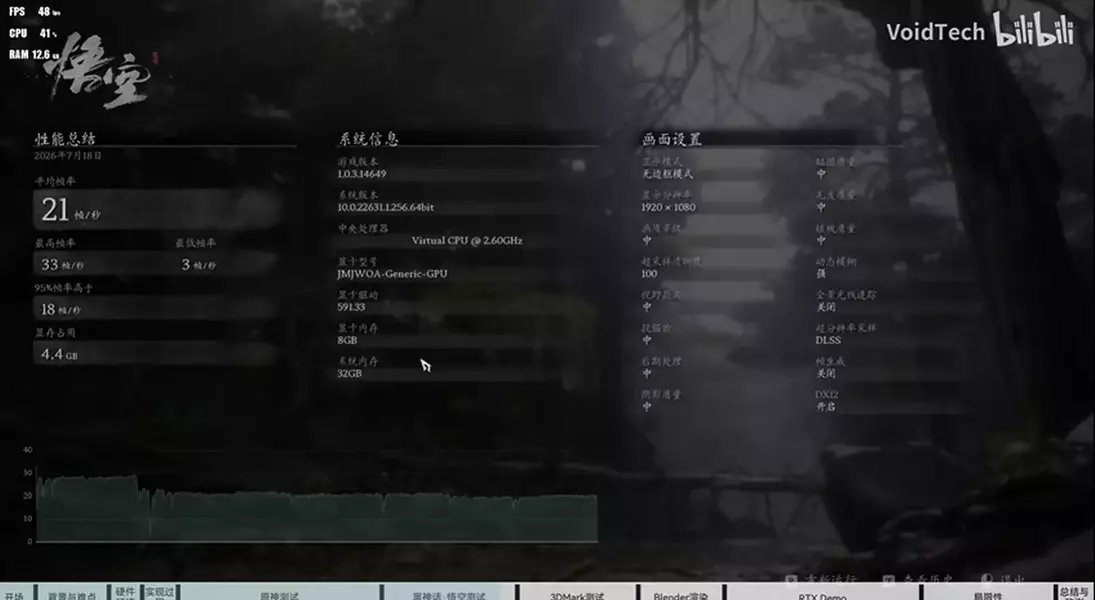
The successful integration, reported by Windows Latest and demonstrated by a developer named VoidTech on the Chinese platform Bilibili, involved an RTX 4060 graphics card running on Windows on Arm. VoidTech achieved this by adapting an "RTX Spark laptop driver," specifically driver version 590. It's worth noting that this is an older driver, as Nvidia's current mainstream version is 610.74, and it reportedly lacks direct support for the DGX Spark processors that form the foundation of RTX Spark. Despite these nuances, VoidTech's explicit claim that the driver is based on RTX Spark technology lends credibility to the effort, especially considering the recent emergence of official RTX Spark drivers.
During the demonstration, several games were run, including the Black Myth: Wukong benchmark. Preliminary results for this benchmark, conducted at 1080p resolution with DLSS enabled solely for anti-aliasing (not upscaling) and medium settings with ray tracing off, showed an average of 21 frames per second (fps). This performance is considerably lower than what the RTX 4060 typically achieves on a standard Windows setup under similar conditions, where it managed around 50 fps on High settings with TSR for anti-aliasing. The system utilized a Huawei Kunpeng 920 processor, a server-optimized chip that is unlikely to offer the same gaming prowess as a desktop-oriented CPU, which may have contributed to the lower frame rates.
Despite the current performance limitations, the fact that a discrete Nvidia GPU is functioning at all on Windows on Arm is remarkable. These drivers are far from official, suggesting that significant performance gains could be realized with further optimization and dedicated development. Nvidia has previously projected that actual RTX Spark gaming performance would reach 100 fps at 1440p in modern titles. Early tests by industry experts on pre-release RTX Spark laptops, such as playing Alan Wake 2, indicated promising smoothness, though a definitive assessment awaits the official launch of the chip this autumn.
The potential for RTX Spark to expand gaming on Windows on Arm to other devices is substantial. It is highly probable that once the underlying driver technology becomes more refined and widely available, Nvidia will find it challenging, if not impossible, to restrict its compatibility solely to RTX Spark chips, potentially opening up a broader range of Nvidia GPUs to the Arm ecosystem. Furthermore, observations of early Qualcomm X Elite development units revealing PCIe graphics connections in their BIOS settings suggest that the capability for discrete GPUs has always been an inherent possibility for Windows on Arm. The ultimate success will depend on the pace of software support development and how effectively the ecosystem can harness these new hardware capabilities.
