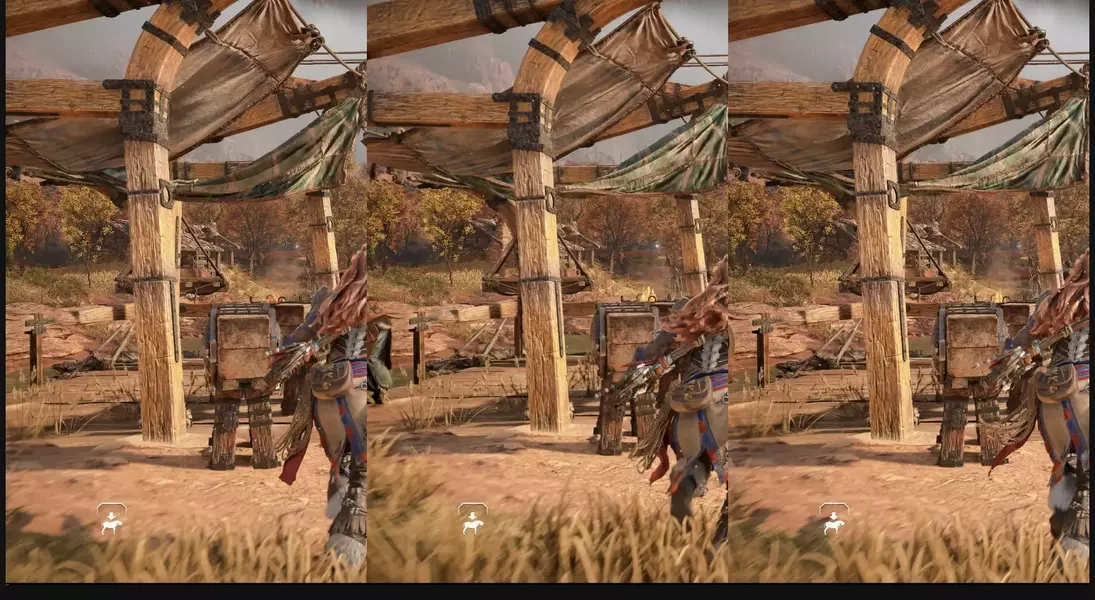
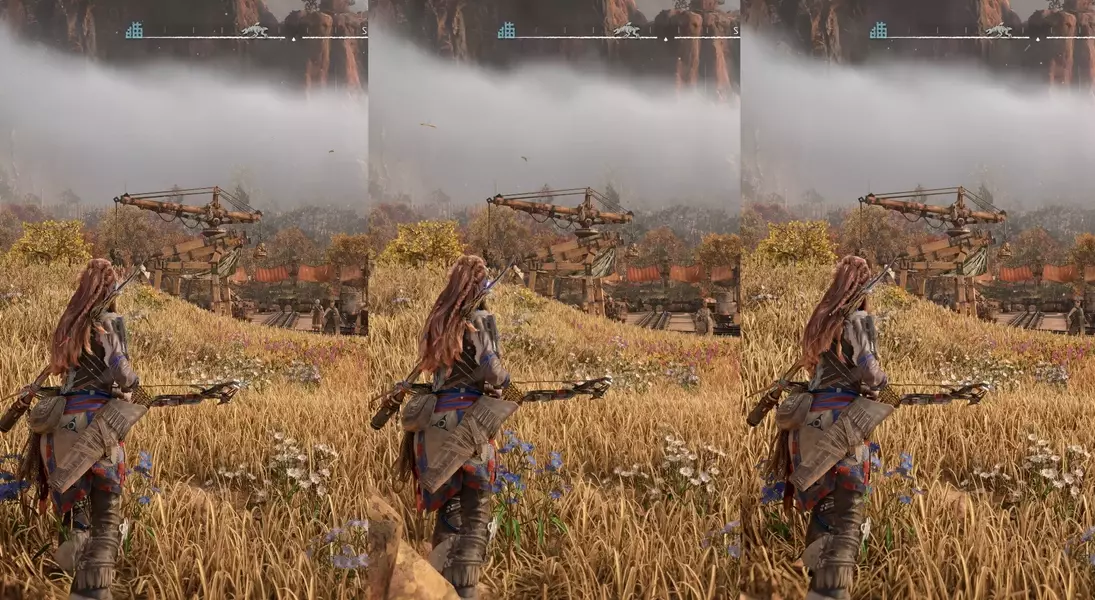
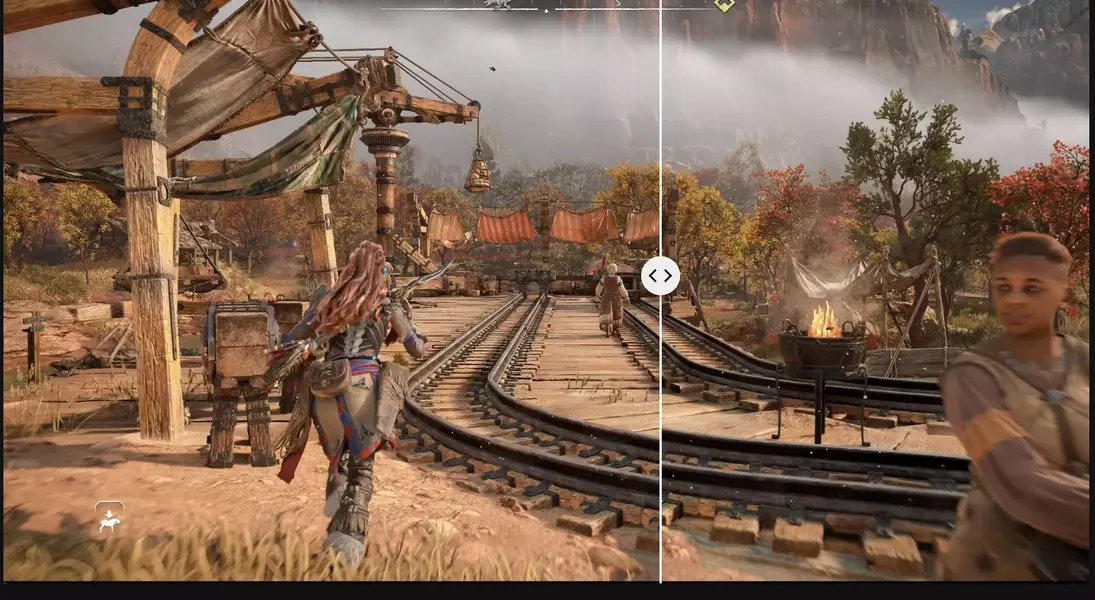
A recent comprehensive blind test conducted by the German technology publication ComputerBase.de has demonstrated a clear preference among gamers for Nvidia's DLSS (Deep Learning Super Sampling) technology when compared to AMD's FSR (FidelityFX Super Resolution) and traditional native 4K rendering. This extensive study, which involved over 1,000 participants, meticulously evaluated the visual fidelity across a selection of six contemporary video games, ultimately positioning DLSS as the leading solution for enhancing graphic quality.
The research methodology employed by ComputerBase.de ensured an unbiased assessment, as participants were unaware of which rendering technology they were observing. The test subjects were presented with pre-rendered video clips from games such as Anno 117, Arc Raiders, Cyberpunk 2077, Horizon Forbidden West, Satisfactory, and The Last of Us Part 2. These videos allowed for a detailed examination of image quality, offering side-by-side or split-screen comparisons with zoom and pause functionalities. Both DLSS and FSR were configured to their 'Quality' settings, targeting a 4K output, while native 4K rendering utilized the games' inherent TAA (temporal anti-aliasing) implementations.
The results unequivocally showed DLSS 4.5 dominating every single game category. Native 4K rendering consistently secured the second position, while AMD's FSR (referred to as FSR 4 or FSR Redstone in its latest iterations) invariably came in last. The most significant lead for DLSS was observed in Satisfactory, where a remarkable 60.9% of gamers favored it, in stark contrast to 15.1% for native 4K and a mere 12.4% for FSR. Even in the tightest contest, Cyberpunk 2077, DLSS still garnered 34.4% of votes, slightly ahead of native 4K's 32.4%, with FSR trailing at 10.6%. Approximately 10% of voters across all titles expressed no particular preference.
The consistent triumph of DLSS over FSR might not come as a major surprise to many in the gaming community, given Nvidia's long-standing leadership in AI-driven upscaling. However, the fact that DLSS also surpassed native 4K rendering is particularly noteworthy. This phenomenon can be attributed to DLSS's sophisticated AI algorithms, which leverage temporal and vector data to reconstruct and generate intricate details, often resulting in textures that appear sharper and more refined than their natively rendered counterparts. Furthermore, many contemporary game engines are developed with upscaling technologies in mind, allowing for optimized visual outputs when DLSS is engaged.
The evolution of both DLSS and FSR has been continuous, marking this study as a snapshot of their current performance. While AMD's recent AI-enhanced FSR updates represent considerable progress, Nvidia's DLSS generally maintains a superior edge in visual quality. An intriguing aspect not covered by this comparison is Intel's XeSS upscaling technology. XeSS has shown promising competitiveness and could potentially bridge the performance gap between DLSS and FSR. Although Intel's market presence in GPUs is limited, a version of XeSS compatible with hardware from all three major GPU manufacturers exists, making a future comparative analysis highly anticipated. In an era where the hardware market is influenced by the AI boom, extracting maximum performance and visual fidelity from existing graphics cards has become paramount, highlighting the increasing importance of advanced upscaling solutions.
