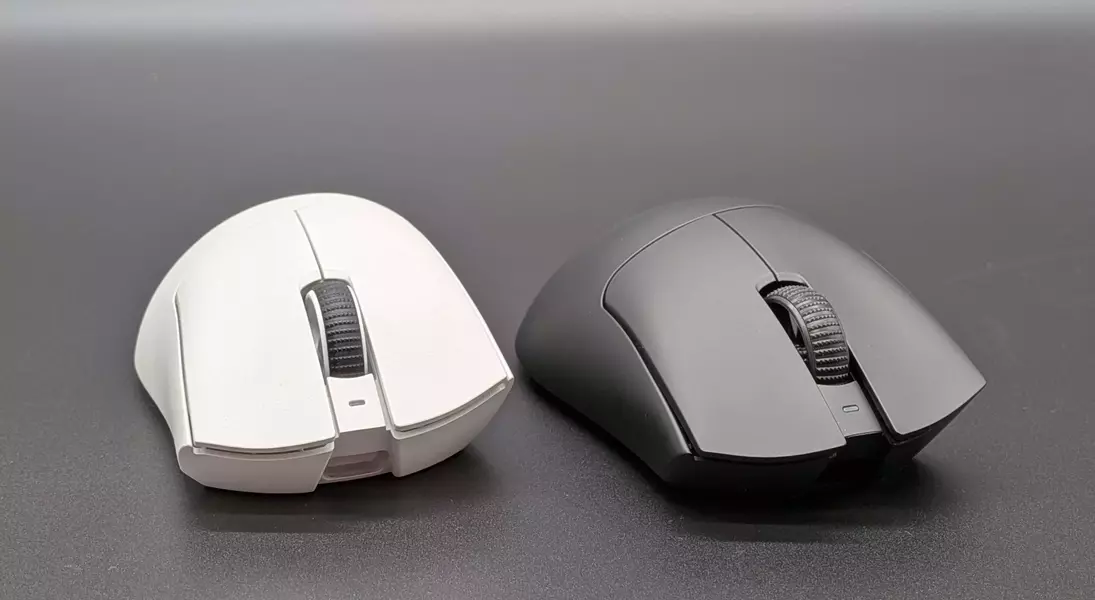
In an insightful exploration that deviates from conventional hardware evaluations, an innovative metric dubbed the "James Score" has been introduced to assess the true value of gaming mice. This score moves beyond mere cost, integrating a meticulous price-to-weight ratio with established review scores, offering a fresh perspective for consumers navigating the vast market of gaming peripherals.
Details of the Gaming Mouse Value Assessment
The genesis of this novel evaluation method traces back to an observation of an Amazon product listing for the Turtle Beach Burst II Air, which unusually highlighted a price-per-ounce metric. This sparked a more in-depth inquiry into how such a concept could be refined and applied comprehensively to gaming mice. The author developed a two-pronged approach for the "James Score."
First, a detailed price-to-weight analysis was conducted. For each mouse, its manufacturer's suggested retail price (MSRP) was divided by its weight in grams, yielding a "grams-per-dollar" value. Variations in weight for different color models were accounted for by using the lowest reported weight. These values were then meticulously plotted on a scale, with a proprietary method assigning a percentage score based on their relative position, effectively normalizing the weight-efficiency of each device against its cost.
The second component involved incorporating the professional review scores provided by PC Gamer. These scores, reflecting expert opinions on performance, ergonomics, and overall user experience, were combined with the price-to-weight percentages. This dual assessment aims to counteract biases that might arise from focusing solely on a single metric, such as lightweight design often correlating with higher prices, or budget options being overlooked due to perceived lower quality.
The study specifically focused on mice that had undergone a formal review by PC Gamer, ensuring a consistent benchmark for the quality aspect. The final aggregated scores revealed compelling insights. The Glorious Model O Eternal emerged as the top performer, excelling in both its price-to-weight efficiency and its strong review ratings. Following closely was the 8BitDo Retro R8, a model favored by the author for personal use, which secured the second position. Interestingly, two Mchose models shared the third spot, indicating that well-designed budget-friendly options can offer significant value.
This unconventional analysis suggests that while the industry increasingly caters to demand for ultra-lightweight and often expensive mice, a holistic view encompassing cost-effectiveness per gram and expert evaluation reveals that robust, affordable alternatives often present superior overall value. This challenges the prevailing notion that higher price and lighter weight inherently equate to better quality for all users.
This innovative scoring system provides a thought-provoking lens through which to view gaming hardware. It implicitly questions whether the market's current fixation on extreme lightness at a premium price truly serves the broader gaming community. The "James Score" highlights that exceptional value can indeed be found in meticulously balanced products that offer both economic accessibility and commendable performance, validating the merit of more budget-conscious, yet high-quality, options. This methodology could inspire consumers to look beyond surface-level specifications and consider a more nuanced understanding of product worth.
