Discover the Nothing Headphone (1), a device that dares to merge nostalgic design with cutting-edge audio technology, promising an immersive listening experience.
Experience Sound, Redesigned: Where Vintage Charm Meets Modern Acoustics.
Unpacking the Nothing Headphone (1): Specifications and Initial Setup
The Nothing Headphone (1) boasts a remarkable technical profile, featuring 40mm speaker drivers with a frequency range of 20 Hz to 40,000 Hz. These headphones include adaptive active noise cancellation and a four-microphone AI-driven environmental noise cancellation system, enhanced by KEF acoustic engineering. Connectivity is seamless with Bluetooth 5.3, supporting Hi-Res Audio, LDAC, and USB-C lossless playback. They are also IP52 rated for dust and water resistance. Battery life is generous, offering 35 hours with ANC activated and an impressive 80 hours without. A quick five-minute charge provides five hours of listening time (ANC off). Available in black and white, these headphones ensure versatile use.
Setting up the headphones is straightforward and innovative. A unique Bluetooth button is discreetly placed inside the right earcup. Upon powering on, the headphones automatically enter pairing mode, ready to connect with iOS, macOS, or Android devices, with Android benefiting from Google Fast Pair. The dedicated Nothing app, available for both iOS and Android, provides access to a range of customizable features and facilitates firmware updates, ensuring your headphones are always up-to-date.
The Headphone (1) features a singular, intuitive control scheme located entirely on the right earcup. An action button on the front can be customized for various advanced functions, such as digital assistance, EQ presets, or microphone muting. The standout feature is a roller that allows for precise volume adjustments by scrolling left or right. This roller also functions as a multi-functional button for activating listening modes and controlling playback. Below the roller, a paddle manages calls and enables fast forward/rewind. All these controls operate smoothly and efficiently, providing a user-friendly experience.
A Distinctive Aesthetic: The Controversial Yet Meticulous Design
The visual appeal of the Nothing Headphone (1) is certainly not universally acclaimed. While promotional images might suggest a sleek, futuristic look, the reality can be quite different upon unboxing. However, this does not diminish the thoughtful artistry that Nothing has invested in its design.
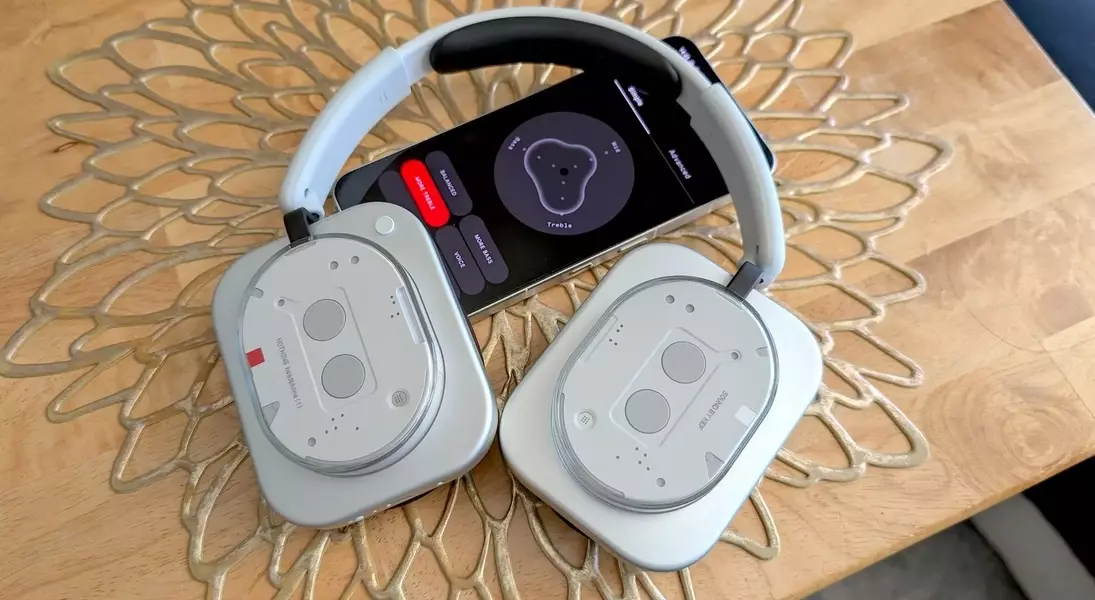
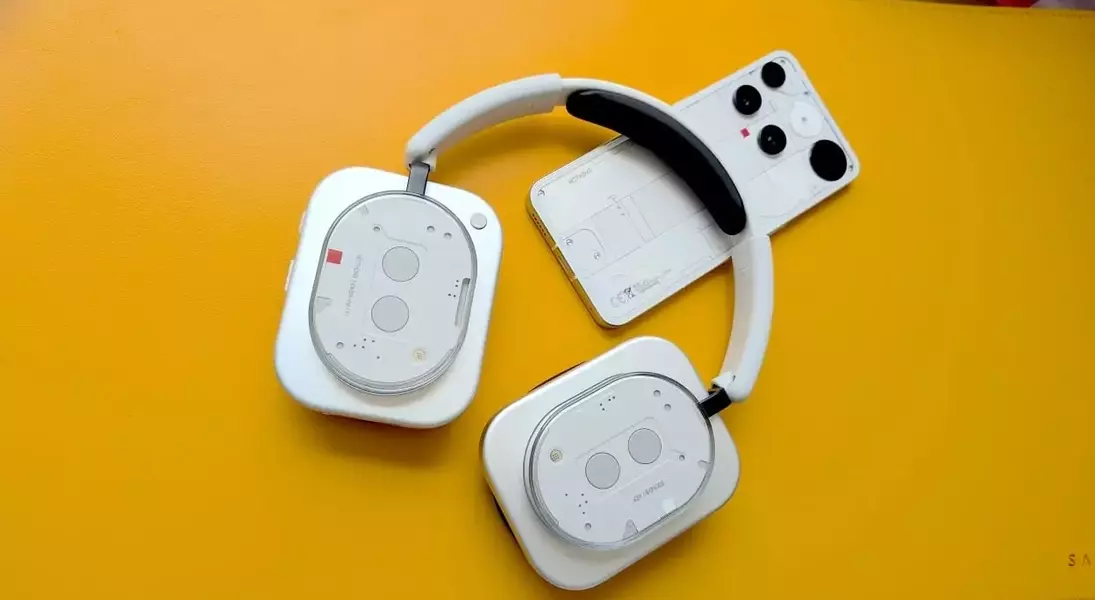
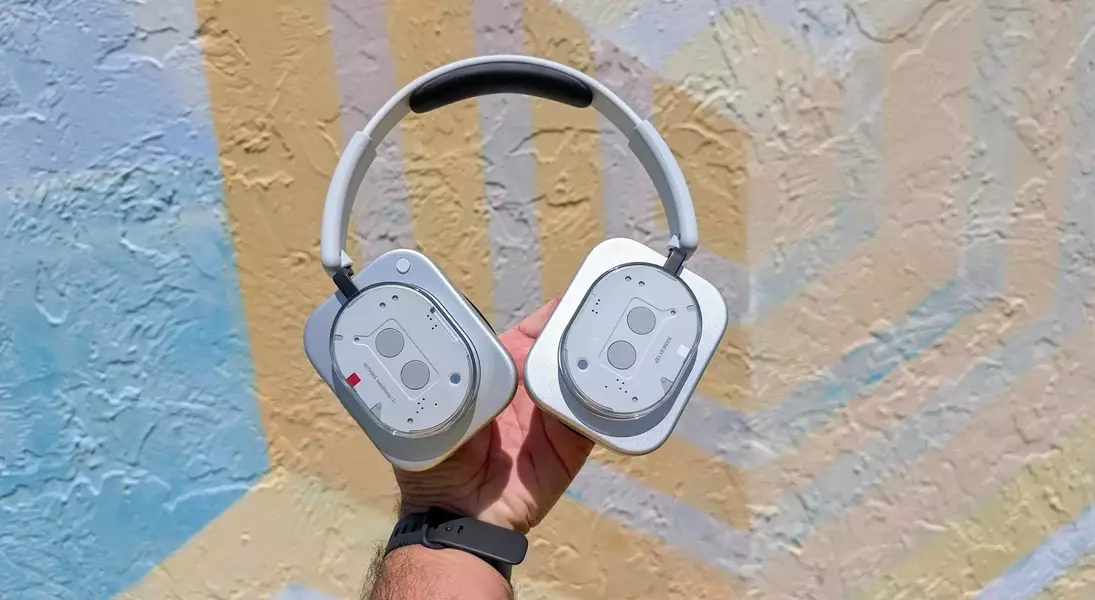
Attention to detail is evident throughout the Headphone (1). The internal clean white casing features an embossed headphone imprint, embodying a minimalist art sensibility. The oval-shaped earcups evoke a sense of nostalgia, reminiscent of classic Sony Walkman designs, while the rectangular earcups pay homage to vintage home audio headphones. Subtle elements, such as the angular arms and dotted patterns, highlight the brand's sophisticated craftsmanship. Furthermore, the headphones are certified IP54, providing protection against dust, sweat, and water splashes, making them durable for everyday use.
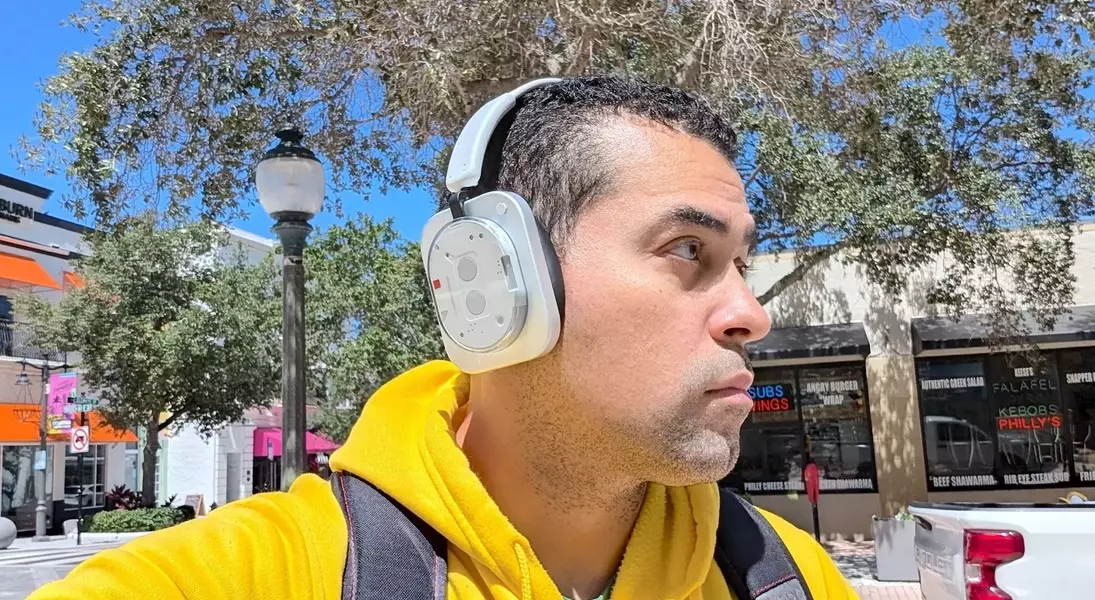
Despite its unique aesthetic, the Headphone (1) has practical drawbacks. Weighing 11.6 ounces, they feel substantial and somewhat cumbersome. The earcups tend to clank together when swiveled, which can lead to chipping of the metallic paint finish over time. Additionally, the non-foldable design reduces their portability, making them less convenient for travel and potentially exposing parts to damage when not in use.
Exceptional Audio Quality and Superior Noise Cancellation
While the Headphone (1) may not win awards among hardcore audiophiles, its soundstage, fine-tuned by KEF, delivers a rich and satisfying blend of lows, mids, and highs. Out of the box, the audio performance is impressive, but it truly shines after minor EQ adjustments. Users can either create a personalized sound profile by manually adjusting frequencies or select from four predefined presets: Balanced (default), More Bass, More Treble, and Voice. The More Treble preset, in particular, offered the most stable and balanced sound during testing.
Testing with various music genres showcased the headphones' capabilities. The electric guitar riffs and strong drums in Green Day's "Walking Contradiction" resonated powerfully, delivering an engaging listening experience. "ooh la la" by Run the Jewels exhibited impressive reverberation, with robust bass notes that smoothly extended and decayed with each snare hit. Mid-range and high frequencies were commendable, and ballads like Mariah Carey's "We Belong Together" featured clear and vibrant vocals, especially as the singer's pitch expanded during the outro.
For Android users, the LDAC codec provided the optimal listening experience, streaming music at a high bitrate and preserving the intricate nuances of original recordings. Even Spotify tracks, which sounded compressed on a MacBook Pro, gained a significant high-resolution boost when played through a OnePlus 11 or Nothing Phone (3). The low lag mode effectively reduced latency for video content. Furthermore, the headphones support lossless playback via USB-C, enhancing clarity for services like Apple Music when connected to a MacBook Pro. While Nothing's spatial audio mode might not rival offerings from Apple or Bose, it offers an acceptable, theater-like acoustic experience.
The adaptive active noise cancellation (ANC) on the Nothing Headphone (1) surpassed expectations. It effectively suppressed a wide range of frequencies, minimizing common disturbances like chatter and household appliance noises. High-pitched sounds, such as crying babies or sirens, were significantly reduced. The transparency mode proved highly practical for indoor use, enabling clear conversations and heightened environmental awareness. This feature was particularly useful outdoors, allowing the wearer to hear approaching pedestrians and vehicles from a distance.
Battery life with ANC enabled is a respectable 35 hours, extending to over 80 hours when ANC is off. The fast-charging capability is also a notable convenience, providing five hours of listening time (ANC off) from just a five-minute charge.
Areas for Refinement and Other Considerations
Despite their strengths, the Headphone (1) exhibits several areas that require improvement. Connectivity issues were observed in multipoint mode, where audio occasionally stuttered when the headphones were a few feet away from the primary device. The included 3.5mm and USB-C cables were notably short, making them impractical for use with desktops or laptops. The wear detection feature performed inconsistently, often experiencing a frustrating three-second delay when it did work.
Another significant design flaw is the lack of a foldable mechanism. This limits the headphones' portability, making them awkward to carry and increasing the risk of damage to exposed components during transit.
Is the Nothing Headphone (1) a Worthwhile Investment?
For enthusiasts of the Nothing brand or those drawn to retro-inspired headphones who seek competent active noise cancellation and sound quality at a reasonable price, the Nothing Headphone (1) presents a viable option. However, individuals prioritizing other aspects might consider alternative premium headphones available on the market.
The soundstage, meticulously crafted by KEF, brings notable depth and richness to various audio tracks. While enjoyable out of the box, optimizing audio quality requires engaging with the equalizer settings. Lossless playback further enhances the listening experience, delivering superior audio fidelity. The adaptive active noise cancellation is surprisingly effective, proficiently neutralizing unwanted ambient sounds and seamlessly transitioning to a transparency mode for increased environmental awareness. The extended battery life also proves invaluable, particularly for travelers or those with prolonged listening sessions.
In a somewhat controversial assessment, the Headphone (1)'s design appears more compelling in concept and marketing materials than in its physical manifestation. While its appearance embodies an appealing nostalgia and features some attractive elements, the real-world charm falls short of promotional depictions. When considering these aesthetic nuances alongside the aforementioned functional drawbacks, the overall value proposition of the Nothing Headphone (1) becomes a subject of critical evaluation.
