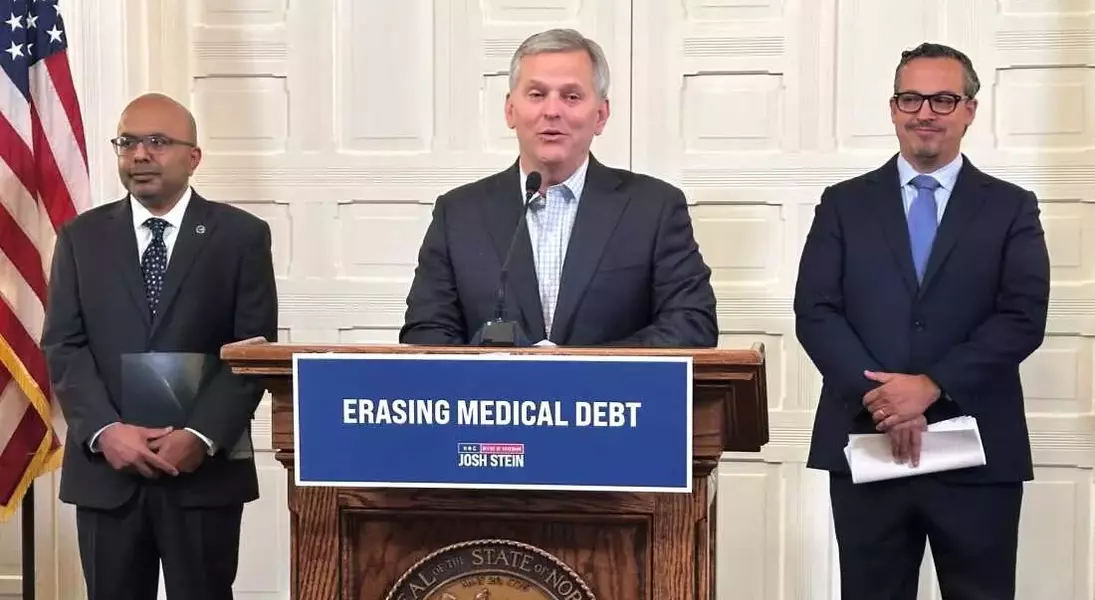
North Carolina has implemented a pioneering initiative to alleviate the burden of medical debt, significantly impacting 2.5 million residents. This comprehensive program, developed through a collaborative effort between the state and its hospitals, addresses both existing medical debt and aims to prevent future financial hardships for patients. The program's core involves hospitals forgiving debts dating back to 2014 and establishing a system where financial assistance is automatically applied to eligible individuals, removing the onus from patients to navigate complex application processes. This approach is a significant step towards ensuring that healthcare access does not compromise an individual's financial stability, setting a precedent for other states grappling with similar issues.
This innovative strategy was largely inspired by the personal experiences of former North Carolina Health Secretary Kody Kinsley, who witnessed his family's struggles with medical expenses. This firsthand understanding fueled his determination to create a more equitable system. The state's initiative ties additional Medicaid funding for hospitals to their participation in debt relief efforts, and crucially, mandates the automatic application of financial aid. This means that families meeting specific income criteria, such as a family of four earning less than $96,000 annually, will receive discounts without needing to apply, thereby streamlining access to affordable care and reducing the psychological and financial stress associated with unexpected medical bills.
North Carolina's Innovative Approach to Healthcare Finance
North Carolina has launched a groundbreaking initiative to eliminate medical debt for a substantial portion of its population, specifically 2.5 million individuals. This significant undertaking stems from a unique agreement forged between the state government and its hospitals, aiming to alleviate the substantial financial strain that medical expenses often place on families. The core of this program involves a dual strategy: first, the forgiveness of existing medical debts accumulated since 2014, and second, the proactive implementation of automatic financial assistance for patients who meet specific eligibility criteria. This forward-thinking approach seeks to transform how healthcare costs are managed, ensuring that access to necessary medical care does not result in insurmountable financial hardship for residents. The program highlights a commitment to financial well-being alongside physical health.
This comprehensive debt relief and prevention strategy is designed to simplify the process for patients, shifting the responsibility from individuals to healthcare providers. Hospitals, in collaboration with organizations like Undue Medical Debt, identify and inform eligible patients about their debt erasure, as exemplified by Dawn Daly-Mack's experience. Furthermore, the commitment to automatically discount services for qualifying patients, such as families earning below $96,000 annually, represents a critical systemic change. This measure not only addresses the immediate crisis of medical debt but also creates a more sustainable and equitable healthcare financing model for the future. By intertwining state funding incentives with hospital participation, North Carolina is setting a new standard for mitigating the financial impact of healthcare.
Addressing and Preventing Medical Debt Across States
The issue of medical debt, which affects approximately one in twelve Americans and amounts to an estimated $220 billion nationally, is being tackled with varying strategies across different states. North Carolina's model stands out by integrating debt forgiveness with preventative measures, directly engaging hospitals through Medicaid incentives. This contrasts with approaches seen in other states; for instance, Arizona and New Jersey have utilized state funds to directly purchase and cancel medical debts, while Oregon and Illinois focus on screening patients for financial assistance. These diverse state-level initiatives underscore the widespread recognition of medical debt as a critical financial and social issue, necessitating innovative solutions to protect citizens from its devastating effects.
Despite these state-level efforts, a significant concern remains regarding the unevenness of protections across the country. Experts like Heather Howard from Princeton University highlight that a patient's geographic location can largely determine the extent of financial safeguards they receive against medical debt. This patchwork of regulations is further complicated by recent federal policy changes, such as the rollback of protections against medical debt appearing on credit reports, which could exacerbate the problem. With predictions of an increase in uninsured individuals due to upcoming policy shifts, the need for cohesive, national-level solutions becomes even more pressing. The sustainability of state initiatives, particularly in the face of potential Medicaid cuts, is also a growing concern for healthcare associations, emphasizing the urgent need for broader, more uniform reforms.
