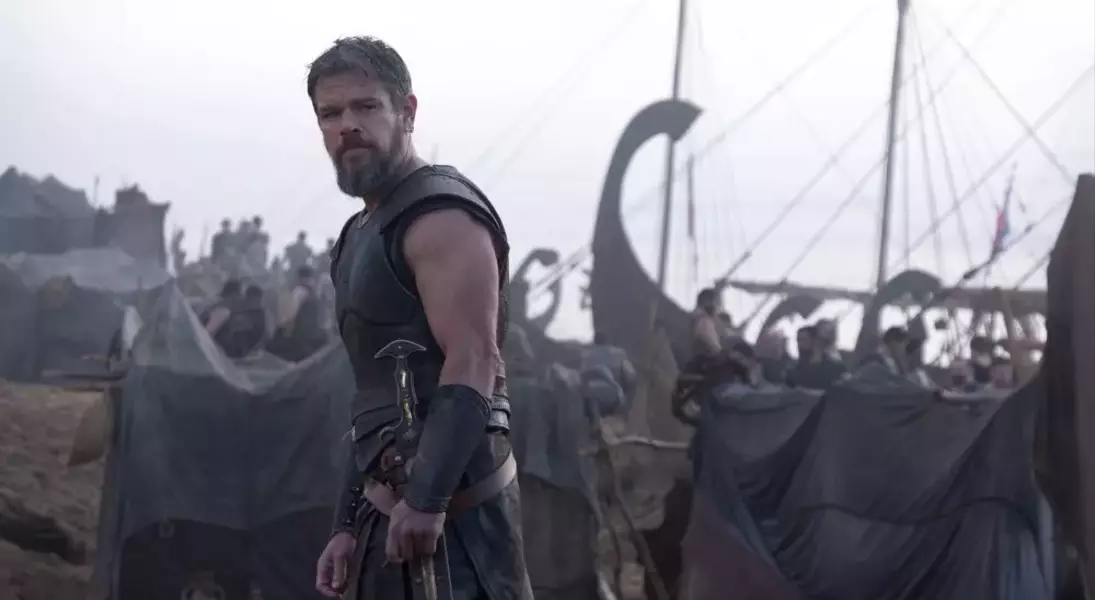
Hollywood has long avoided a direct cinematic adaptation of Homer's "The Odyssey" for over seven decades, despite its status as a foundational epic. This avoidance might stem from the text's immense familiarity or its daunting scope. In 2026, Christopher Nolan, a filmmaker renowned for his ambitious, genre-defying blockbusters, undertakes this challenging task. Known for infusing unique authorial vision into mainstream genres, Nolan's approach to this ancient tale is both meticulously detailed and steeped in traditional craftsmanship. His adaptation distinguishes itself through a complex, non-linear narrative structure, echoing Penelope's intricate weaving and further intensifying the original text's in media res opening.
The cinematic rendition of "The Odyssey" by Nolan is an undeniable feat. Spanning nearly three hours, the film delivers a continuous stream of breathtaking action sequences, each grand enough to serve as a climax in a lesser production. While Nolan's screenplay streamlines and modernizes Homer's language, it does not diminish the narrative's stakes or scale. The sheer magnitude of the mythological journey and human drama embedded in the film reminds us why other filmmakers have shied away from such an undertaking. Despite its consistent engagement and frequent moments of awe, the film often falls short of eliciting profound emotional responses. It captivates the senses and intellect with its structural complexity, making the emotional detachment almost negligible, yet subtly noticeable.
The film's emotional resonance largely comes from Matt Damon's nuanced portrayal of Odysseus. As the weary king of Ithaca, Damon brings a palpable sense of exhaustion and sadness to the role, presenting a more poignant figure than previous interpretations. His performance effectively conveys the hero's disorientation and relentless struggle against fate and divine will. However, connecting with Odysseus's ultimate return proves challenging. The film's depiction of his wife Penelope, played stoically by Anne Hathaway, and his son Telemachus, portrayed somewhat callowly by Tom Holland, feels underdeveloped compared to the more sharply drawn themes of honor and betrayal among men. John Leguizamo's subtle yet powerful performance as Eumaeus, Odysseus's loyal blind servant, delivers the film's most deeply felt emotion, highlighting a patient longing for his master.
Ultimately, "The Odyssey" shines brightest in its most spectacular and visceral moments. The thrilling encounter with the cyclops Polyphemus, brought to life through dazzling digital effects and a touch of unexpected compassion, stands out. Another memorable sequence involves the surreal and darkly sensual seduction by the enchantress Circe, with Samantha Morton delivering a raw and unforgettable performance. The iconic Trojan Horse segment also provides a rousing and humorous spectacle. Viewed in IMAX, Hoyte van Hoytema's sprawling, vivid cinematography and Ludwig Göransson's deep electro-orchestral score create an immersive sensory experience. The film's opulent, confident grandeur allows it to overcome its emotional aloofness, leaving the audience feeling as though they have journeyed through an exhilarating, albeit emotionally distant, epic.
