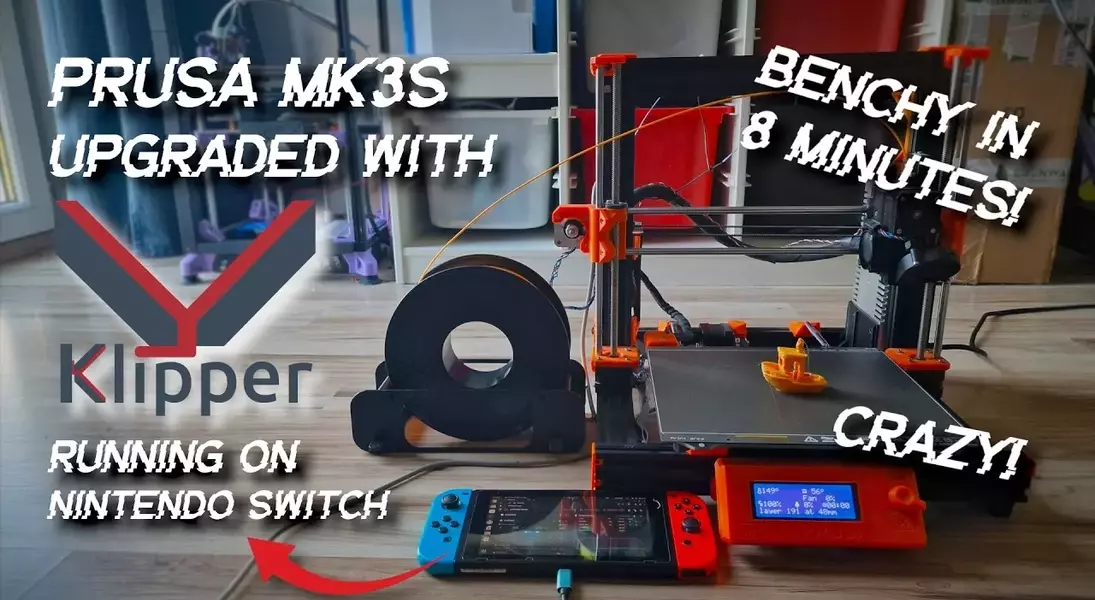
A recent technological breakthrough has showcased the Nintendo Switch's unexpected potential in the realm of 3D printing. By integrating a Linux operating system and the open-source Klipper firmware onto the gaming console, a notable enthusiast successfully amplified their 3D printer's operational speed by a staggering 1000%. This innovative application allowed a model typically requiring 90 minutes to complete in a mere eight minutes.
This impressive enhancement stems from Klipper's unique architecture, which diverts computational tasks from the 3D printer's built-in microcontroller to a more powerful external device. Traditionally, firmwares like Marlin burden the printer's own, often limited, processing unit with complex calculations. Klipper, in contrast, leverages the external device to handle G-code processing and mathematical computations, transmitting precise instructions in real-time. This not only boosts printing speed but also significantly improves output quality by minimizing imperfections such as ringing and ghosting. While a Nintendo Switch proved effective in this demonstration, experts suggest that a Raspberry Pi offers a more accessible and cost-efficient alternative for the majority of users.
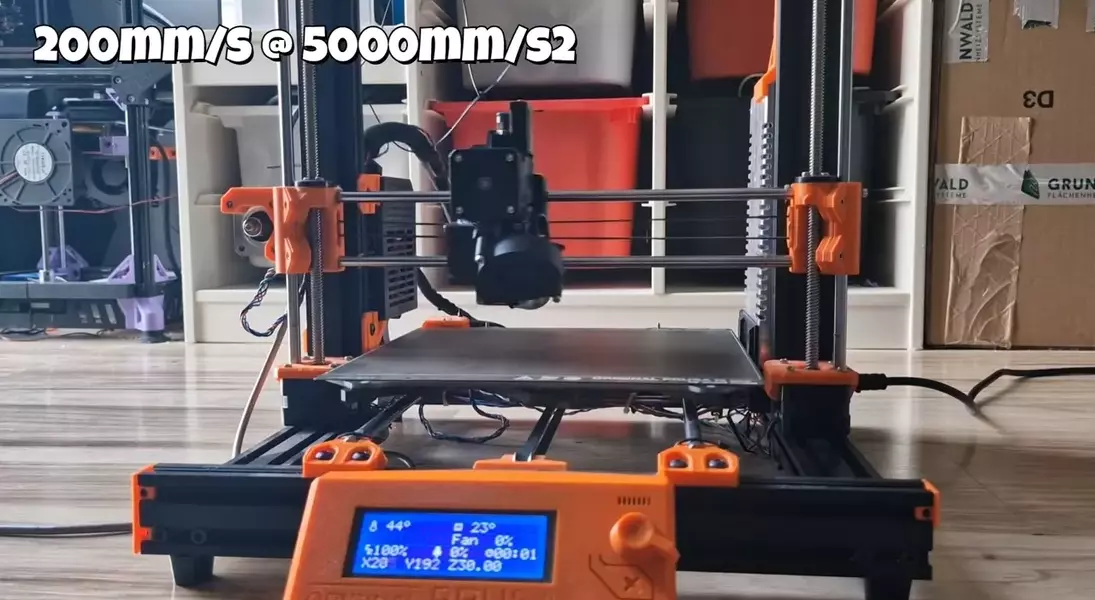
Beyond speed and precision, Klipper offers enhanced flexibility in workflow. Users can adjust code and modify settings instantly without the need for firmware recompilation or system restarts. The experiment involved connecting the Linux-enabled Switch to the 3D printer, identifying its serial ID, and then pushing the printer's capabilities to their limits. Despite the printer's inherent hardware constraints, like its cooling system and stock hotend, the setup achieved an impressive 400 mm/s speed with 17,000 mm/s² acceleration. This demonstrates Klipper's transformative potential, particularly for older printers, making it a free, powerful, and surprisingly adaptable solution even on unconventional hardware like a gaming handheld.
This innovative use of consumer electronics for industrial applications highlights the boundless possibilities that emerge when technology is recontextualized. It underscores the importance of open-source initiatives and creative problem-solving in extending the lifespan and enhancing the performance of existing hardware. Such advancements inspire a future where resourcefulness and cross-platform compatibility drive progress, demonstrating that true innovation often lies in reimagining the potential of tools we already possess.
