Nintendo's latest financial report reveals a considerable dip in Switch 2 console sales during the summer months, with nearly four million fewer units sold than in the same period last year. This downturn comes as Nintendo implemented a price increase for the handheld device globally in September 2026, raising concerns about its potential impact on future sales, especially leading into the crucial holiday season.
Nintendo Switch 2 Faces Sales Challenges and Strategic Adjustments
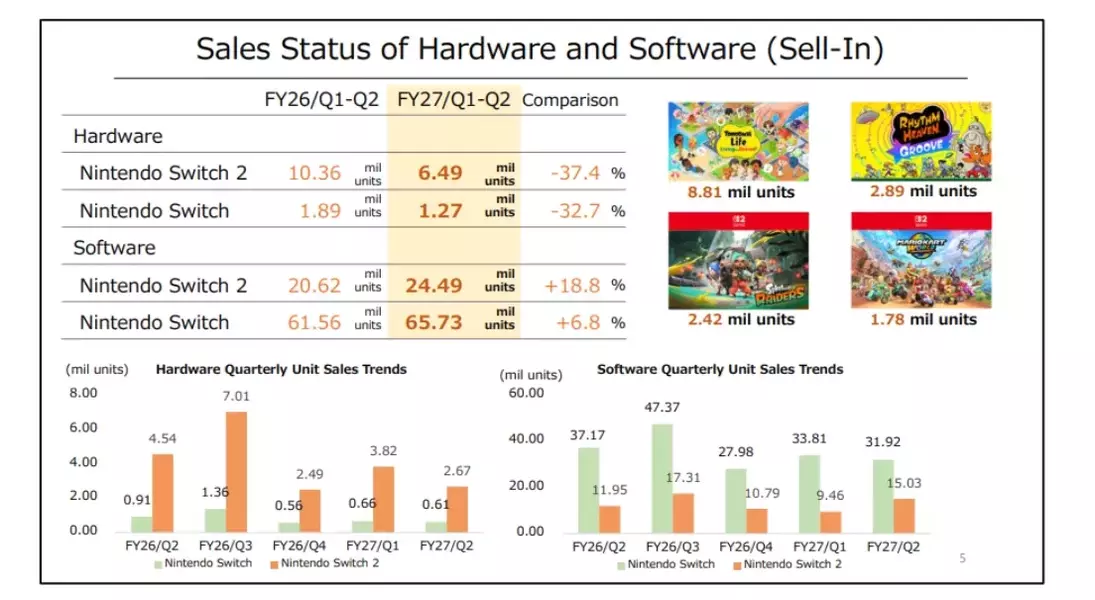
During the financial period spanning from April 1, 2026, to September 30, 2026, Nintendo's Switch 2 console recorded sales of 6.49 million units. This figure represents a notable decrease of 3.87 million units when compared to the 10.36 million units sold during the corresponding period in the previous year. This sales trajectory marks a significant departure from the original Switch's early performance, which saw a consistent increase in sales over its initial five years.
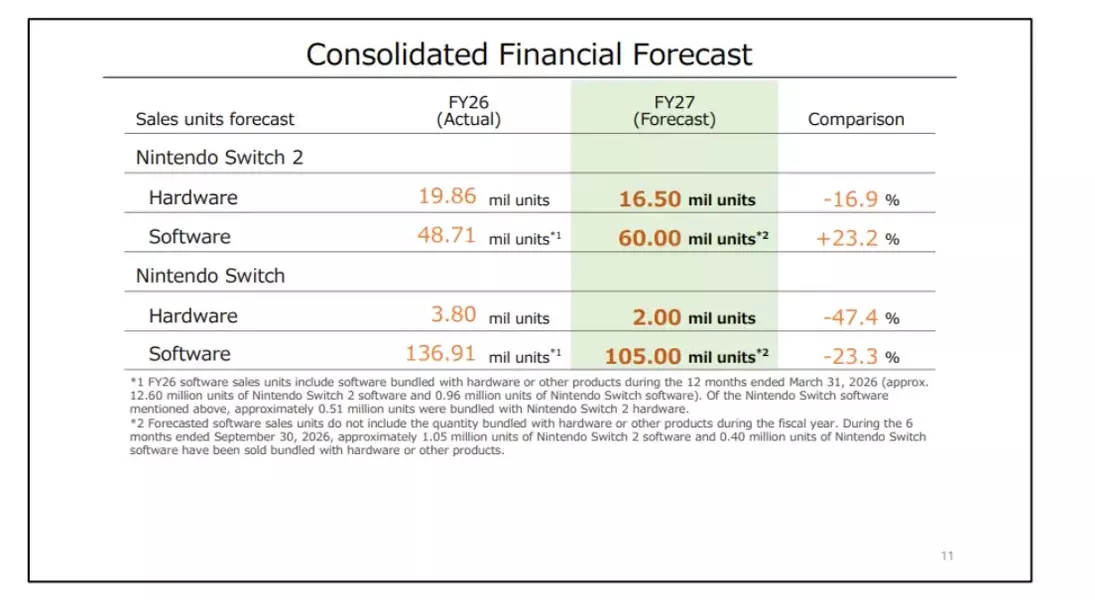
The original Switch also saw a sales decline, with 1.27 million units sold in the same period, a 32.7% reduction. While this is expected for an older model, the drop for the newer Switch 2 is more concerning. Despite an impressive launch year where the Switch 2 sold 19.8 million units—outperforming its predecessor's initial year—Nintendo has revised its sales forecast for the fiscal year ending March 31, 2027, to 16.5 million units, a 16.9% decrease from the previous year's 19.86 million units. This revised forecast suggests that the Switch 2 is unlikely to replicate the original Switch's achievement of doubling its sales in its second year.
Nintendo's decision to raise the price of the Switch 2 by $50, bringing the console to $500, was announced in May 2026 and implemented on September 1, 2026, across major markets including the US, Canada, and Europe. Japan experienced an immediate price hike in May 2026. The company attributed this price adjustment to "changes in market conditions," broadly implying rising memory costs and other economic pressures. Since the sales report largely covers the period before the global price increase, its full effect on consumer demand remains to be seen in subsequent reports.
Despite the challenges in hardware sales, Nintendo's software performance shows a brighter picture. Game sales for the Switch 2 have surged by 18.8%, climbing from 20.62 million to 24.49 million units. This boost is partly driven by the release of highly anticipated new titles, such as the remake of The Legend of Zelda: Ocarina of Time. Furthermore, software sales for the original Switch also continue to thrive, increasing by 6.8% from 61.56 million to 65.73 million units, indicating a robust and active player base across both console generations. Nintendo acknowledges that while hardware sales have decreased, a significant number of consumers are still adopting the system, largely motivated by new game releases, showcasing the enduring appeal of its gaming catalog.
This report highlights the intricate dynamics of the gaming console market, where external economic factors such as memory prices and the broader cost of living crisis can significantly influence hardware performance. For Nintendo, the task ahead involves navigating these market volatilities while continuing to leverage its strong software lineup to maintain its position as a leading console provider. The coming months will be critical in observing how the recent price adjustments and the continued release of engaging titles shape the Switch 2's market trajectory and overall consumer adoption.
