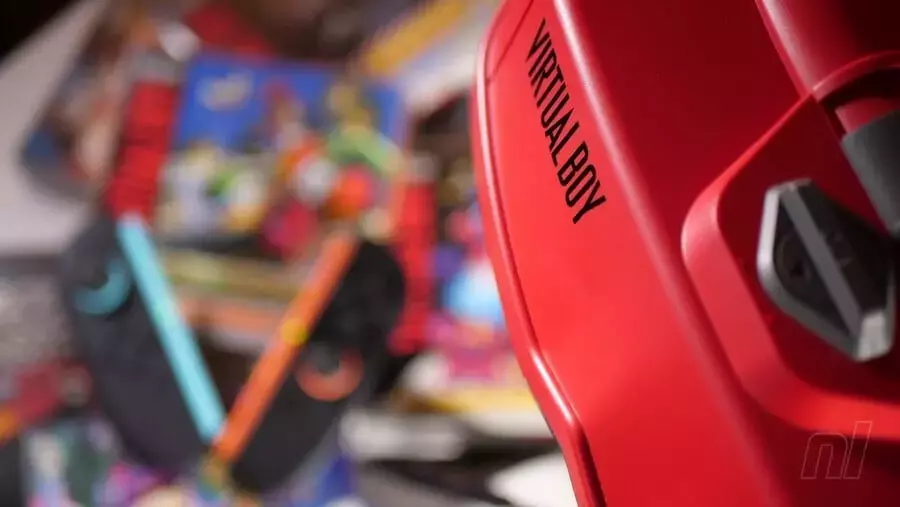
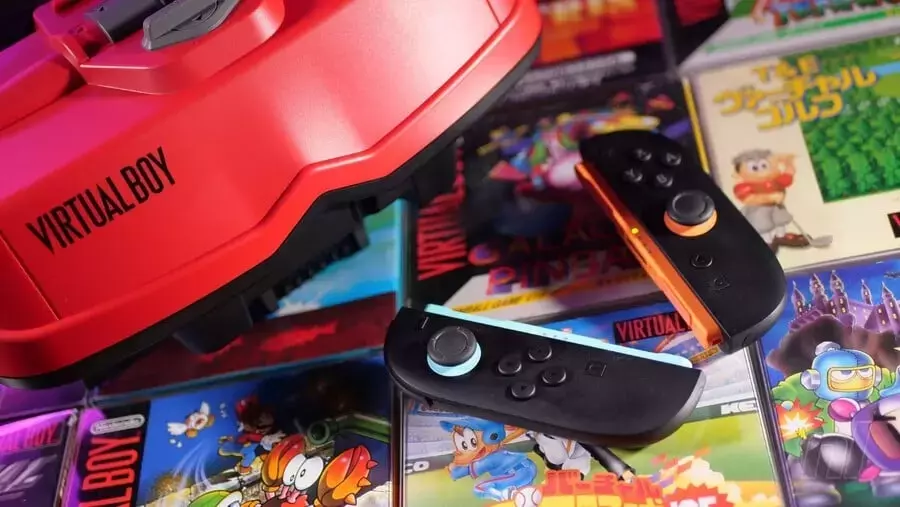
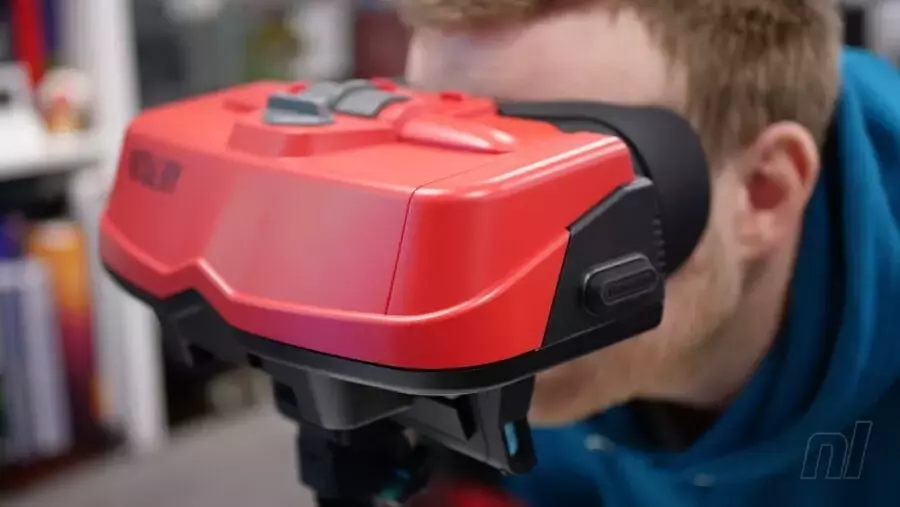
Nintendo has once again stirred excitement among its followers with the reintroduction of one of its most notable commercial missteps: the Virtual Boy. For those of us seasoned enough to recall the original 1995 launch, its unexpected return as a peripheral for the Switch console has certainly piqued curiosity. This updated device, essentially a shell housing a Switch 1 or 2, aims to replicate the unique, albeit flawed, experience of its predecessor.
The Reimagined Virtual Boy: A Deep Dive into Nintendo's Latest Accessory
In a surprising move, Nintendo has brought back the Virtual Boy, a console initially conceived by the esteemed Gunpei Yokoi. The original system, despite its innovative vision, suffered from rushed development, uncomfortable ergonomics, and a limited game selection, leading to its swift discontinuation less than a year after its 1995 debut. Fast forward to today, and the Virtual Boy has been reborn as an accessory for the Nintendo Switch, offering a faithful, albeit subtly altered, recreation of the classic monochrome red display. This modern iteration foregoes internal technology, instead utilizing the Switch's screen and a pair of red-tinted lenses, reminiscent of the Labo VR headset, to achieve its signature visual style.
Key differences between the 1995 and new 2026 models include the absence of a physical controller port, volume dial, and headphone jack on the modern unit, though these features are cleverly molded into the casing for aesthetic continuity. The interpupillary distance (IPD) and focus controls are also purely decorative, with adjustments now managed in-app. The stand, a common point of failure in the original, has been redesigned to be slightly taller and is compatible with older Virtual Boy units, offering a practical solution for collectors. However, the new stand cannot be used with the original console due to a different locking mechanism. Furthermore, the eye shade, once easily removable for cleaning, appears more integrated into the new design, requiring some force to detach.
The visual experience is remarkably similar to the original, with the Switch's pixels being slightly more pronounced. Audio is handled by the Switch's internal speakers, necessitating wireless headphones for private listening due to the lack of a 3.5mm jack. A significant inherited drawback is the console's inherent design, which still requires players to hunch over, leading to potential neck strain and eye fatigue. Nintendo has thoughtfully included an 'Automatic Pause' feature, encouraging breaks every 20 minutes, a nod to the original's attempt to mitigate these discomforts. The controller setup has also been updated, utilizing the Switch's Joy-Cons, a departure from the original's dual-pad design, which is arguably an improvement given the original controller's mixed reception.
Priced at approximately £70 / $100, this new Virtual Boy accessory is not a casual purchase. While it offers a unique opportunity to experience a piece of gaming history without the challenges of maintaining an original unit (such as fragile stands and ribbon connector issues), its limited game library and inherent discomfort mean it's likely to become more of a display piece than a regularly used gaming device. For Nintendo Switch Online subscribers, especially those intrigued by Nintendo's past experiments, this accessory provides an accessible way to explore a niche but historically significant platform, with the promise of unreleased titles adding further appeal.
The re-release of the Virtual Boy, despite its historical shortcomings, offers a fascinating case study in nostalgia marketing and the enduring appeal of retro gaming. While the physical discomfort and limited game library remain, the opportunity to revisit or discover this unique piece of Nintendo's history, now integrated with the modern Switch ecosystem, is undeniably compelling for dedicated fans and curious minds alike. It prompts us to consider the value of preserving gaming history, even its less successful chapters, and how modern technology can breathe new life into forgotten innovations. Perhaps its true value lies not in groundbreaking gameplay, but in its ability to spark conversation and remind us of the diverse and sometimes eccentric path of technological evolution in the gaming world.
