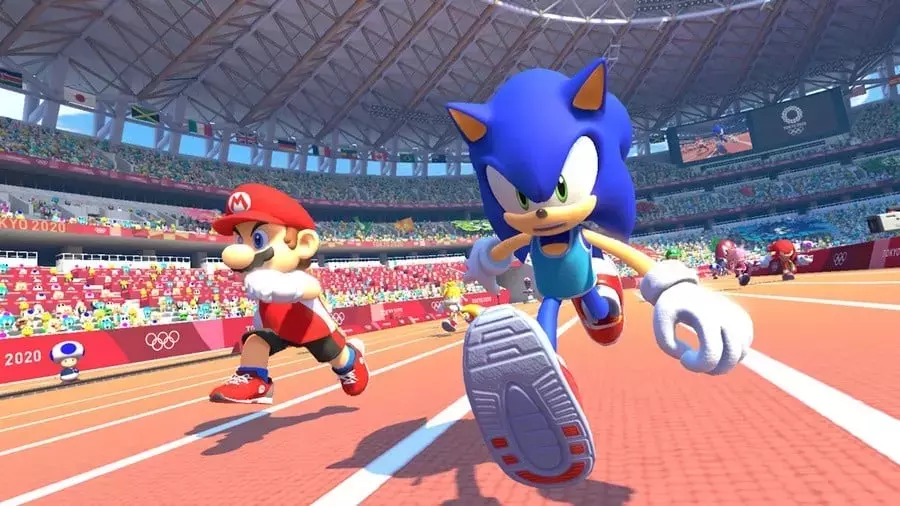
Former Sega of Japan producer Ryoichi Hasegawa recently shared an amusing anecdote, offering a glimpse into the meticulous demands Nintendo places on its collaborators. This incident, involving the "Mario & Sonic at the Olympic Games" series, underscores Nintendo's unwavering commitment to maintaining its brand image and the hierarchical positioning of its flagship character, Mario.
Hasegawa's recollection provides an interesting case study on how intellectual property holders assert control, even over seemingly minor artistic details. It highlights the power dynamics at play in major cross-company collaborations and the lengths to which developers must go to meet the stringent requirements of their partners. This particular story, while humorous, reveals a serious aspect of game development and brand management, where every visual element is carefully considered and dictated.
Nintendo's Character Priority in Game Artwork
Nintendo's stringent demands concerning the visual representation of its characters are well-documented, with numerous developers recounting similar experiences. In a recent interview, former Sega producer Ryoichi Hasegawa brought to light a rather peculiar insistence from Nintendo during the development of "Mario & Sonic at the Olympic Games." He recounted how Nintendo mandated a change in the game's artwork, specifically requiring Sonic's foot to be positioned behind Mario's, even when both characters were depicted standing side-by-side on a field. This directive, enforced for various game assets such as packaging, instruction manuals, and cartridge labels, exemplifies Nintendo's meticulous attention to detail and its clear desire to establish a visual hierarchy that places Mario, its iconic mascot, in a leading position.
Hasegawa candidly described the situation as a 'funny story,' yet he also conveyed the considerable pressure faced by his team. The unexpected demand meant that existing artwork had to be revised, causing a minor disruption in the development process. Nintendo made it unequivocally clear that failure to comply with this specific request would jeopardize the entire partnership, leaving Sega with no alternative but to implement the change. This anecdote serves as a compelling illustration of Nintendo's protective stance over its intellectual properties. It reveals the company's rigorous control over even the subtlest visual elements, ensuring that its characters, particularly Mario, consistently convey an image of prominence and leadership in all collaborative ventures. The incident, while appearing trivial on the surface, speaks volumes about the deep-seated strategies Nintendo employs to safeguard its brand identity and maintain the perceived superiority of its beloved characters.
The Impact of Nintendo's Strict IP Control
Nintendo's reputation for being highly protective of its intellectual property is widely known throughout the video game industry. The incident involving Mario and Sonic's foot positioning is not an isolated event but rather a consistent theme in accounts from third-party developers who have collaborated with the company. These stories collectively illustrate a corporate culture where the integrity and hierarchical representation of Nintendo's characters are paramount, often overriding other creative or practical considerations. The company's unwavering stance on such details suggests a strategic approach to brand management, ensuring that every visual depiction reinforces the established status and appeal of its franchises.
This steadfast commitment to IP control has had a profound impact on cross-franchise collaborations. Developers working on titles featuring Nintendo's characters must adhere to exceptionally strict guidelines, which can sometimes lead to unexpected and demanding revisions. While such meticulousness helps maintain brand consistency and quality, it also presents unique challenges for development teams. The "Mario & Sonic at the Olympic Games" series, which successfully brought together two legendary gaming icons, serves as a testament to the fact that even in partnerships designed to celebrate both brands, Nintendo's internal standards for character portrayal remain non-negotiable. Furthermore, ongoing rumors suggest that the future of the Mario & Sonic at the Olympic Games series might be uncertain, potentially hinting at broader shifts in how these valuable intellectual properties are managed and utilized in future collaborative projects.
