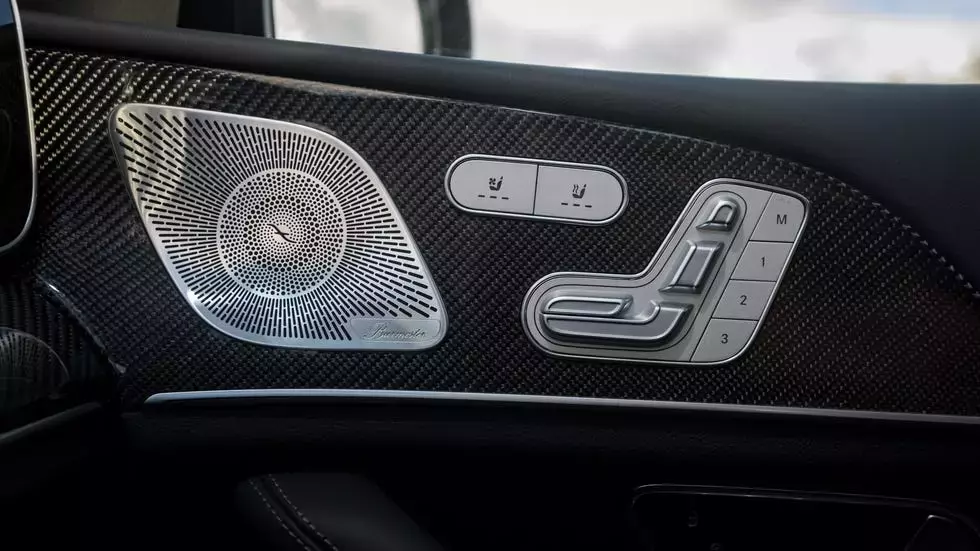
New York State has initiated a significant consumer protection measure by enacting a law that prohibits car manufacturers from imposing subscription fees for features that are already integrated into the vehicle's hardware and do not incur continuous costs for the automaker. Governor Kathy Hochul signed this legislation to address the contentious practice of demanding perpetual payments for functionalities such as heated seats and remote start technology, which leverage physical components already owned by the car owner. This landmark decision aims to curb what many perceive as exploitative practices, ensuring that once a consumer purchases a vehicle equipped with certain hardware, they are not subjected to ongoing charges for its activation or use if the manufacturer has no further expenses tied to its operation. The law primarily targets embedded features that require no additional resources from the producer beyond their initial installation, setting a clear boundary for how automotive features can be monetized in the state, ensuring full value for the initial vehicle purchase.
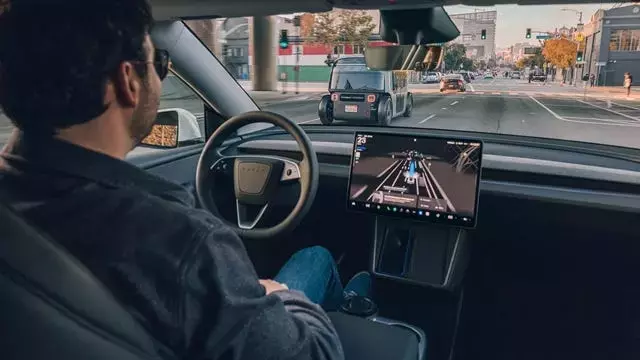
The implementation date for this new regulation is set for February 27, 2027, providing a substantial grace period for car manufacturers, dealerships, and other relevant third parties to revise their business models. A central discussion point involves complex systems such as Tesla's Full Self-Driving, General Motors' Super Cruise, and Ford's Blue Cruise. While these advanced driver-assistance systems rely on pre-existing hardware, manufacturers may contend that continuous software updates, map data, safety monitoring, and developmental overhead represent legitimate ongoing costs, potentially falling outside the law's prohibitions. Clarification from the governor's office is still awaited regarding the precise interpretation for these high-tech functionalities, as the outcome will significantly impact how future automotive technology is offered and sustained.
New York's Stance on Automotive Subscriptions
New York State has initiated a significant consumer protection measure by enacting a law that prohibits car manufacturers from imposing subscription fees for features that are already integrated into the vehicle's hardware and do not incur continuous costs for the automaker. Governor Kathy Hochul signed this legislation to address the contentious practice of demanding perpetual payments for functionalities such as heated seats and remote start technology, which leverage physical components already owned by the car owner. This landmark decision aims to curb what many perceive as exploitative practices, ensuring that once a consumer purchases a vehicle equipped with certain hardware, they are not subjected to ongoing charges for its activation or use if the manufacturer has no further expenses tied to its operation. The law primarily targets embedded features that require no additional resources from the producer beyond their initial installation, setting a clear boundary for how automotive features can be monetized in the state. This legislative action reflects a broader movement to safeguard consumer interests against novel revenue streams in the auto industry, guaranteeing that consumers are not perpetually charged for features they already effectively own.
The recently passed New York legislation (S.9348A/A.10411A) establishes a critical precedent by distinguishing between genuinely service-based subscriptions and those applied to static, pre-installed hardware. This law explicitly forbids automakers and associated third parties from levying recurring fees for amenities like heated seating, advanced navigation interfaces, and remote ignition systems, effectively ending a revenue model that has drawn widespread criticism from consumers. The underlying principle is that if a vehicle component is physically present and fully functional without requiring continuous operational expenditure from the manufacturer, it should not be a source of ongoing income through subscription mandates. This legal framework is particularly relevant given the industry's increasing shift towards software-defined vehicles and monetizing features post-purchase. While the law does not entirely outlaw all subscription models, it strategically targets those that exploit the hardware already embedded in the vehicle. The intent is to foster a more transparent and equitable relationship between car buyers and sellers, ensuring that consumers receive full value for their initial vehicle purchase without being perpetually charged for functionalities that are inherently part of their owned asset. This measure is expected to have far-reaching implications, potentially inspiring similar legislative efforts across other states and nations, thereby influencing the global automotive market's future pricing and feature delivery strategies, creating a more consumer-centric environment.
Navigating the Future of In-Car Technology Fees
The new New York law, effective February 27, 2027, compels the automotive industry to reassess its strategy for monetizing in-car technologies, especially those involving advanced driver-assistance systems. While features like heated seats are straightforward under the new regulation, sophisticated systems such as Tesla's Full Self-Driving (FSD), GM's Super Cruise, and Ford's Blue Cruise present a nuanced challenge. These systems, though relying on integrated vehicle hardware, often entail continuous software updates, real-time data processing, map refreshes, and ongoing research and development to ensure safety and functionality. Automakers are likely to contend that these elements constitute legitimate recurring costs, justifying their subscription models. The legislation forces a clearer definition of what constitutes an "ongoing expense" for the manufacturer, potentially leading to a re-evaluation of how these high-tech functionalities are classified. The industry will need to adapt its offerings, potentially separating hardware activation from software service fees, or clearly demonstrating the continuous value provided by subscription-based advanced features to comply with the upcoming legal requirements, thus shaping future technological access.
The advent of New York's new law introduces a complex layer of interpretation concerning advanced vehicular technologies, particularly autonomous and semi-autonomous driving systems. Automakers like Tesla, General Motors, and Ford, who offer features such as Full Self-Driving, Super Cruise, and Blue Cruise on a subscription basis, will face the intricate task of demonstrating that these services involve continuous expenditures. The debate will center on whether the constant development of algorithms, over-the-air updates for software enhancements, maintenance of high-definition maps, and the infrastructure required to support real-time data processing and safety protocols qualify as "ongoing expenses" in the eyes of the law. If these costs are deemed substantial and continuous, such subscriptions might remain permissible. However, if they are considered merely software activations on static hardware, automakers would need to drastically restructure their pricing. This legislative challenge could spur innovation in business models, encouraging manufacturers to offer clearer tiered services or one-time purchase options for permanent software licenses, while genuinely recurring services (like connectivity for traffic data) could still be subscription-based. The period leading up to the law's effective date in 2027 will be crucial for the industry to refine its arguments and adjust its product strategies, potentially setting a global precedent for how intelligent vehicle features are sold and maintained, balancing consumer protection with technological advancement. The forthcoming clarification from Governor Hochul's office will be vital in shaping the future of this rapidly evolving segment of the automotive market, defining the boundaries of digital ownership.
