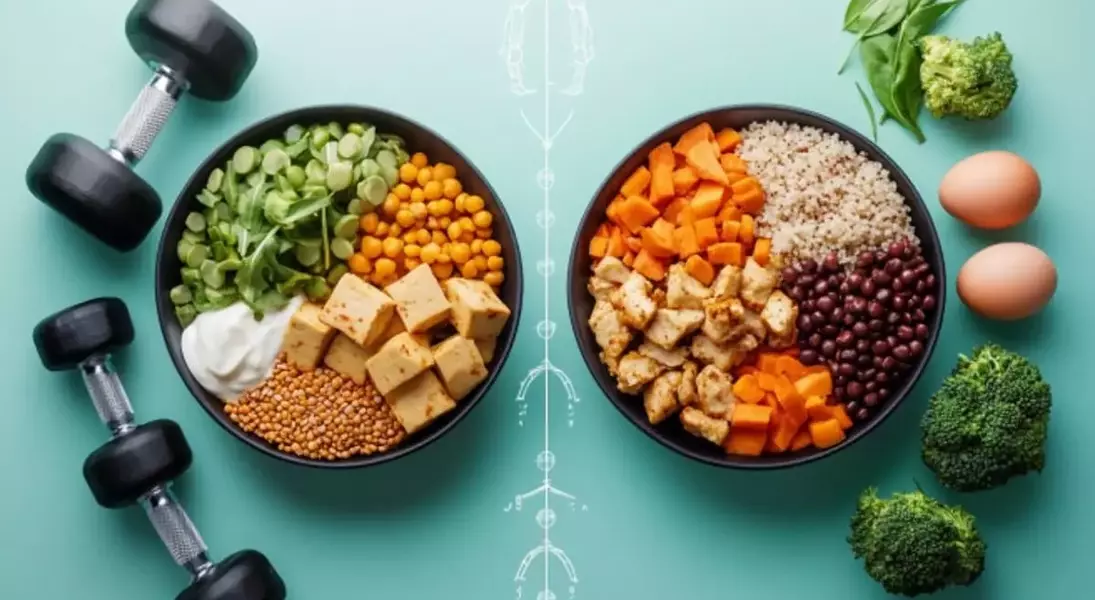
Recent scientific findings have debunked long-held beliefs about the superiority of animal-based proteins over plant-based alternatives for muscle growth. A comprehensive study conducted by researchers at the University of Illinois reveals that as long as protein intake is adequate, the source—whether from animals or plants—has no significant impact on muscle-building outcomes.
The investigation involved 40 physically active adults aged between 20 and 40 who followed either a vegan or omnivorous diet over nine days while participating in strength training exercises. The participants were divided into groups based on their dietary preferences and the timing of their protein consumption throughout the day. Contrary to expectations, the results showed no discernible difference in muscle synthesis rates between those adhering to a vegan diet versus an omnivorous one. Additionally, the even distribution of protein across meals did not enhance muscle protein synthesis compared to consuming most of the protein later in the day.
This groundbreaking research highlights the importance of focusing on sufficient protein intake rather than the specific source or timing of consumption. It suggests that individuals can achieve optimal muscle-building results regardless of whether they consume animal or plant-based proteins, provided they meet their daily nutritional requirements. Furthermore, the study emphasizes the value of adopting realistic eating patterns that reflect how people typically consume food, rather than relying on supplements or single-meal experiments.
Muscle growth is achievable through diverse dietary approaches, challenging outdated assumptions about protein quality and distribution. By embracing a balanced diet rich in essential nutrients, individuals can support their fitness goals effectively. This study underscores the need for further exploration into personalized nutrition strategies that cater to individual preferences and lifestyles, promoting health and well-being for everyone.
