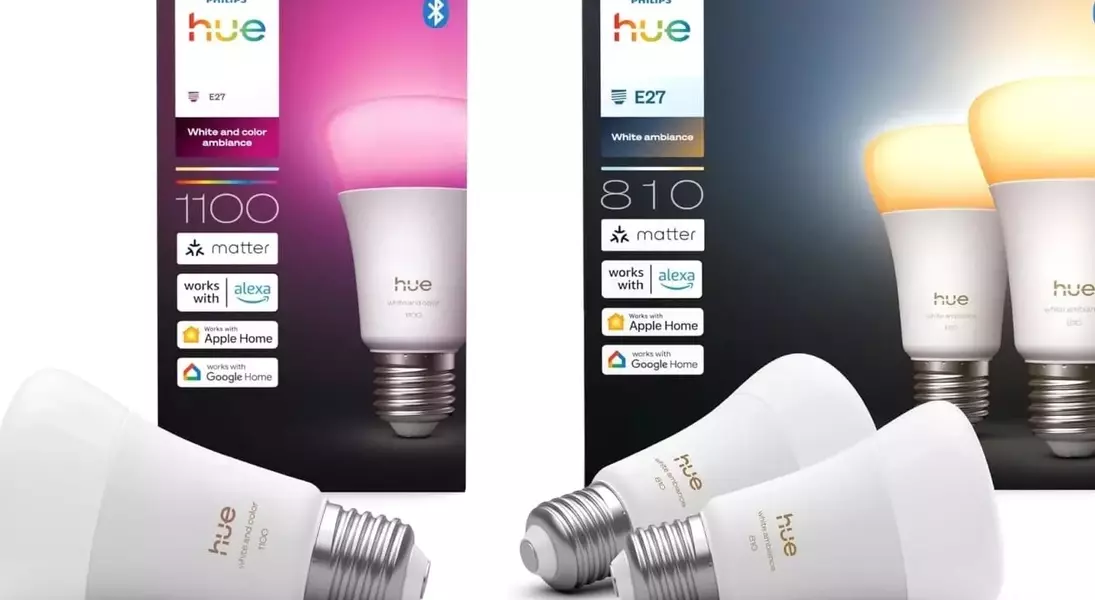
Recent disclosures indicate a significant evolution for Philips Hue smart lighting, with future products poised to offer direct integration with the Matter smart home protocol. This development, hinted at through leaked product packaging and regulatory documents, signifies a departure from the current setup where Hue devices rely on the Hue Bridge to facilitate Matter connectivity. Such a change would enhance interoperability, allowing consumers greater flexibility in controlling their smart lighting systems.
Reports emerging from sources like HueBlog detail that unreleased Philips Hue light bulbs were spotted on Amazon with explicit Matter logos on their packaging. While existing Hue products can already communicate with Matter-enabled systems via the Hue Bridge, this new labeling suggests native support. Currently, Matter operates over Ethernet, Wi-Fi, and Thread, whereas Hue's traditional ecosystem has been primarily built on Zigbee and Bluetooth. This raises questions about the underlying connectivity technology of these new bulbs.
Further reinforcing this speculation is a now-removed FCC filing, which HueBlog also managed to capture. A screenshot from this document reportedly displayed a Matter setup code alongside the familiar Bluetooth and Zigbee certifications for a new Hue White lightbulb. The inclusion of a direct Matter setup code strongly implies that these bulbs will establish direct connections with Matter ecosystems. Given that wired Ethernet would be impractical for light bulbs and Wi-Fi is less common for such low-power devices, the most plausible wireless technology for direct Matter integration is Thread.
Although specific mentions of Thread or Wi-Fi were absent from the publicly available FCC filing, one document (before its removal) noted that certain “functions, bands and modes” were disabled by the manufacturer's software. It is reasonable to infer that Thread, which shares the 2.4GHz band with Zigbee, could be among these initially suppressed capabilities. Should Philips Hue embrace direct Matter-over-Thread support, it would allow users to control their bulbs directly through any Matter controller, diminishing the need for the Hue Bridge for basic functions, though advanced features like dynamic lighting effects would likely still require the Bridge.
This strategic shift by Philips Hue would align with a broader industry trend. Companies like Ikea have already committed to Matter-over-Thread by announcing over two dozen compatible products. As the smart home landscape evolves towards greater interoperability and simplified user experiences, Philips Hue's adoption of direct Matter support, potentially with Thread, would be a timely and significant advancement for its loyal customer base.
The anticipated move by Philips Hue to incorporate direct Matter support into its new light bulbs represents a pivotal moment for the smart lighting industry. This integration promises to streamline user experience and broaden the compatibility of Hue products within the expanding smart home ecosystem. While the full implications and technical specifications will become clearer upon an official announcement, the leaked information paints a compelling picture of a more interconnected and user-friendly future for smart lighting.
